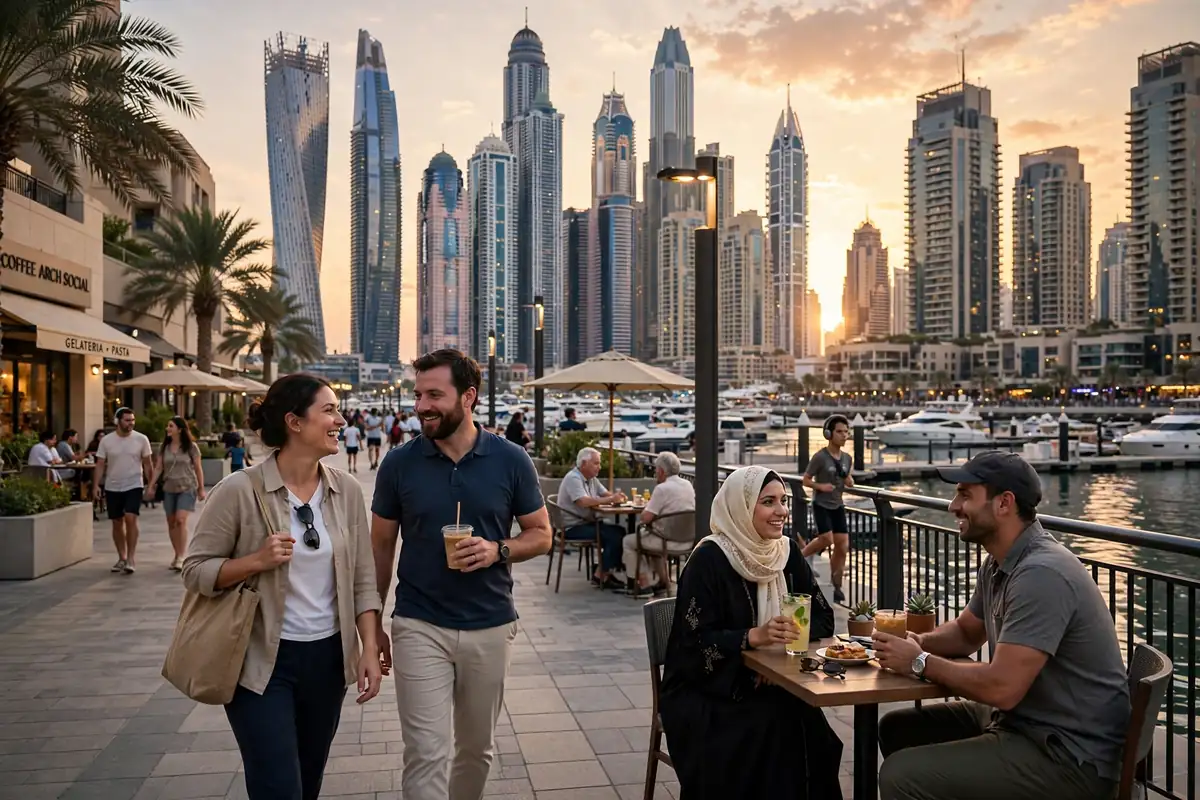
Stainless steel in UAE is one of the most widely used materials in construction, manufacturing, hospitality, and energy. From the facades of high-rise towers in Dubai and Abu Dhabi to kitchen equipment in restaurants, food courts, and hotels, this durable alloy delivers strength, hygiene, and a clean modern finish that suits the region’s ambitious building standards.
This guide covers what stainless steel is, how the main grades differ, and how to choose a reliable supplier in the UAE.
What Is Stainless Steel?
Stainless steel is an iron-based alloy that contains at least 10.5 percent chromium. The chromium reacts with oxygen to form a thin, invisible layer of chromium oxide on the surface. This passive layer protects the metal from rust and repairs itself when scratched, provided oxygen can reach the surface. Nickel, molybdenum, and other elements are added to improve strength, formability, and resistance to specific types of corrosion.
In the UAE, that corrosion resistance matters more than in cooler, drier climates. Coastal humidity, salt spray, high temperatures, and airborne dust place constant stress on exposed metal. Handrails near the Corniche, cladding on beachfront buildings, and equipment in desalination plants all face salty air around the year. Choosing the right grade and finish is therefore not a cosmetic decision; it determines how long the installation lasts and how much maintenance it needs.
Stainless Steel Grades: 304, 316 and 430
Three grades dominate the UAE market. Each balances cost, corrosion resistance, and fabrication behaviour differently, so the best choice depends on where the steel will be used.
Grade 304 is the most common austenitic stainless steel and the workhorse of the industry. It contains around 18 percent chromium and 8 percent nickel, giving it good corrosion resistance, excellent formability, and an attractive finish. It is widely used for kitchen equipment, sinks, food preparation surfaces, interior handrails, and decorative panels. For most indoor applications in the UAE, 304 offers the best balance of performance and price.
Grade 316 adds molybdenum, usually 2 to 3 percent, which greatly improves resistance to chlorides and saltwater. That makes it the preferred choice for coastal construction, marine hardware, swimming pool fittings, desalination and industrial water treatment plants, and chemical or pharmaceutical equipment. It costs more than 304, but the extra protection pays for itself where salt exposure is constant. For projects on the coast or in marine engineering, 316 is usually the safer specification.
Grade 430 is a ferritic stainless steel with around 17 percent chromium and very little nickel. It is magnetic, less expensive, and reasonably resistant to corrosion in mild indoor environments. It is commonly used for appliance panels, decorative trims, and indoor fittings where salt exposure is minimal.
Common Forms
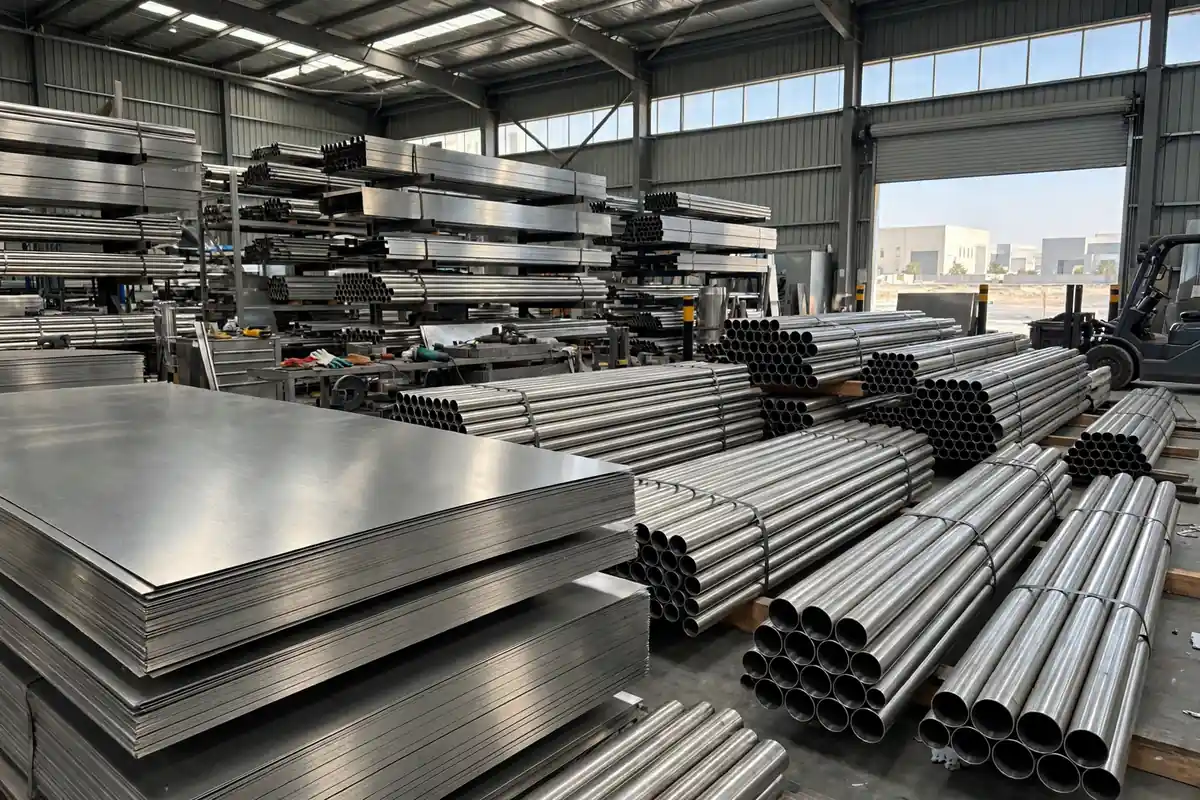
UAE stockists typically supply stainless steel in several forms. Sheets and plates are used for cladding, splashbacks, tanks, and decorative panels, while pipes and tubes serve plumbing, handrails, heat exchangers, and structural work. Bars, angles, and channels suit frames, supports, and machined parts. Fasteners and fittings complete most installations: buyers often order stainless steel nuts, bolts, elbows, tees, and flanges alongside the main material. Sheet metal fabrication workshops can then cut, bend, weld, and polish these forms into finished products, from balustrades to custom kitchen counters.
Applications Across the UAE
In construction, stainless steel appears in facades, curtain walling, canopies, lift interiors, staircases, and balustrades. Architects value its clean appearance and low maintenance, while engineers value its strength-to-weight ratio. In hospitality and food service, it is the standard for commercial kitchens, cold rooms, display counters, and food preparation areas because it is hygienic, easy to clean, and does not taint flavours.
In oil and gas, petrochemical, and power plants, stainless steel is used for piping, pressure vessels, valves, and shell and tube heat exchangers, where resistance to heat and corrosive fluids is essential. Marine and coastal projects use grade 316 for jetties, boat fittings, and harbour structures. Hospitals and laboratories rely on it for sterile surfaces, surgical equipment, and cleanroom fittings, where hygiene cannot be compromised.
Suppliers and Fabrication Services
Most buyers source stainless steel from stockists and traders in Dubai, Abu Dhabi, and Sharjah, particularly around industrial areas such as Al Quoz, Mussafah, and Sharjah Industrial Area. Many suppliers hold sheets, pipes, and fittings in stock and can cut material to size. Larger projects often work directly with a metal fabrication company that handles cutting, bending, welding, polishing, and installation. When comparing fabrication partners, ask to see previous work, check workshop capacity, and confirm whether they handle finishing and site installation as well as supply.
Prices and Cost Factors
Stainless steel prices in the UAE move with global nickel and chromium prices, so quotes are usually valid for a short period. Grade 316 typically costs 20 to 40 percent more than 304, while 430 is the most economical of the three. Thickness, finish, and quantity also affect pricing: brushed and mirror finishes cost more than standard mill finishes, and small cut pieces carry a cutting charge. Delivery, welding consumables, and polishing should be included in any comparison, since the cheapest material quote is not always the lowest total project cost.
How to Choose a Supplier
Start by confirming that the supplier can provide mill test certificates showing the grade, chemical composition, and mechanical properties of the material. Reputable stockists supply certificates with each batch and label their stock clearly. Check whether the supplier offers cut-to-size service, fast delivery across the Emirates, and support with welding consumables and finishes. For fabrication work, look for experience with similar projects, certified welders, and a workshop that can produce samples before full production begins. Clear written quotations, realistic lead times, and a straightforward returns policy are all signs of a dependable partner.
Maintenance Tips for Coastal Environments
Even stainless steel needs care in the UAE’s coastal climate. Rinse salt deposits off exposed surfaces regularly, and clean with mild soap and water rather than abrasive pads or chloride-based cleaners. Wipe in the direction of the grain to avoid scratching brushed finishes, and dry surfaces after cleaning. Inspect welds and joints periodically, since crevices can trap salt and moisture. Where a protective coating is specified, specialist treatments such as painting of metals can add an extra barrier, but the coating must be compatible with the grade and the environment.
With the right grade, a reputable supplier, and regular care, stainless steel in UAE delivers decades of reliable service in even the harshest coastal conditions.