Marine Engineering in UAE supports some of the busiest shipping lanes in the world. From container ships calling at Jebel Ali to offshore support vessels working off Abu Dhabi and tankers passing through Fujairah, vessels depend on skilled engineers, well-equipped workshops and reliable repair yards. The United Arab Emirates has invested heavily in ports, dry docks and maritime services, making it a practical base for shipowners, operators and offshore companies that need work done quickly and to international standards.
This guide explains what marine engineering in UAE covers, the services available, where the main hubs are, how certification works, how to choose a firm, and what work typically costs in AED. Whether you manage a fleet, operate a single vessel or plan an offshore project, it will help you ask the right questions and plan maintenance.
What Marine Engineering Covers in UAE
Marine engineering covers the design, installation, maintenance and repair of the machinery and systems that keep a vessel safe and moving. On a typical commercial ship that includes main engines, generators, propulsion systems, steering gear, pumps, compressors, boilers, fuel systems, cooling systems, deck machinery and automation. Engineers also work on hull structure, piping, ventilation, fire-fighting systems and safety equipment. In the UAE, much of the work is repair, refit and conversion rather than new shipbuilding.
Vessels calling at UAE ports often use a port stay to complete planned maintenance, fix defects found during inspection, and renew certificates. Because port time is expensive, good planning matters. Owners usually send a work list in advance, agree a scope and schedule with the yard, and arrange spares before arrival. Local firms are used to tight windows, including alongside repairs while cargo operations continue.
Core Marine Engineering Services
The firms offering marine engineering in UAE usually cover a broad mix of mechanical, electrical, hydraulic and structural work. The most common services are below.
Ship Repair and Maintenance
Routine repair and maintenance keeps machinery reliable between surveys. This includes engine overhauls, generator servicing, pump and compressor repairs, valve overhauls, heat exchanger cleaning, and renewal of pipes, bearings and seals. Many contractors offer riding repair teams that sail with the vessel. A planned maintenance schedule reduces breakdowns, fuel waste and unplanned off-hire time.
Dry Docking and Hull Maintenance
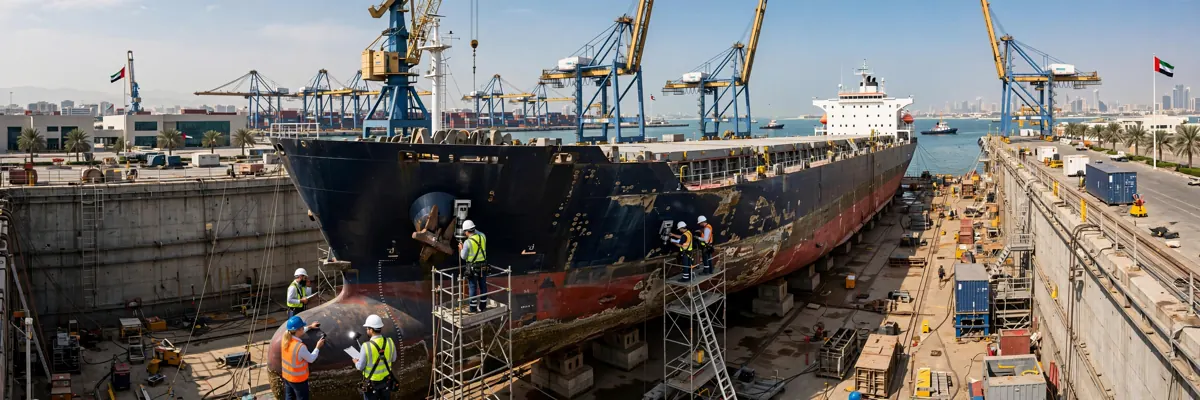
Dry docking allows engineers to inspect parts of the vessel that are normally underwater. Typical work includes hull cleaning and blasting, antifouling and protective coatings, propeller repair, rudder and shaft work, and renewal of hull steel. Choosing the right coating system matters in warm Gulf waters, where fouling and corrosion move quickly. For guidance on surface preparation, see this overview of painting of metals in the UAE.
Offshore Engineering
Offshore engineering supports oil and gas platforms, jack-up rigs, support vessels, barges and subsea operations. Work can include structural repairs, piping maintenance, crane and winch servicing, engine support and accommodation refits. Offshore projects demand strict safety procedures, permits to work, and crews trained for confined spaces and work at height. Ask any offshore contractor how it manages safety and simultaneous operations before you award work.
Propulsion, Electrical and Hydraulic Systems
Propulsion problems can stop a vessel quickly, so diagnosis must be fast and accurate. Engineers work on main engines, gearboxes, shaft lines, propellers, thrusters, steering systems and control systems. Electrical work covers switchboards, motors, generators, alarms, navigation equipment and automation, while hydraulic work covers steering gear, hatch covers, cranes, winches and deck machinery. For related electrical work, see this guide to marine electrical equipment in the UAE. For seals and hydraulic components, see this guide to hydraulic seals in the UAE.
Fabrication, Machining and Spare Parts
Many marine jobs need a part made or repaired locally rather than ordered from overseas. UAE workshops offer steel fabrication, pipework, welding, and precision machining for shafts, valves, flanges and engine components. For background on workshop capability, see these guides to metal fabrication in the UAE and CNC machining in the UAE. Fasteners also matter: see this guide to stainless steel nuts in the UAE. Where heat transfer is involved, see this guide to shell and tube heat exchangers in the UAE.
Major Marine Engineering Hubs in the UAE
Dubai Maritime City and the Jebel Ali area form the largest marine cluster in the country, with repair yards, workshops, suppliers and service companies close together. Abu Dhabi serves offshore oil and gas work, port operations and naval support. Fujairah, on the east coast, is a major bunkering and anchorage hub where vessels can arrange repairs, surveys and supplies outside the Strait of Hormuz. Sharjah and Ras Al Khaimah also have yards that handle smaller vessels and coastal craft.
Certifications and Classification
Marine work in the UAE must meet international rules. Classification societies such as ABS, Bureau Veritas, DNV, Lloyd’s Register and ClassNK survey vessels and approve repairs. Flag-state requirements, SOLAS safety rules and MARPOL environmental rules also apply. A reputable firm should show class approvals, ISO certification, welder qualifications, and a clear quality and safety system. Ask for method statements and risk assessments before work starts.
How to Choose a Marine Engineering Firm
Start with scope and track record. Ask for similar jobs completed in the last two years, references from shipowners, and evidence the firm has worked on your vessel type. Check yard access, workshop capacity, lifting and testing facilities, and whether the firm handles mechanical, electrical and hydraulic work in-house. Confirm pricing, payment terms, warranty, insurance and response times for urgent call-outs. A good firm gives a clear written quotation, a realistic schedule and a final report with test results.
Costs in AED
Costs vary with vessel size, scope, yard location and urgency. As a rough guide, minor alongside repairs may cost AED 5,000 to AED 30,000. Medium repairs such as pump overhauls or generator work often fall between AED 30,000 and AED 150,000. Major dry-dock packages or engine overhauls can run from AED 150,000 to well over AED 1,000,000. Always get itemised quotations that separate labour, materials, yard charges, class fees and subcontracted work.
Timelines and Planning
Allow two to four weeks to plan a dry-dock package and one to two weeks for a medium alongside repair. Minor jobs can often be arranged within days if spares are available. Confirm the yard slot, class surveyor attendance, spare delivery dates and crew availability before the vessel arrives. Allow a buffer for extra steel renewals or parts delays.
Final Thoughts
Marine Engineering in UAE offers shipowners a strong mix of location, capability and speed. With clear scope, class-compliant workmanship and a firm that communicates well, you can keep vessels safe, compliant and on schedule.