For fashion brands, retailers, hotels, schools and sports teams, working with clothing manufacturers in UAE production hubs offers a practical balance of regional access, skilled garment work and faster communication than many overseas-only supply chains. Dubai, Sharjah and Ajman have long histories in textiles and garment production, serving local labels, uniform programmes and export orders, while buyers across the Emirates use UAE factories for everything from small capsule collections to steady repeat lines. This guide explains how the sector works, what to look for in a garment partner, and how to move from an idea or sample to a finished order without costly misunderstandings.
How the UAE Clothing Manufacturing Sector Works
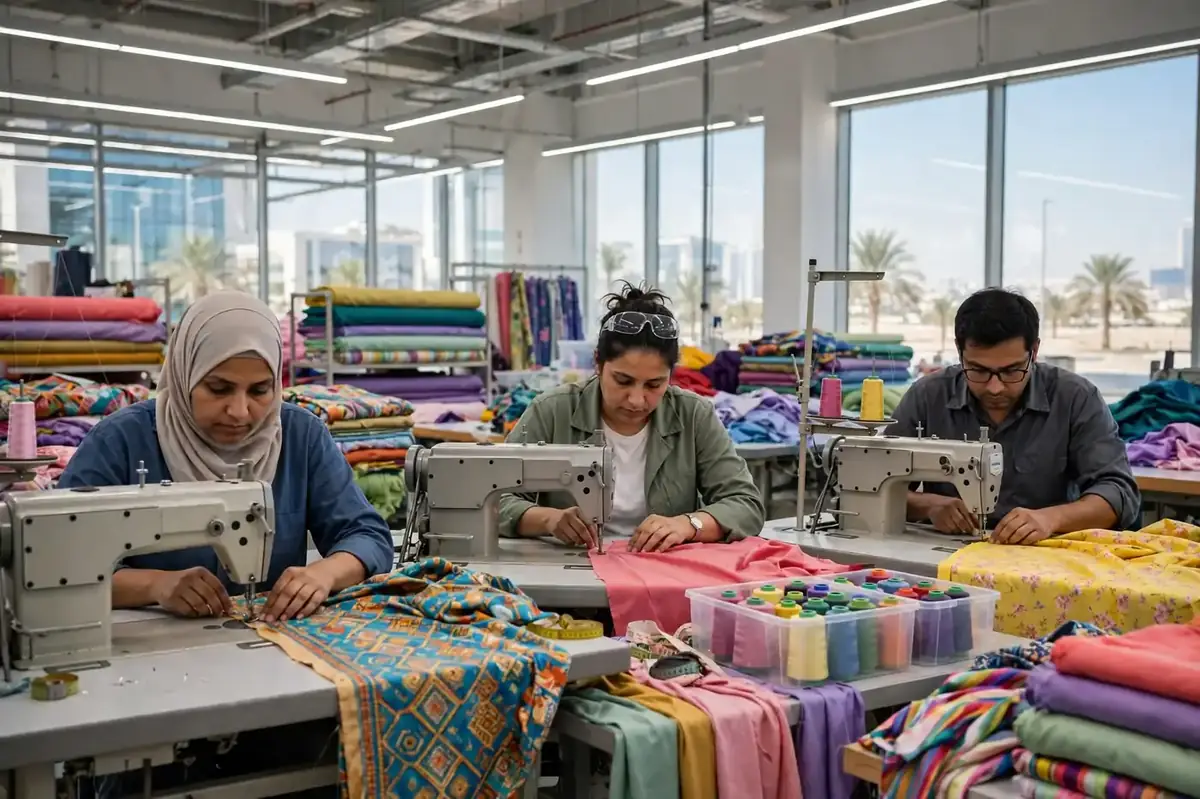
UAE garment factories range from compact workshops handling short runs and alterations for local clients to larger units producing uniforms, workwear and fashion lines at scale. Many factories cluster in industrial areas where fabric suppliers, trimming shops, embroidery and printing services and logistics providers sit close together, which shortens the back-and-forth when a sample needs a different button, a revised print or an extra fitting. That local ecosystem is one reason brands that sell in the Gulf often prefer a regional partner even when they also source basics internationally.
Manufacturers generally work in one of three ways. With full-package production, the factory sources fabric and trims, makes patterns, grades sizes, sews, finishes and packs, working from your designs and specifications. With cut-make-trim production, you supply the fabric and materials and the factory provides pattern work, cutting and sewing. With white-label or ready-design production, you select from styles the factory already makes and apply your branding, which suits simple products and faster launches but offers less originality. Specialist producers sit within each model, including dedicated UAE sportswear manufacturers for activewear and team kits and focused UAE t-shirt manufacturers for promotional and retail basics, and choosing the model that matches your stage keeps costs and responsibilities clear from the start.
It helps to understand the basic chain before you brief anyone. A design becomes a technical pack, the technical pack becomes a pattern, the pattern produces a sample, and only after the sample is approved should bulk fabric be cut. Each step exists to catch problems cheaply, on one garment, rather than expensively across a full order.
What UAE Manufacturers Commonly Produce
Uniforms are a major part of local production: corporate wear, hospitality outfits, healthcare scrubs, school uniforms, security and facilities clothing and industrial workwear. Uniform programmes value consistency above novelty, because a hotel or school must be able to reorder the same style, fabric and colour months later and have it match what staff already wear. A good uniform partner keeps your patterns, fabric references and size records on file and warns you early if a fabric is being discontinued so alternatives can be approved in good time.
Fashion production covers abayas and modest wear, dresses, shirts, trousers, knitwear and seasonal collections for boutiques and online labels. The wider market described under UAE women clothing shows how varied local demand is, from everyday essentials to occasion pieces, and factories that serve fashion clients are used to smaller runs, more frequent style changes and closer attention to finishing details such as stitching quality, pressing and presentation. Retail basics such as t-shirts, hoodies and polos bridge both worlds, ordered by brands, events and companies alike, often with embroidery or print added as a separate step.
Adjacent categories often travel with a clothing order. Buyers building a fuller range may coordinate footwear through contacts in UAE footwear manufacturing or accessories through suppliers of leather goods in UAE markets, keeping a collection’s look consistent. Whether a factory can help coordinate those extras or simply focus on garments, clarity about scope in the first conversation prevents delays later.
Choosing the Right Garment Partner
Begin with fit for your product, not with the biggest factory or the lowest quote. A unit that excels at woven uniforms may not be the best home for stretch activewear, and a fashion workshop used to delicate fabrics may struggle with heavy workwear. Ask what they produce most, request to see finished samples of similar garments, and check seams, stitching density, buttonholes, lining and pressing on those samples as a customer would. The condition and type of equipment matters as well; the range of UAE garment industry machines used across factories, from industrial sewing and cutting to finishing and embroidery equipment, affects both quality and the operations a partner can offer in-house.
Minimum order quantities, often called MOQs, shape what is realistic. Factories set minimums per style and colour because setup, pattern work and machine changes cost time regardless of order size. Smaller runs usually cost more per piece, and that is normal rather than a sign of a bad quote. Be honest about your likely volumes and reorders, and ask how pricing changes as quantities grow, so you can plan a path from a first test order to regular production instead of negotiating every order from zero.
Communication is the quiet deciding factor. You need a partner who confirms specifications in writing, flags problems early, sends progress updates and sample photographs, and answers sizing or fabric questions directly. If answers are vague before you have paid a deposit, they rarely become clearer during production. Visiting the factory, where possible, remains the simplest due-diligence step: you see working conditions, organisation and quality control in person, and you meet the people who will actually make your garments.
Fabric, Sampling and Getting the Specification Right
Most production problems are really specification problems. A complete technical pack should cover measurements for every size, fabric type and weight, colour references, trims, stitching details, branding placement, labels and packing instructions. Photographs and a physical reference garment help enormously, because written descriptions of fit and finish are easy to interpret differently. If you do not yet know how to build a tech pack, many factories will guide you, but the clearer your starting information, the more accurate the first sample will be.
Fabric choice deserves time in the UAE context. Lightweight, breathable fabrics suit the long warm season, while blends can add durability and easier care for uniforms that are washed constantly. Always request swatches, check how the fabric handles after washing a sample garment, and consider colourfastness and shrinkage before approving bulk cutting. The broader trade in UAE apparels gives buyers access to both locally stocked fabrics and imported materials, and your partner should explain the trade-off between a fabric available immediately from local stock and one ordered in for your job, which may look identical but change the timeline.
Treat sampling as an investment, not a delay. Expect to pay for samples, approve them in writing, and keep a signed or photographed record of the approved version, sometimes called the pre-production sample. Any change after approval, however small it feels, should be confirmed in writing with its cost and time effect, because a last-minute pocket move or fabric swap can ripple through cutting and sewing. Check the sample on a person, not only on a table: fit, movement and comfort decide whether customers keep a garment.
Timelines, Quality Control and Delivery
Production timelines depend on fabric availability, order size, style complexity and the factory’s current workload, and they stretch at peak periods such as the run-up to the school year, major retail seasons and large hospitality openings. Ask for a schedule that separates sampling, fabric sourcing, bulk production and finishing, and build your own launch or delivery promises around confirmed factory dates with a small buffer, rather than around the earliest date mentioned in a first conversation. A dependable partner will tell you when a deadline is unrealistic instead of agreeing and delivering late.
Quality control should happen during production, not only at the end. Agree the checks in advance: measurements against the size chart, stitching and seam strength, colour matching across the order, print or embroidery placement, labelling and final packing. For larger orders, a mid-production check catches a drifting measurement or a wrong trim while correction is still easy, and a final inspection before dispatch protects both sides. Define how defects are handled: what counts as a defect, what proportion triggers repair or replacement, and how issues found after delivery are reported and resolved.
Finish with the commercial details in writing: total price and what it includes, deposit and balance terms, who supplies and owns patterns and leftover fabric, delivery or collection arrangements within the Emirates or for export, and what happens if either side changes the order. Clear paperwork is not bureaucracy for its own sake; it is what lets a good working relationship survive a busy season or an unexpected problem.
The right partner makes production feel straightforward: honest advice on fabrics and quantities, a sample you are proud of, steady communication and garments that arrive as specified. Take time to compare specialisms, check samples closely and agree details in writing when you shortlist clothing manufacturers in UAE industrial areas and online, and a first small, well-managed order can grow into the reliable supply relationship every growing brand, school, hotel or team eventually needs.