Garment Industry Machines in UAE power everything from small tailoring shops in Ajman to large export factories in Dubai and Sharjah. Whether you stitch abayas, school uniforms, workwear, or high-street fashion, the right machines decide your speed, stitch quality, and profit margin. This guide explains the main machine types, trusted brands, realistic prices in AED, where to buy from suppliers in UAE, and how to maintain your equipment so it keeps earning for years.
What Are Garment Industry Machines?
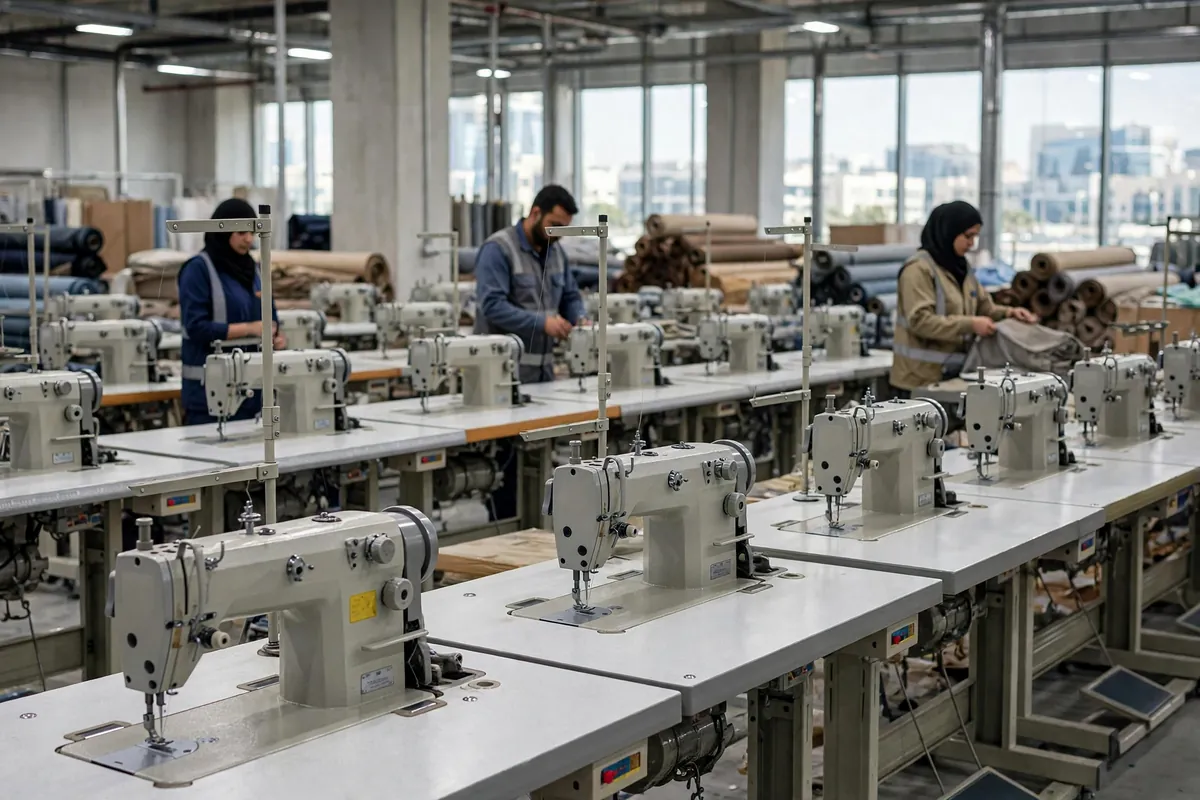
Garment industry machines are commercial machines built to sew, cut, embroider, press, and finish clothing at scale. Unlike domestic sewing machines, they run for long hours, handle thick fabrics such as denim and canvas, and hold a steady stitch speed. A typical UAE workshop combines several machines into a production line: one station cuts fabric, another sews seams, a third adds embroidery or buttons, and a final station presses and checks each piece before packing.
Main Types of Garment Machines
Choosing the right machine starts with the job it must do. These are the machines most UAE garment factories and tailoring shops use every day.
- Industrial sewing machines: flatbed, cylinder-bed, and post-bed models for straight stitching, zigzag, and heavy-duty seams.
- Overlock machines: trim and overcast raw edges so seams stay neat and do not fray.
- Coverstitch machines: create stretchy hems on T-shirts, leggings, and sportswear.
- Cutting machines: straight-knife, round-knife, and computer-controlled cutters for accurate layers.
- Embroidery machines: single-head models for small shops and multi-head models for bulk orders.
- Pressing and fusing machines: steam presses, ironing tables, and fusing presses for a crisp finish.
- Button, buttonhole, and bartack machines: specialist machines that speed up finishing and improve consistency.
Popular Brands in the UAE
Juki, Brother, and Singer industrial machines dominate workshops across the UAE because parts are easy to find and technicians know them well. Juki is a favourite for high-speed lockstitch and overlock work. Brother offers reliable computerized models with tidy stitch control. Singer industrial machines remain popular with smaller workshops for their simple setup and low running cost. Other respected names include Pegasus for overlock machines, Tajima for embroidery, and Eastman and Lectra for cutting systems.
Garment Factories in UAE: Where the Work Is
The UAE garment sector is spread across several industrial hubs. Ajman is known for affordable workshops and tailoring units serving local and export orders. Sharjah Industrial Areas host a dense mix of stitching, embroidery, and printing factories with easy access to ports and raw materials. Dubai offers larger facilities in Al Quoz, Ras Al Khor, and Jebel Ali, plus showrooms where buyers can see machines working before they buy. Abu Dhabi and Ras Al Khaimah are growing too, especially for uniforms and technical workwear.
Many workshops share buildings with other light-industrial units, so the same discipline that applies to woodworking machinery in UAE and heavy equipment repair in UAE applies here: keep machines serviced, keep aisles clear, and keep safety guards in place.
When you choose a location, think about rent, labour, delivery routes, and how close your spare-parts supplier is. A workshop near your supplier saves hours when a needle bar or motor needs urgent replacement, and it keeps downtime low during peak seasons such as Ramadan and back-to-school.
Garment Machine Prices in UAE (AED)
Prices vary by brand, speed, automation, and condition. The figures below are typical market ranges in the UAE and will help you budget before you visit a supplier.
- New industrial single-needle lockstitch machine: AED 2,500–AED 6,000.
- New overlock machine: AED 3,000–AED 8,000.
- New computerized embroidery machine (single-head): AED 15,000–AED 40,000.
- New fabric cutting machine: AED 4,000–AED 25,000 depending on automation.
- New steam press and ironing table set: AED 2,000–AED 7,000.
- Used machines: typically 40–60% cheaper, but check the motor, timing, and stitch quality first.
Used machines can be excellent value for a new tailoring shop, especially when they come from a closing factory with service records. For high-volume production, however, a new computerized machine usually pays for itself through faster output, lower thread breakage, and fewer repairs.
Where to Buy Garment Machines in UAE
Start with established suppliers in Dubai, Sharjah, and Ajman who stock machines, spare parts, and accessories under one roof. Visit the showroom, test the machine with your own fabric, and ask for a written warranty, installation, and operator training. Compare at least three quotations and check what is included: delivery, table, servo motor, needles, and thread stand all affect the real cost.
Online marketplaces and dealer listings are useful for price checks, but inspect a used machine in person before paying. Ask the seller to run the machine at full speed, sew your thickest fabric, and show the motor and belt condition. Keep the invoice and warranty card, since both help if you need a claim later.
Maintenance, Spare Parts & Choosing the Right Machine
Regular maintenance is the cheapest way to protect your investment. Clean lint from the bobbin area daily, oil the machine as the manual directs, and replace needles before they go blunt. Keep a small stock of needles, bobbins, belts, and presser feet so a minor fault never stops production. When you need parts, choose genuine or high-quality compatible spares, because cheap parts can damage timing and stitch formation. As with other industrial machinery in UAE, a reliable local parts supplier matters as much as the machine itself.
Workshops that also cut metal fittings often keep a guide to stainless steel nuts in UAE handy for fasteners.
To choose the right machine, list the fabrics you sew most, the daily output you need, and your budget. A boutique sewing abayas needs a smooth lockstitch and a good overlock, while a uniform factory may need buttonhole, bartack, and pattern-sewing machines too. If your budget is tight, plan the purchase with a business loan calculator for the UAE so repayments stay comfortable. For workshops that run long hours, cooling and ventilation matter as well, and many owners also review HVLS industrial fans in Dubai to keep staff comfortable.
Finally, compare machines on total cost, not sticker price alone. Add service contracts, spare parts, training, and electricity use before you decide. Ask other workshop owners what they run and why, and buy from a supplier who answers the phone after the sale. With the right machines, a clear maintenance routine, and a dependable supplier, a garment business in the UAE can grow from a single sewing table to a full production line.