Choosing tiles in the UAE is one of those decisions that looks simple in the showroom and then follows you around for years. Tiles cover the floors you walk on every day, the bathroom walls that face steam and splashes, and the kitchen surfaces that take heat, oil and constant cleaning. In a country where summer temperatures push past 45°C and air conditioning runs for most of the year, the right tile also has to cope with thermal movement, heavy footfall and the fine desert dust that finds its way indoors. This guide explains the main tile types sold in the Emirates, what they cost, where each one works best, and how to buy without overpaying or choosing a finish you will regret.
The main types of tiles in the UAE
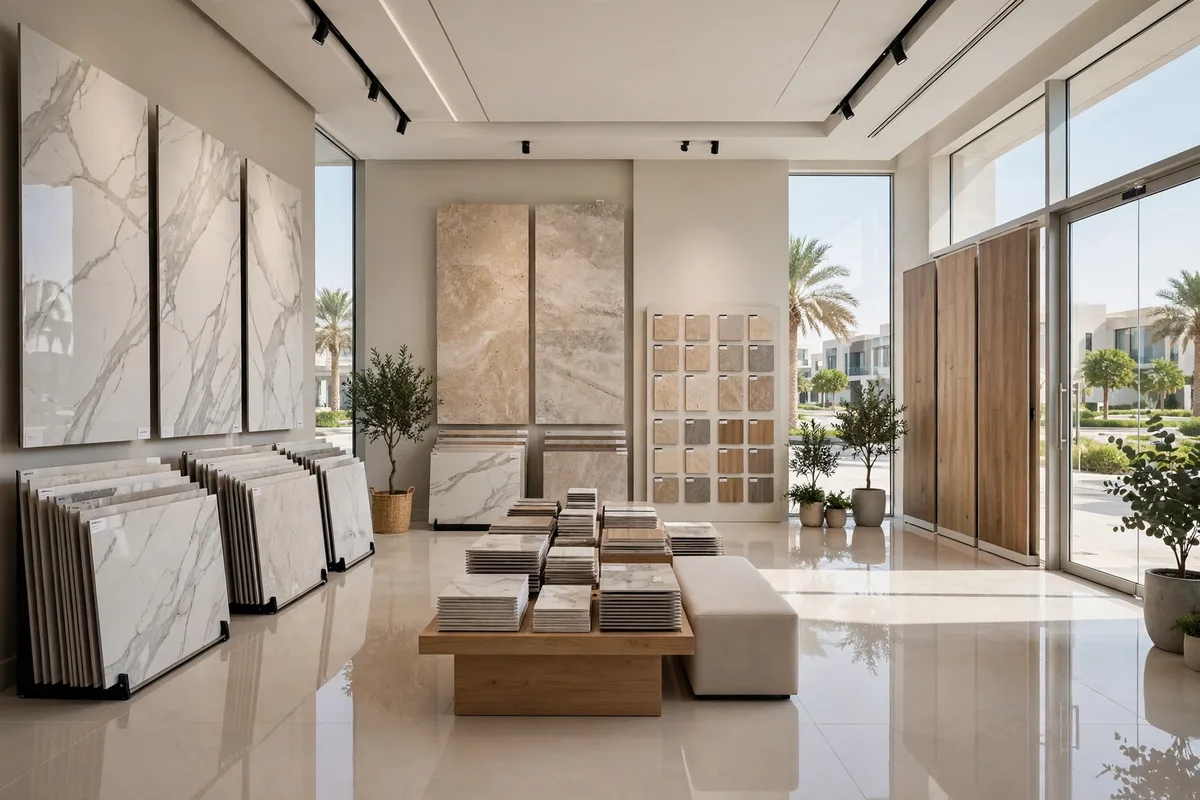
Ceramic tiles are the workhorse of UAE homes. Made from clay fired at moderate temperatures, they are affordable, widely available and easy to cut and lay. Glazed ceramic suits walls, splashbacks and light-traffic floors, but it is softer than porcelain, so it chips more easily in busy hallways. Porcelain tiles are fired hotter and denser, absorb very little water and handle heavy traffic, which is why most new apartments and villas use porcelain for main floors. Full-body and glazed porcelain both perform well; glazed versions give you the marble, stone and wood looks that dominate current interiors.
Vitrified tiles overlap heavily with porcelain in the local market and are sold as a hard-wearing floor option for commercial spaces. Natural stone — marble, granite, travertine and limestone — sits at the premium end: beautiful and cool underfoot, but it needs sealing and more careful maintenance. Mosaic tiles in glass, ceramic or stone are used for feature walls, pool interiors and bathroom niches. For outdoor areas, look at textured anti-slip tiles and thicker pavers rated for exterior use around pools, balconies and driveways.
Matching tiles to each room
For living rooms and bedrooms, large-format porcelain (60×60 cm, 60×120 cm or bigger) is the current standard: fewer grout lines make rooms look larger and cleaning easier. Wood-effect porcelain planks give the warmth of timber without warping in the humidity. Bathrooms need water-resistant wall tiles and, more importantly, a floor with grip — small-format or matte tiles with an anti-slip rating are safer when wet. Kitchens do best with stain-resistant glazed porcelain on the floor and easy-wipe tiles or a single slab splashback behind the hob.
Balconies, terraces and pool decks get direct sun and can reach surface temperatures that crack unsuitable tiles or fade their colour, so choose exterior-rated, frost-and-heat-resistant ranges with a rough texture. If you are renovating a whole property, it helps to plan tiling alongside other trades — our guide to building construction in the UAE explains how the finishing stages fit together, and the wooden flooring guide is worth reading if you are torn between tiles and timber-effect floors.
Sizes, finishes and what they mean
Tile size changes both the look and the labour bill. Standard 30×30 and 30×60 cm tiles are cheapest to lay. Large slabs look premium but need flat floors, skilled installers and more cutting waste, so fitting costs rise. Finishes matter just as much: polished tiles shine and show every footprint, matte tiles hide dust and are safer underfoot, and textured or lappato (semi-polished) finishes sit in between. Always check the PEI wear rating for floors — PEI 3 suits bedrooms, PEI 4 or 5 is better for entrances, kitchens and commercial use — and ask for the slip-resistance rating for any wet area.
What tiles cost in the UAE
Budget ceramic tiles start from roughly AED 25–40 per square metre, mid-range porcelain typically runs AED 45–90, and premium Italian or Spanish porcelain and natural stone can exceed AED 150–300 per square metre. Installation labour in Dubai and Abu Dhabi commonly adds AED 40–80 per square metre depending on tile size, pattern and floor condition, plus adhesive, grout and skirting. Always order 7–10% extra for cuts and breakages, and keep a few spare tiles from the same batch for future repairs, because dye lots vary and a discontinued range cannot be matched later. If your project also involves wet-area plumbing or repairs, our plumbing services guide covers the other trade you will likely need in the same rooms.
Where to buy tiles in the UAE
The biggest selections sit in the industrial areas: Dubai’s Al Quoz and Ras Al Khor, Sharjah’s Industrial Areas and Abu Dhabi’s Mussafah host the major showrooms and warehouses, including large local manufacturers and importers of Italian, Spanish, Indian and Chinese ranges. Sharjah warehouses often undercut Dubai showroom prices on the same ranges, so it is worth comparing delivered prices including transport. Check that your supplier can supply the full quantity from one batch, confirm the delivery timeline in writing, and inspect a sample under your own lighting — showroom lighting flatters colours that can look very different at home. For ongoing care of tiled floors in rented or managed properties, the facility management guide explains how maintenance contracts usually handle hard-floor care.
Installation tips that save money later
Most tile failures in the UAE come from preparation, not the tile itself. Floors must be level and clean, wet areas need proper waterproofing before tiling, and large tiles need the correct notched trowel and full adhesive coverage to avoid hollow spots that crack under point loads. Movement joints matter in a hot climate — long runs of tiling without expansion gaps can tent or lift when temperatures swing. Choose grout colour deliberately (mid-grey hides dirt best), seal grout in wet areas, and for stone tiles budget for sealing on day one and re-sealing every year or two. Keeping floors clean also protects the finish; our mattress cleaning guide covers the hygiene side of the same rooms, and the stainless steel guide helps if you are matching tiles with metal trims and fittings.
The bottom line
For most UAE homes, glazed porcelain in a large format is the safest all-round choice: hard-wearing, cool, easy to clean and available at almost every budget. Spend your money on correct sizes for the room, a finish that suits how the space is used, and proper installation rather than on the most expensive tile in the shop. Compare at least two suppliers, buy from a single batch with spares, and your tiles should still look good long after the rest of the renovation has been forgotten.