In a country where every drop of water counts, wastewater treatment in UAE plays a central role in protecting public health, supporting industry, and keeping landscapes green. The UAE reuses a large share of its treated wastewater, mainly for irrigation and landscaping, which makes efficient treatment plants and reliable products more than a technical detail. They are part of everyday infrastructure.
This guide explains how wastewater treatment works in the UAE, the main municipal and industrial systems, the products that keep plants running, the rules set by Dubai Municipality and Environment Agency Abu Dhabi, and what treated water reuse, costs, and supplier choice look like in practice. It will help you ask the right questions and choose a system that fits your site.
How Wastewater Treatment Works
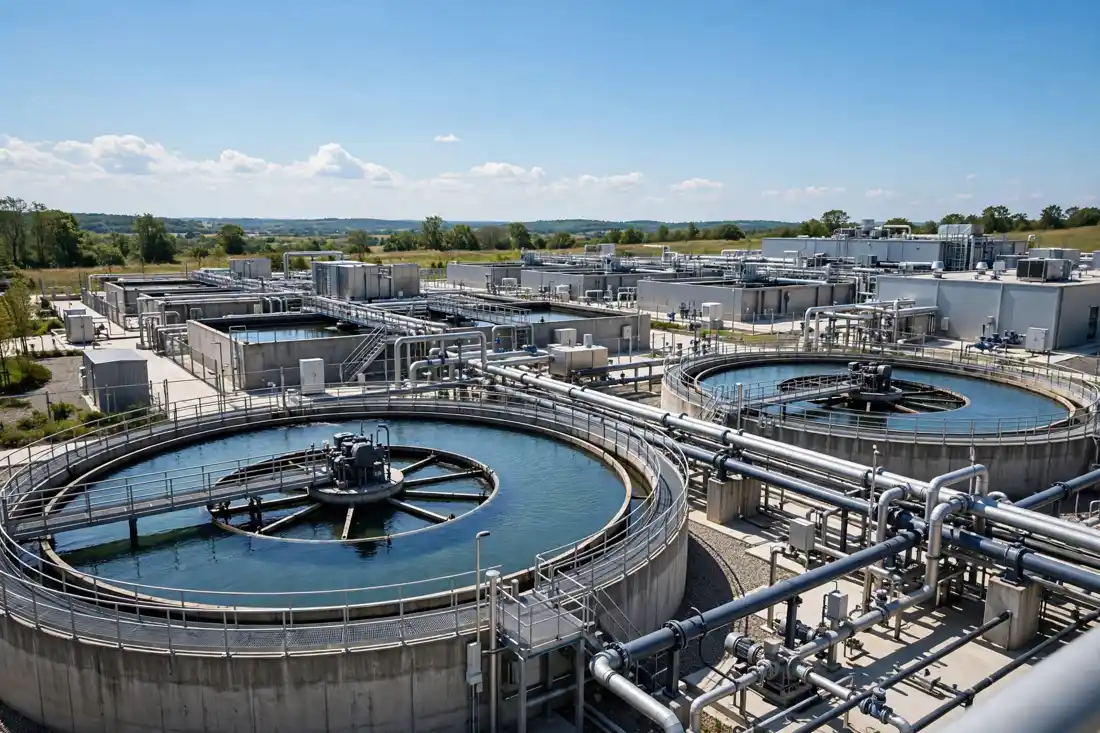
Wastewater treatment removes solids, organic matter, nutrients, and harmful microbes from used water so it can be safely discharged or reused. A typical plant moves water through several stages. Screening and grit removal take out large solids and sand. Primary treatment settles heavier particles. Secondary treatment uses bacteria to break down dissolved organic pollution. Tertiary treatment then polishes the water with filtration and disinfection, often using ultraviolet light or chlorine, so it meets reuse standards.
The cleaner the required output, the more stages a plant needs. Water destined for landscape irrigation must meet stricter quality limits than water discharged to a sewer network.
Municipal and Industrial Systems: STP and ETP Plants
Municipal sewage treatment plants, often called STPs, handle wastewater from homes, offices, hotels, and malls. In the UAE, large central STPs serve cities and suburbs, while packaged STPs serve individual buildings, labour camps, resorts, and remote sites. Packaged plants arrive prefabricated, need a smaller footprint, and can be expanded as occupancy grows, which suits developments without a central sewer connection.
Industrial effluent treatment plants, or ETPs, deal with a tougher mix. Factories discharge oils, chemicals, heavy metals, and high-strength organic loads that a standard STP is not designed to handle. ETPs therefore add steps such as oil separation, chemical precipitation, neutralisation, and biological treatment tuned to the specific waste stream. Food processing, pharmaceuticals, metal finishing, and other industrial facilities in the UAE commonly need an ETP before they can discharge to the sewer or reuse water on site.
Because industrial sites combine process water, cooling water, and wash water, the wider industrial machinery on site also affects what the ETP must handle.
Treatment Products: Chemicals, Membranes, Pumps, Filters and Dosing Systems
A treatment plant is only as reliable as its products. The main categories are:
- Treatment chemicals: coagulants, flocculants, pH adjusters, disinfectants, and antiscalants that help solids settle, control odour, and keep membranes clean.
- Membranes: ultrafiltration and reverse osmosis membranes that remove fine particles, bacteria, and dissolved salts for high-quality reuse.
- Pumps and blowers: submersible pumps, dosing pumps, and air blowers that move water and supply oxygen to biological tanks.
- Filters and screens: bar screens, drum filters, sand filters, and activated carbon filters that protect downstream equipment and polish the final water.
- Dosing systems: automated chemical dosing skids with metering pumps, tanks, and controllers that add exactly the right amount of chemical at the right time.
- Valves and seals: industrial valves that control flow and isolation, plus seals that keep pumps and rotating equipment leak-free.
Consumables drive running costs. Membranes foul, filters clog, and dosing chemicals are used every day, so buyers should compare not only the purchase price but also replacement intervals, energy use, and chemical consumption.
Seals and gaskets deserve the same attention, since worn hydraulic seals can cause leaks, downtime, and contamination in pump systems.
Regulations: Dubai Municipality and Environment Agency Abu Dhabi
Wastewater rules in the UAE are set at emirate level, so requirements vary by location. In Dubai, Dubai Municipality regulates sewer connections, discharge quality, and the licensing of treatment and tanker services. In Abu Dhabi, the Environment Agency Abu Dhabi sets environmental standards for discharge and reuse, while the local water and sewerage authority manages network connections.
Before buying a system, confirm which authority approves your project, what discharge or reuse limits apply, and what testing and reporting you must submit. Keep discharge permits, lab reports, and maintenance logs on file. Facilities that skip approvals risk fines, disconnection, or shutdown, and fixing a non-compliant plant after installation is far more expensive than designing it correctly from the start.
Reuse for Irrigation and Landscaping
Treated wastewater, often called treated sewage effluent or TSE, is widely used across the UAE for irrigating parks, roadside planting, golf courses, and landscaped areas in residential communities. Reuse reduces demand on desalinated water and groundwater, which is one reason regulators encourage it wherever quality allows. For a building owner, a plant that produces irrigation-grade water can cut landscaping water bills and support green spaces.
Costs
Costs depend on flow, incoming wastewater strength, required output quality, and site conditions. A small packaged STP for a villa compound costs far less than a custom ETP for a factory with complex effluent, and tertiary treatment adds to both capital and operating costs. Get quotes that separate equipment, civil works, installation, commissioning, and annual maintenance, and ask for lifetime running costs.
How to Choose a System and Supplier
Start with your wastewater: measure daily flow, peak flow, and the pollutants in your stream. Then match the system to your reuse or discharge goal, the space available, and your budget for operation and maintenance. Ask suppliers for reference projects of similar size, performance guarantees, and a clear maintenance plan. Prefer a supplier that installs and services the plant.
Installation quality matters as much as equipment quality. Poor civil works, undersized pipework, and skipped commissioning cause most early failures. Make sure mechanical engineering contractors handling installation and commissioning follow the manufacturer’s drawings, test every pump and dosing line, and train your operators.
Plan maintenance from day one. Keep spare filters, seals, and dosing parts on site, schedule servicing the way you would for heavy equipment repair, and log every service visit. A plant that is checked weekly and serviced on schedule will run for years with stable output.
If your site produces industrial effluent, check whether its processes involve electroplating chemicals or other hazardous inputs, because those streams need dedicated pre-treatment and careful handling before they reach any biological stage.