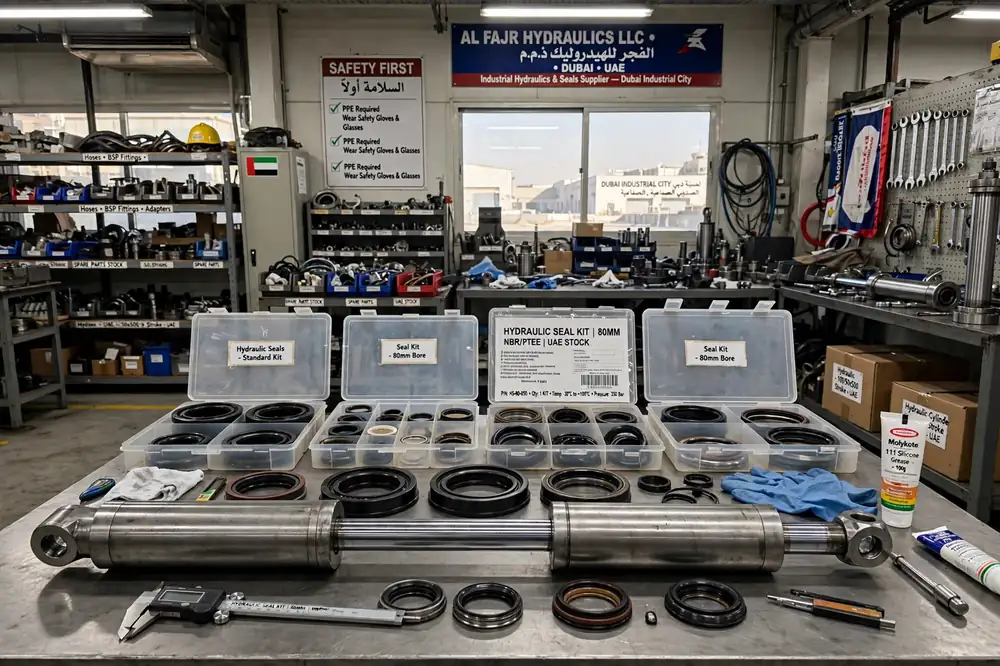
Hydraulic seals in UAE are vital components. They sit inside cylinders, pumps, motors and valves, holding pressurised fluid in and keeping dirt and moisture out. When a seal fails, machines lose power, leak oil and stop working, so choosing the right seal matters for every site, factory and workshop across the Emirates.
From excavators on Dubai construction sites to presses in Sharjah and equipment in Abu Dhabi, hydraulic seals work under heat, dust and pressure. This guide explains the main types, materials, costs and suppliers, so buyers can choose seals that last.
What Are Hydraulic Seals?
A hydraulic seal is a ring or shaped component that closes the gap between moving parts in a hydraulic system. It stops pressurised oil escaping past a rod or piston, keeps contaminants out, and holds pressure steady so force transfers smoothly. Without effective seals, a cylinder drifts and a machine wastes energy and oil.
Seals also protect rods and cylinder bores from scoring. A damaged rod or dirty fluid can destroy a new seal quickly, which is why fitting, cleanliness and correct sizing matter as much as the seal itself. Seals work alongside industrial valves to keep a hydraulic circuit sealed.
Types of Hydraulic Seals in UAE
Different jobs need different seals. The main types used are:
- Rod seals: Rod seals fit around the piston rod and stop fluid leaking out of the cylinder as the rod moves.
- Piston seals: Piston seals sit on the piston and seal the gap between piston and cylinder bore, holding pressure on each side.
- Wiper seals: Wiper seals, also called scrapers, wipe dust, sand and grit off the rod before it enters the cylinder.
- O-rings: O-rings are simple round seals used in static joints, and UAE workshops often start with standard O-ring sizes.
- Rotary seals: Rotary seals seal rotating shafts in pumps and motors, keeping fluid in while the shaft turns.
- Wear rings: Wear rings, or guide rings, centre the piston and rod, reduce metal contact and extend seal life.
Materials
Seal material decides how a seal handles heat, pressure, chemicals and wear. Common choices include:
- NBR: NBR, or nitrile rubber, is affordable and good for general oil-based fluids at moderate temperatures.
- Viton: Viton, or FKM, resists high heat and many chemicals, making it a strong choice for demanding oil and gas work.
- Polyurethane: Polyurethane offers excellent wear resistance and is widely used for rod and piston seals on construction equipment.
- PTFE: PTFE handles high temperatures and low friction, and suits rotary and high-speed applications.
For hot outdoor work, Viton or PTFE usually outlasts rubber. Always match the material to the fluid, because the wrong compound can swell, shrink or crack.
Where Hydraulic Seals Are Used in UAE
Hydraulic seals appear wherever fluid power moves heavy loads. The biggest users include:
- Construction equipment: Excavators, loaders, cranes, bulldozers and concrete pumps rely on cylinder seals for lifting and digging.
- Factories and workshops: Presses, woodworking machinery, machine tools and material handling equipment use seals in cylinders and pumps.
- Marine and ports: Cranes, winches, steering gear and deck machinery face salt water and need corrosion-resistant seals.
- Oil and gas: Drilling rigs, wellheads, pipelines and refinery equipment run at high pressure and temperature, so seals must be specified carefully.
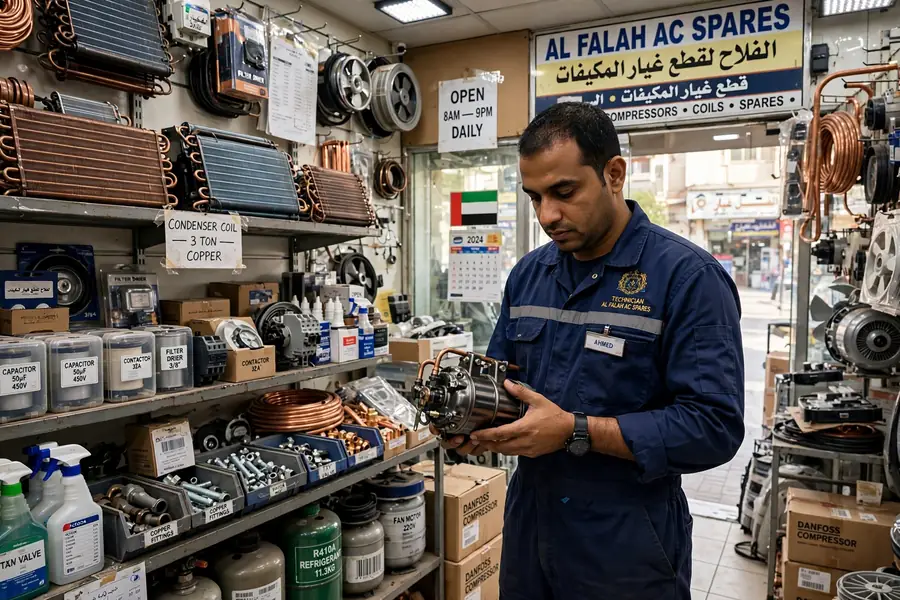
- Cooling systems: Air-conditioning compressors use seals that must handle refrigerants, and AC parts suppliers often stock these specialist seals.
Hydraulic cylinder seals are also a regular repair item in Dubai workshops.
How to Choose Hydraulic Seals in UAE
Measure twice and order once. Check these five points before buying:
- Size: Measure rod diameter, bore diameter and groove width with calipers. Even a small error causes leaks.
- Pressure: Match the seal rating to the system working pressure, not just the pump label.
- Temperature: Allow for UAE summer heat and fluid temperature under load, not only the ambient reading.
- Fluid: Confirm the hydraulic oil or fluid type, because seal compounds react differently to mineral, synthetic and water-based fluids.
- Compatibility: Check the rod finish, groove condition and mating parts. A scored rod will ruin a new seal.
If the original part number is available, give it to the supplier. It removes guesswork and speeds up matching.
Hydraulic Seals Suppliers in UAE
Hydraulic seals suppliers in UAE cluster around the main industrial zones. Dubai offers the widest range, with dealers in Al Quoz, Jebel Ali and Ras Al Khor stocking standard seals and kits. Abu Dhabi suppliers in Mussafah serve oil, gas and construction fleets, while Sharjah industrial areas are strong for workshop stock and fast sales.
When comparing hydraulic seals manufacturers and stockists, look for genuine material data, clear pressure and temperature ratings, stock depth and custom seal services. A good supplier will ask about your machine, fluid and working conditions first, and for larger installations mechanical engineering contractors can specify seals.
Hydraulic Seals Costs in UAE
Prices vary with size, material and whether the seal is standard. As a guide for the UAE market:
- Standard O-rings: About AED 1 to AED 10 each, depending on size and material.
- Rod and piston seals: About AED 15 to AED 120 each.
- Wiper seals: About AED 10 to AED 80 each.
- Cylinder seal kits: About AED 80 to AED 600, depending on cylinder size.
- Custom or low-volume seals: Higher, because tooling and cutting add cost.
Bulk packs and kits usually work out cheaper per seal.
Maintenance & Replacement
Seals wear gradually, then fail suddenly. Watch for external oil leaks, a cylinder that drifts under load, and cloudy or dirty oil.
Inspect rods for scratches, check oil level and cleanliness, and replace seals as a set when a cylinder is opened. Include seal checks in regular equipment maintenance, alongside routines such as generator maintenance. Store spares in a cool, dark place, away from sunlight and chemicals.
Frequently Asked Questions
How long do hydraulic seals last?
Typically two to five years, depending on heat, pressure, fluid cleanliness and duty.
How much do hydraulic seals cost in UAE?
Standard seals usually cost a few dirhams to about AED 120 each; cylinder kits run from about AED 80 to AED 600.
How do I measure a hydraulic seal?
Measure the rod or bore diameter, groove width and seal cross-section with calipers. Bring the old seal and machine model to the supplier if unsure.
Where can I buy hydraulic seals in UAE?
From specialist seal suppliers and industrial stockists in Dubai, Abu Dhabi and Sharjah, many of which stock standard sizes and cut custom seals to order.
For most buyers in the UAE, the right seal matches the machine, fluid and working conditions, not just the cheapest option. Measure carefully, buy from a supplier who asks the right questions, and keep spares.