Dietary supplements are part of everyday life for many people in the UAE. From busy professionals in Dubai to fitness lovers in Abu Dhabi, more residents use vitamins, protein powders, herbal capsules, and minerals to support their nutrition and general wellbeing. Pharmacies and online stores offer a wide choice of local and international brands.
With so much choice, it helps to understand what supplements are, which types are popular in the UAE, how they are regulated, and how to choose safe products. This guide covers where to buy, typical prices in dirhams, and when to speak to a doctor. It is general information only, not medical advice.
What Are Dietary Supplements?
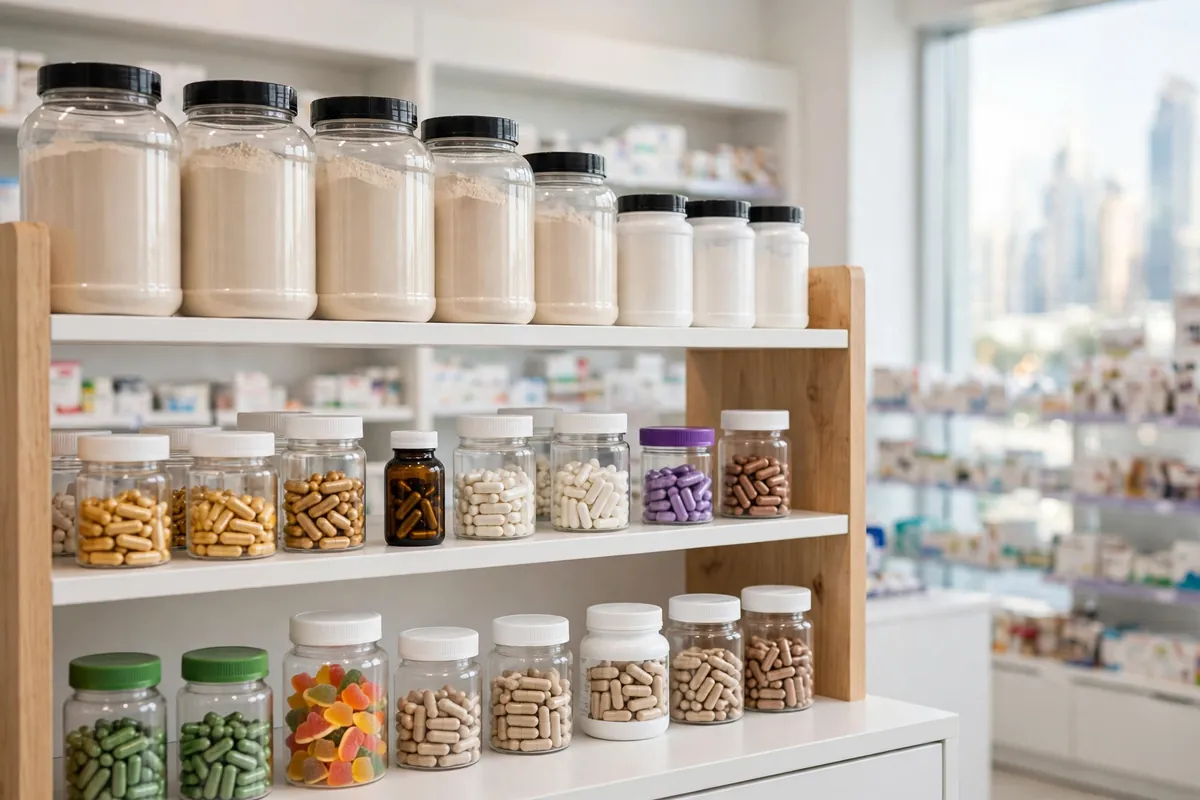
A dietary supplement is a product taken to add nutrients or other useful substances to your diet. Supplements come as tablets, capsules, gummies, powders, liquids, and bars. They are not meant to replace a balanced diet. Instead, they can help fill a gap — for example, vitamin D when you get little sun, or protein when you train hard.
In the UAE, supplements are widely used by people of all ages. Some take a daily multivitamin. Others focus on one nutrient, such as vitamin C, calcium, or omega-3. Fitness enthusiasts often use protein and creatine, while others prefer herbal products such as ashwagandha or turmeric. Always read the label and follow the suggested dose.
Popular Types of Dietary Supplements in the UAE
Vitamin D is one of the most popular supplements in the UAE. Despite the sunny weather, many residents spend most of the day indoors and may have low vitamin D levels. Vitamin D supports bone health and normal muscle function, and many doctors in the UAE test for it during routine check-ups.
Multivitamins are also common, because they combine several vitamins and minerals in one tablet. Vitamin C, B-complex, zinc, magnesium, and calcium are frequent choices, often taken for everyday nutritional support. Omega-3 fish oil is popular for people who eat little oily fish. Collagen powders and gummies have grown in popularity too, especially among people interested in skin, hair, and joint support.
For fitness, protein powders are the best-known option. Whey protein is widely available in the UAE, along with plant-based proteins made from pea, soy, or rice for people who avoid dairy. Creatine and pre-workout blends are also sold in gyms and supplement shops. If you train regularly, our guide to exercise in the UAE can help you build a balanced routine.
Herbal supplements are another large category. Turmeric, ginger, ashwagandha, ginseng, and green tea extract are sold in pharmacies and health stores across the Emirates. Natural does not always mean safe, and herbal ingredients can interact with medicines, so tell your doctor or pharmacist about everything you take.
MOHAP Registration and Rules for Supplements in the UAE
Dietary supplements sold in the UAE are regulated by the Ministry of Health and Prevention, known as MOHAP. Products must be registered and approved before they can be sold legally. This process checks ingredients, labelling, safety information, and manufacturing standards.
This matters because unregistered products may contain hidden ingredients, incorrect doses, or misleading claims. Avoid buying from unknown sellers on social media or websites without a clear business name, address, and return policy. If a product promises instant weight loss or a guaranteed cure, treat it with caution.
MOHAP rules also affect labelling. Labels must list ingredients, the recommended daily dose, warnings, and the manufacturer or distributor. Imported products should carry clear information in Arabic or English. For a wider look at healthcare in the country, see our guide to health care in the UAE.
Where to Buy Dietary Supplements in the UAE
Licensed pharmacies are the safest place to start. Large chains such as Aster Pharmacy, Life Pharmacy, and Boots have branches across Dubai, Abu Dhabi, Sharjah, and other emirates, with trained pharmacists who can answer questions. Many pharmacies also sell online, with same-day or next-day delivery in major cities.
Specialist health stores are another good option. Holland & Barrett has stores in the UAE and sells vitamins, herbal products, and sports nutrition. Health-food shops in malls often stock organic and plant-based ranges. Online, iHerb delivers many international brands to the UAE, and local stores such as Amazon.ae and Noon also list supplements.
If you prefer in-person advice, you can also read about home health care in the UAE and health centres in the UAE to see what local services offer, from check-ups to nutrition advice.
How Much Do Supplements Cost in the UAE?
Prices vary by brand, size, and ingredients. A basic vitamin D or vitamin C supplement often costs around AED 30 to AED 70. A standard multivitamin usually costs AED 50 to AED 120. Protein powders typically cost AED 150 to AED 400 for a tub. Omega-3, collagen, and herbal products usually fall between AED 60 and AED 200.
How to Choose Safe Supplements
Start by checking the label. Look for the full ingredient list, the amount per serving, the recommended dose, warnings, expiry date, and the manufacturer or distributor. Choose products with clear, complete labelling and avoid those with vague blends that do not show amounts. Third-party testing marks, such as USP, NSF, or Informed Sport, can add confidence, but they do not guarantee a product suits you.
Buy from licensed sellers, keep the receipt, and store supplements as directed — usually in a cool, dry place away from sunlight. Do not exceed the stated dose, and do not combine several products with the same ingredient without checking the total amount. For general medical guidance, our overview of medical services in the UAE explains where to find licensed clinics and hospitals.
Who Should Speak to a Doctor First?
Speak to a healthcare professional before starting a new supplement if you are pregnant, breastfeeding, living with a long-term condition, taking regular medicines, or planning surgery. Parents should also seek advice before giving supplements to children. If you feel unwell after starting a product, stop taking it and seek medical advice. This article is general information only and is not a substitute for professional advice.
Final Thoughts
Dietary supplements in the UAE offer plenty of choice, but the safest approach is simple: choose registered products, buy from licensed sellers, read the label, and ask a pharmacist or doctor when unsure. If you train often, our guide to gyms in DSO shows one popular training option in Dubai. With careful choices, supplements can fit neatly into a balanced, healthy routine.