Before a surface in the Emirates can be painted, coated or welded, it usually has to be blasted. Sandblasting — more accurately called abrasive blasting — is the workhorse of surface preparation across the UAE’s shipyards, fabrication shops, construction sites and workshops. It strips rust, old paint and mill scale back to clean metal, gives coatings something to grip, and can take a weathered villa facade or a corroded storage tank back to bare material in hours. This guide explains how the process works, the main methods and abrasives, where it is used locally, and how to choose a contractor who does it safely.
What Sandblasting Is and How It Works
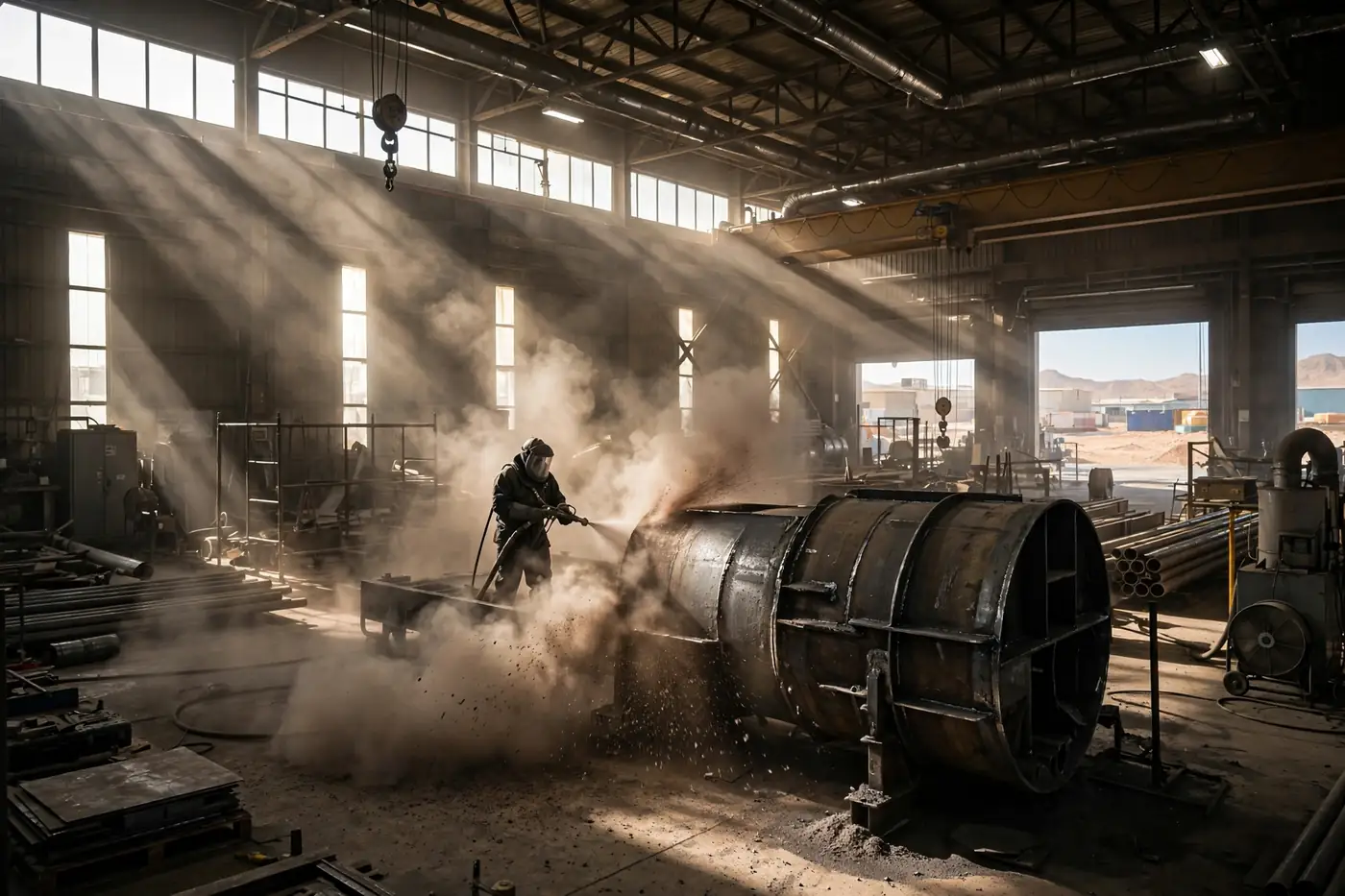
Abrasive blasting propels a stream of hard particles at a surface using compressed air. The impact cuts away rust, paint, scale, carbon deposits and general contamination, leaving a clean surface with a microscopic roughness — the “profile” — that primers and coatings anchor to. The operator controls the result through three variables: the abrasive material, the air pressure, and the distance and angle of the nozzle.
The work is usually graded by cleanliness standards, from a light brush-off blast to “white metal” for critical industrial coatings. Getting the grade right matters: over-blasting wastes time and material, while under-blasting is the most common hidden cause of coating failure a year later — the paint looks fine until it peels in sheets.
Common Methods and Abrasives
Despite the name, actual sand is rarely the abrasive of choice today, because free silica dust is a serious health hazard. Modern UAE contractors work with a range of media. Garnet is the all-rounder — hard, fast-cutting, low-dust and recyclable several times. Steel grit and shot suit heavy industrial work and enclosed blast rooms. Copper slag is a cheaper single-use option common on large outdoor steel jobs. Soda blasting uses bicarbonate for delicate work — engine parts, soft metals, graffiti removal — where the substrate must not be marked. Wet or vapour blasting mixes water into the stream to suppress dust, which makes it the practical choice in occupied areas and for many marine jobs.
Method follows material. A ship’s hull, a villa’s decorative stonework and a classic car’s floor pan all get “sandblasted”, but with different media, pressures and containment — which is why a proper contractor asks what the surface is before quoting.
Where Sandblasting Is Used in the UAE
The marine sector is the biggest user: shipyards in Dubai, Sharjah and Fujairah blast hulls, tanks and decks as the first step of every refit. Industry follows closely — oil and gas equipment, storage tanks, pipelines, structural steel and plant machinery all need periodic blasting before recoating, often as part of the shutdown maintenance handled by firms offering facility management in the UAE.
Construction uses blasting to clean formwork and steel, prepare concrete, and expose aggregate on decorative finishes; the larger construction companies in Business Bay and across the Emirates keep blasting subcontractors on call, often alongside heavy kit booked through crane rental in the UAE. In the building-care world, gentle wet blasting restores stone and concrete facades — a heavier-duty cousin of the facade cleaning in the UAE used for routine washing. Automotive and metal workshops round out the demand: chassis, wheels, gates, railings and fabricated parts are blasted before powder coating or painting by the painters in the UAE, and fabricators pair it with welding services in the UAE when steel needs both repair and refinishing.
Sandblasting vs Other Surface Preparation
Blasting competes with grinding, needle guns, chemical stripping and high-pressure water jetting. Grinding is fine for small welds and spots but slow and uneven across large areas. Chemical strippers soften paint without touching rust or scale, and bring disposal problems of their own. Ultra-high-pressure water removes coatings without abrasive cleanup but leaves no surface profile for repainting.
For most steel preparation, blasting wins on speed, consistency and the quality of the profile it leaves — a tank or hull section that takes a blasting crew a day can take grinders a week, with a worse finish. The trade-offs are noise, dust management and the need for containment, which is why method selection on occupied sites matters as much as the blasting itself.
Safety, Dust Control and Environmental Rules
Abrasive blasting is unforgiving work. Operators wear supplied-air blast helmets, heavy protective suits and hearing protection, because ricocheting media and compressor noise are constant. Silica-bearing dust must never be dry-breathed — the industry’s move away from sand and towards garnet and wet methods exists largely for this reason.
On site, containment is the other half of the job. Professional contractors sheet and screen the work area, collect spent abrasive, and dispose of contaminated waste — especially old paint, which may contain lead or marine anti-fouling toxins — through approved channels rather than general skips. In residential areas, expect working-hour limits and dust screens as standard practice; a contractor who proposes open dry blasting next to occupied villas with no containment is telling you how the rest of the job will go too.
How to Choose a Sandblasting Contractor
Ask first about media and method for your specific surface, and walk away from one-size-fits-all answers. Check that the company carries proper PPE and supplied-air equipment, ask how spent abrasive and stripped paint are disposed of, and request references from similar work — marine, industrial and restoration blasting are different trades wearing the same overalls.
Quotes should specify the cleanliness grade to be achieved, the abrasive, whether priming follows immediately (blasted steel flash-rusts quickly in coastal UAE humidity, so same-day priming is best practice), and what is excluded — access equipment, containment and waste removal are the classic extras. Priced per square metre for flat work or per item for components, a clear written scope protects both sides. Get that right, and sandblasting does exactly what it promises: a clean, keyed surface that makes every coat applied afterwards last as long as it should.