Electrical work is the one home service where cutting corners is genuinely dangerous. In the Emirates, where air conditioning, water heaters, pumps and heavy kitchen appliances load circuits hard all year, electricians in UAE handle everything from a tripping breaker and a dead socket to full distribution-board upgrades, villa rewiring and fault-finding in commercial units. This guide explains what professional electricians actually do, which jobs legally and practically need a qualified tradesperson, how pricing works, and how to choose an electrician whose work will still be safe years after they leave.
What Electricians in the UAE Do Day to Day
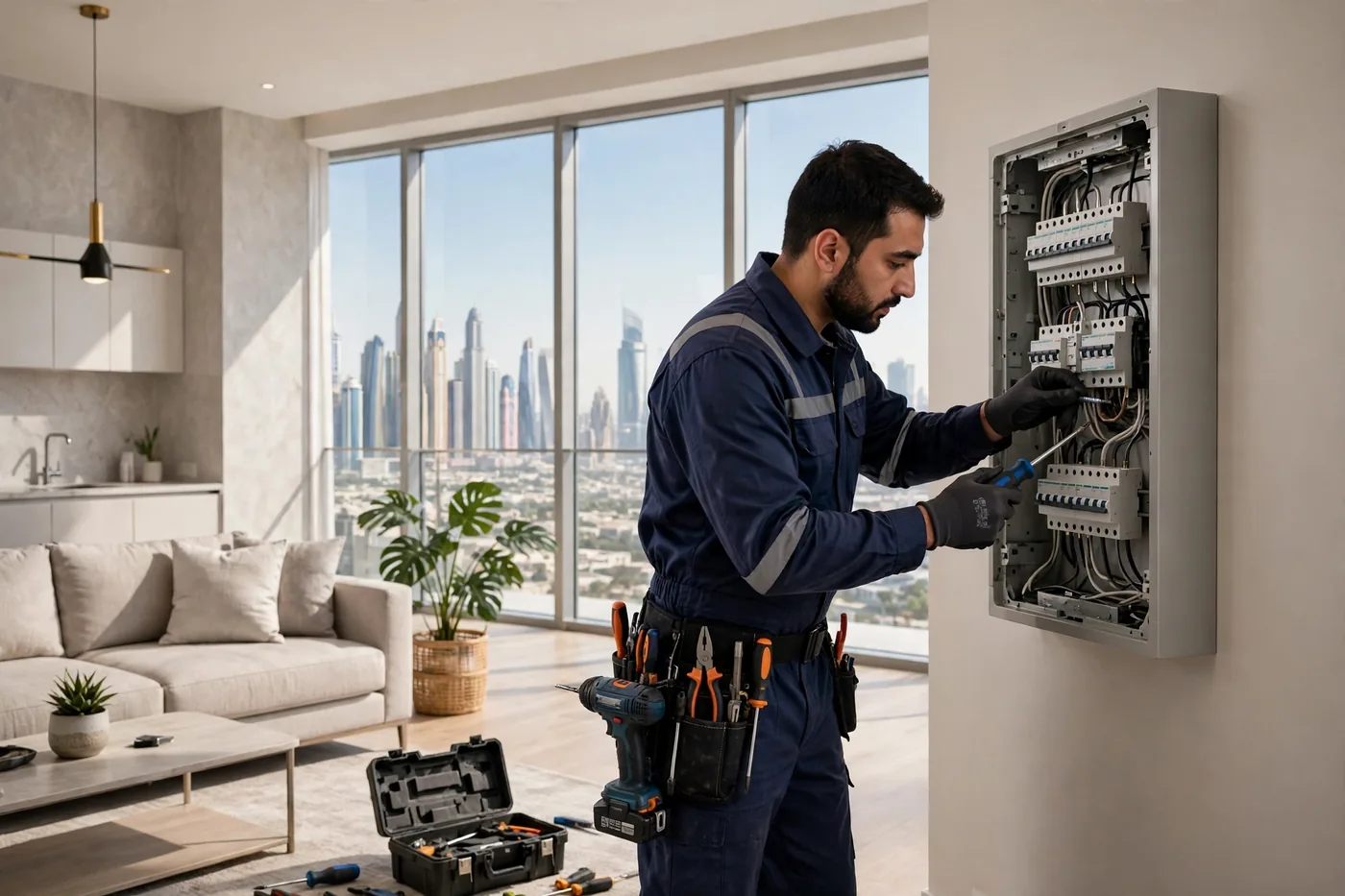
The most common callouts are faults: a breaker that keeps tripping, lights that flicker, sockets that stop working, or a burning smell near a switch. A good electrician traces the cause methodically rather than swapping parts at random, because a tripping breaker is often reporting a real overload or an earth fault elsewhere in the circuit. The second big category is installation work: new lighting, ceiling fans, chandeliers, outdoor and garden lighting, additional sockets, dedicated circuits for ovens, water heaters and EV chargers, and consumer-unit upgrades in older villas.
Electricians also carry out testing and inspection, which landlords and buyers increasingly request when a property changes hands. That work overlaps with major appliance installations, so it often happens alongside air conditioning in UAE replacements, where a new unit needs its isolator, cabling and breaker checked before it is connected. For smaller jobs that genuinely sit below electrical work, such as hanging shelves or assembling furniture, a general handyman service is the cheaper route, but anything inside the wiring itself belongs to an electrician.
Smart Homes and Modern Electrical Work
A growing share of residential electrical work in the Emirates is no longer about faults at all, but about upgrades: app-controlled lighting, smart switches and curtains, video doorbells, whole-home Wi-Fi access points and the extra sockets that home offices now demand. These jobs still belong with electricians, because smart devices connect to the same circuits as everything else, and neutral wires, load limits and board capacity decide whether an installation works reliably or flickers and drops offline. Villas adding rooftop solar readiness, battery storage or EV charging are planning work that starts at the distribution board. If you are modernising a home in stages, ask your electrician to map the current board and spare capacity first; a small amount of planning at that level prevents the piecemeal overloads that cause the fault callouts described above.
Jobs You Should Never DIY or Hand to Unqualified Labour
Distribution boards, meter connections, circuit design, bathroom electrics and any work inside walls or ceilings should only be done by qualified electricians working for a licensed company. The risks are not theoretical: undersized cables overheat inside conduits, poor connections arc, and missing earth protection turns a faulty appliance into a shock hazard. In rented property there is a liability angle too, because unauthorised electrical alterations can breach your tenancy and leave you responsible for damage.
Alarm, camera and access-control wiring sits in the same category. Installers who fit security services in UAE properties rely on will coordinate the low-voltage side with the electrician handling power, and modern CCTV cameras increasingly run power over the network cable itself, which still needs a planned, tidy installation rather than improvised wiring. If a quote for electrical work sounds implausibly cheap, it usually means the testing, certification or materials have quietly been left out.
How Electrical Pricing Works
Most companies price in one of three ways: a call-out fee plus an hourly rate for fault-finding, a fixed price per point for installation work such as sockets and lights, or a quoted project price for board changes and rewiring. Emergency and after-hours callouts carry a premium, which is fair, but the rate should be stated before the visit rather than negotiated at your door at midnight.
Materials are the variable to watch. Breakers, RCDs, cable and accessories range from reputable brands to anonymous imports, and the difference shows up in safety and lifespan. Ask for the specification in writing, and expect a proper invoice that separates labour and materials. Renovation projects should sequence trades properly: first-fix electrics happen before plaster and paint, and our guide to renovation services in the UAE explains how that ordering works across a full refurbishment. If a second trade is needed in the same visit window, coordinating with plumbing services in UAE providers avoids opening the same walls twice.
Signs Your Home Needs an Electrical Inspection
Older villas and long-let apartments give warning signs before they fail. Breakers that trip when the AC and water heater run together, warm switch plates, buzzing from the distribution board, scorch marks around sockets, and lights that dim when a heavy appliance starts all point to circuits under stress. Two-pin plugs forced into sockets with adapters, and extension leads running permanently under rugs, are everyday hazards worth fixing properly.
An inspection is also sensible when you buy or lease a property that has had informal alterations over the years. A qualified electrician can test circuits, check earthing and bonding, confirm the board matches the load the home now carries, and give you a written list of what needs attention now versus what can wait.
Choosing an Electrician You Can Trust
Choose a licensed company, not a phone number passed around a building chat. Ask about the electrician’s experience with your type of property, whether their work is tested and certified on completion, and whether they guarantee their labour. For tenanted buildings, check whether your landlord or building management needs to approve the contractor before work starts, because many towers keep an approved list.
Electricians in UAE homes carry real responsibility: their work hides inside walls and ceilings, and its quality only becomes obvious when something goes wrong. Pay for testing, keep the paperwork, and treat the cheapest untested quote as the expensive option it usually turns out to be.