From the guard at a residential tower gate to the control room of a logistics warehouse, security services in UAE form a regulated, professional industry that protects people, property and events across the Emirates. Businesses, communities and event organisers rely on licensed security companies for manned guarding, mobile patrols, access control and event security, while technology such as CCTV and alarm systems extends what a team can watch. This guide explains the main types of security services, how licensing works, what affects contract costs, and how to choose a provider that treats security as a system rather than a uniform at a door.
The Main Types of Security Services
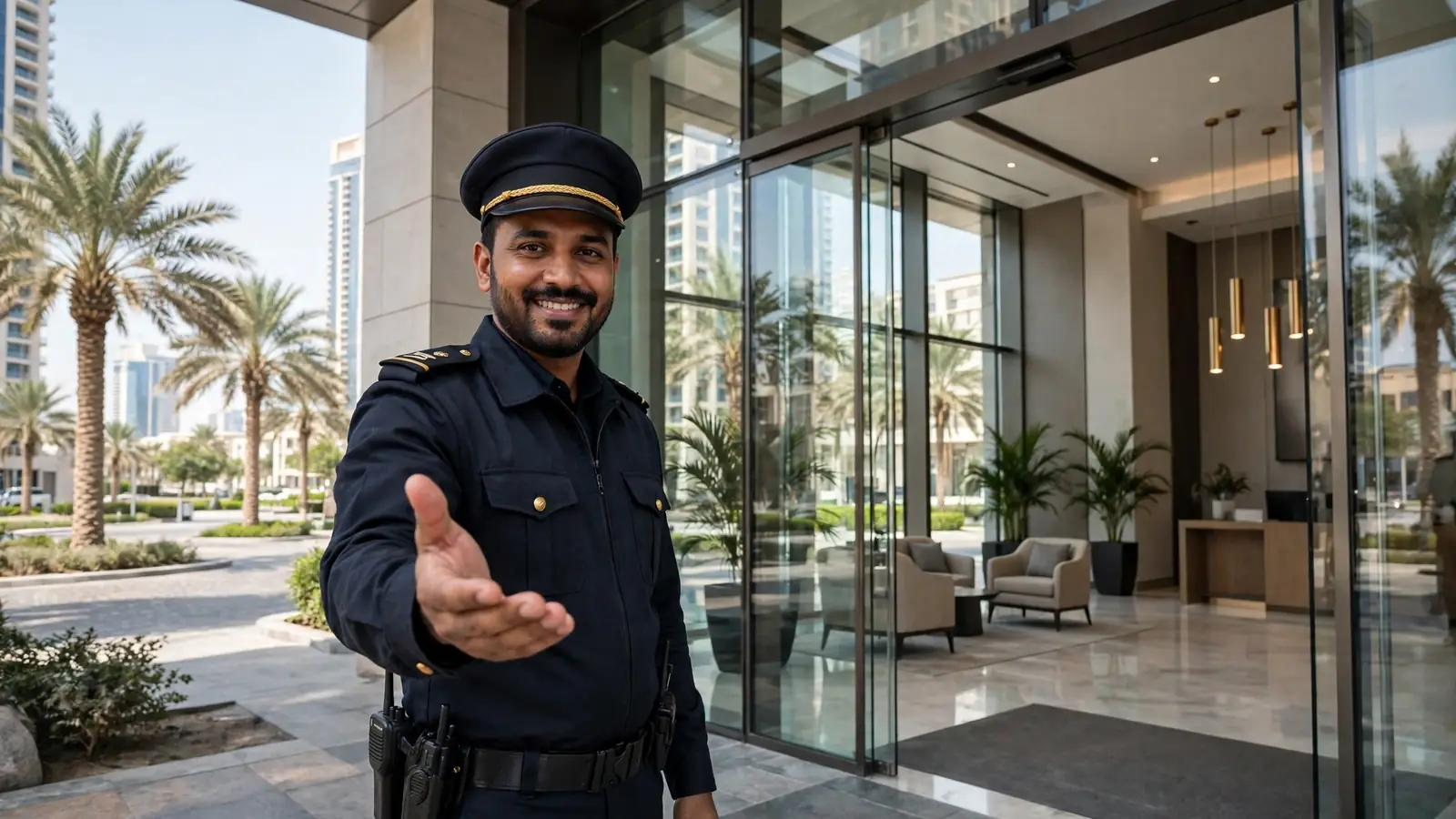
Manned guarding is the foundation: trained guards stationed at gates, receptions, retail floors, car parks and construction sites, controlling access, checking deliveries, patrolling perimeters and responding to incidents. Duties vary widely by site. A tower concierge guard is largely a customer-facing access role, while a warehouse guard manages goods movement and vehicle checks, and a site guard on a construction project protects materials and plant overnight.
Beyond static guarding, providers offer mobile patrols that visit multiple premises on a route, event security teams for concerts, exhibitions and private functions, and specialist roles such as lifeguards for pools and beaches and close-protection officers for individuals. Many contracts blend people with systems, and the established security companies in UAE typically design both together, placing guards where judgement is needed and cameras where constant watching is needed.
Licensing and Guard Training
Private security in the Emirates is regulated, and companies must be licensed by the relevant authority in their emirate — in Dubai, the Security Industry Regulatory Agency (SIRA) oversees licensing of companies, systems and individual guards. Licensed guards complete approved training covering legal powers and limits, incident reporting, first response, fire awareness and customer interaction, and they work in uniform with identification. This regulation is why buyers should never hire unlicensed casual guards directly for a business premises: if an incident occurs, an unlicensed arrangement leaves the client exposed legally and practically.
Technology has its own approvals. Camera systems in many commercial premises must meet SIRA specifications for coverage, recording quality and retention, which is why installation should be done by approved companies. Our guide to CCTV cameras in UAE explains camera types and installation considerations, and for offices and homes, computer security systems in UAE covers the digital side of protection that physical teams increasingly work alongside.
What a Security Contract Typically Covers
A guarding contract defines the number of guards, shift patterns (commonly 8 or 12 hours), posts and patrol routes, supervision visits, reporting procedures and replacement cover for sick days and leave, which matters more than clients expect: an uncovered post is a gap in protection, and professional companies guarantee relief staff. The contract should also cover uniforms and equipment, incident escalation contacts, and the format of daily occurrence reports, which are the client’s evidence that patrols and checks actually happened.
Events are usually contracted separately, with guard numbers calculated from expected attendance, venue layout and risk profile, and agreed with the venue and authorities where required. Large gatherings draw on the same planning discipline as the wider industry described in our guide to event management in UAE, where security, crowd flow and emergency exits are planned together rather than bolted on.
Costs and What Drives Them
Guarding is priced mainly per guard per month, and the figure reflects shift length, the number of shifts per day, guard experience and language skills, site location, and whether supervision, patrol vehicles or equipment are included. A single daytime guard for a small facility is a very different contract from a 24-hour, multi-post operation with a supervisor and control room. Cheaper quotes usually mean thinner supervision, weaker replacement cover or guards working unlawful hours, all of which surface at the worst possible time.
When comparing proposals, ask each company the same questions: Who supervises, and how often do they visit? How is absence covered? What training and licensing do the guards hold? What does the daily report look like? The answers separate professional providers from labour suppliers with a security signboard. For residential communities, security is often bundled into facilities arrangements alongside services such as lifeguard services in UAE for pool areas, giving one accountable contractor for site safety.
Technology has changed what a guarding team can cover. Modern contracts increasingly include electronic access control for doors and barriers, visitor management systems that log contractors and guests, and monitored camera networks watched from a control room that dispatches mobile patrols when an alarm triggers. For multi-site businesses, central monitoring means one standard of reporting across every location. When you design or upgrade such a system, the guarding and technology should be planned together, because cameras without a response procedure only record incidents, while guards without camera coverage cannot watch everything at once. The strongest arrangements layer the two deliberately, post by post and camera by camera.
Choosing and Managing a Provider
Start with licensing and references from sites similar to yours, then walk a prospective provider around your premises and listen to the quality of their questions. A good security manager identifies weak points you had not considered — a blind corner, a delivery entrance that bypasses the gate log, a fire exit propped open — and proposes layered fixes, from procedures and lighting to physical products such as the fire curtains in UAE used in some commercial buildings as part of the wider safety system.
Once appointed, manage the contract actively: review occurrence reports, hold short monthly meetings, test response to a staged incident occasionally, and update post instructions when your operations change. Security fails quietly when nobody checks it. Chosen well and managed properly, a licensed security provider becomes part of how your property or business runs every day — visible enough to deter, professional enough to reassure, and prepared for the rare day when their training genuinely matters.