Air conditioning in UAE is not a luxury; it is essential infrastructure for homes, offices, shops and warehouses for most of the year. Choosing the right system, installing it properly and maintaining it on schedule determines both comfort and electricity bills in a climate where summer temperatures routinely push cooling systems to their limits. This guide explains the main types of air conditioning used across the Emirates, how to size a system correctly, what installation involves, and the maintenance habits that keep units efficient and reliable for years.
The Main Types of Air Conditioning Systems
Split systems are the most common choice in UAE apartments and villas. An indoor unit mounted on the wall connects to an outdoor condenser, and multi-split setups allow several indoor units to run from fewer outdoor units. They are efficient, relatively quiet and allow room-by-room temperature control. Window units survive in older buildings and labour accommodation, being cheaper to install but noisier and less efficient. For larger villas, commercial spaces and buildings with many rooms, ducted and central systems hide the equipment above ceilings and deliver air through grilles, giving a cleaner look at a higher installation cost.
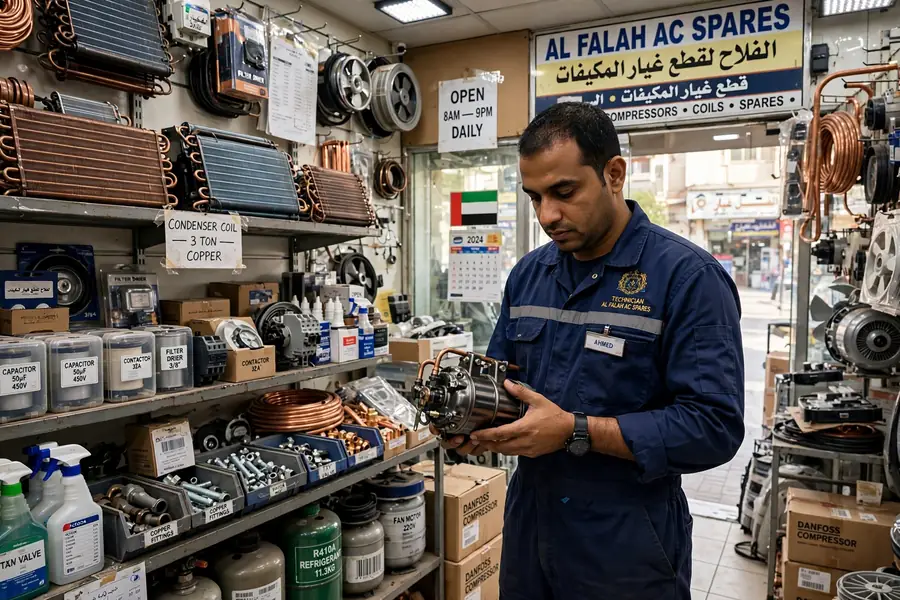
Newer inverter models adjust compressor speed continuously instead of switching on and off, which usually means steadier temperatures and lower running costs, an important consideration when a system runs ten hours a day. When comparing models, look at the energy efficiency rating displayed on the UAE energy label, the refrigerant type, and the warranty on the compressor, because these factors matter more over five summers than small differences in purchase price. If a unit fails, our guide to AC parts in UAE explains how genuine spares and consumables are sourced.
Sizing a System Correctly for UAE Heat
Undersized units run constantly and never quite cool the room; oversized units cool too quickly, cycle on and off, and leave humidity behind. Correct sizing depends on room area, ceiling height, window size and direction, insulation, and how many people use the space. South and west-facing rooms with large glass areas need noticeably more capacity than shaded internal rooms of the same size. A competent installer will calculate the load rather than guessing from room size alone, and will ask about how the space is actually used.
For whole properties, this is also the moment to think about the building as a system. Good shading, sealed windows and serviced ducts all reduce the load the AC must handle. Properties undergoing bigger upgrades often coordinate AC work with renovation services in UAE, so ceiling work, duct changes and unit installation happen in one planned sequence instead of three disruptive visits.
Installation: What a Proper Job Involves
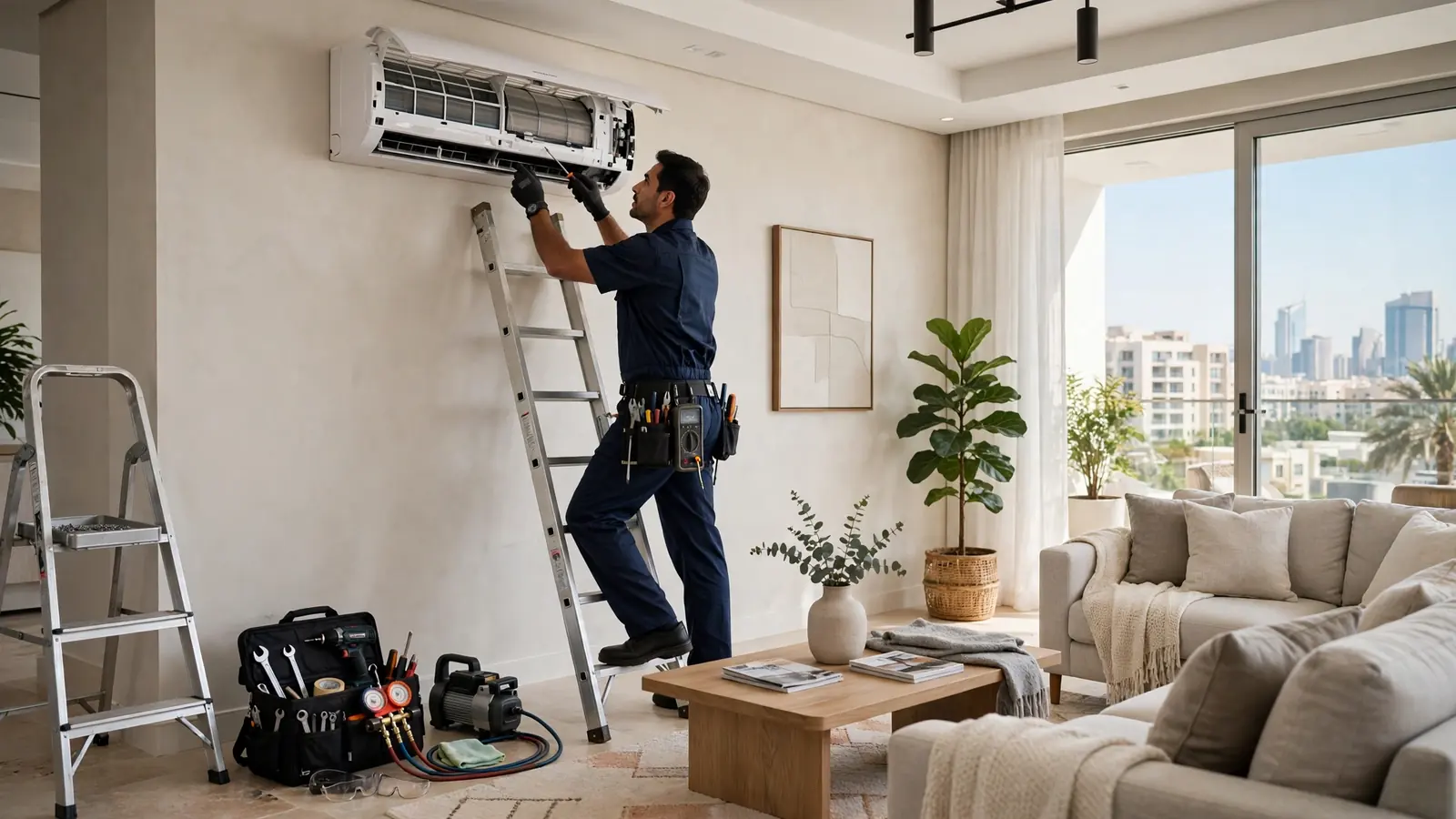
Correct installation matters as much as the brand on the box. Indoor units need level mounting, correct refrigerant pipe runs with proper insulation, and a condensate drain that actually falls to a drain point, because blocked or badly sloped drains are the most common cause of ceiling leaks in UAE homes. Outdoor units need airflow clearance and should not bake in trapped hot air on a small balcony, which forces the compressor to work harder and shortens its life.
Electrical work must be done properly, with the correct breaker and cable size for the unit’s load. This is not a place to cut corners; if your property’s wiring is old or you are adding several units, have it assessed by qualified electricians in UAE before installation day. After fitting, the installer should vacuum the refrigerant lines, check pressures, test cooling in every mode, and demonstrate the controls and filter cleaning to you before leaving.
Maintenance That Keeps Systems Efficient
The single most valuable habit is filter cleaning. In the Emirates’ dusty environment, filters clog quickly, airflow drops, cooling weakens and the unit consumes more power to do less work. Washable filters should be rinsed every few weeks in summer. Beyond filters, an annual professional service should include coil cleaning for indoor and outdoor units, drain flushing, refrigerant pressure checks, and inspection of electrical connections and fan motors.
Ducted systems need their ductwork inspected and cleaned periodically, because dust and mould inside ducts undo the benefits of a serviced unit. Small faults such as a dripping drain, a noisy fan or a thermostat that reads incorrectly are far cheaper to fix early, and a reliable handyman service in UAE can handle many of the minor repairs and access issues that come up between annual services. For villas and commercial sites with backup power, pairing AC maintenance planning with generator maintenance in UAE keeps cooling running even during outages.
Zoning and controls are the other lever on comfort and cost. Larger villas often split systems by floor or by wing so bedrooms can be cooled at night without running the whole property, and programmable thermostats prevent the common habit of leaving every unit at one low setting around the clock. During the milder winter weeks, many households can switch systems off entirely for stretches, which is also the ideal window for annual servicing, filter deep-cleaning and any replacement work, because installers are less rushed and you are not left without cooling while the work is done. Planning replacements for winter rather than waiting for a July breakdown is one of the simplest ways to save money and stress.
Running Costs and When to Replace a Unit
Electricity is the lifetime cost of air conditioning, dwarfing the purchase price over a decade. Inverter technology, correct sizing, clean filters and sensible thermostat settings — cooling to a comfortable rather than freezing temperature — make the biggest difference to bills. Smart thermostats and timers help households avoid cooling empty rooms during working hours, a common waste in UAE homes.
Replacement becomes the sensible option when a unit needs frequent repairs, uses an old refrigerant that is expensive to top up, cools unevenly despite servicing, or is more than a decade old and inefficient by modern standards. A new, correctly sized inverter system usually pays for itself in comfort and lower bills over its first years of heavy UAE use. Whether you are installing for the first time, upgrading a villa, or simply keeping an existing system honest with proper maintenance, treating air conditioning as a long-term system rather than an appliance is the key to staying cool without punishing bills.