Prefabricated modular buildings in UAE are changing how quickly homes, offices, and facilities get built. Instead of constructing everything on site, major building sections are manufactured in a factory, transported to the plot, and assembled into a finished structure. This guide explains what prefabricated modular buildings in UAE offer, the main types available, realistic costs, the approvals you will need, and how to choose a reliable supplier. Whether you are planning a villa, a site office, or a classroom block, modular construction can save months of work when it is planned properly.
What Are Prefabricated Modular Buildings?
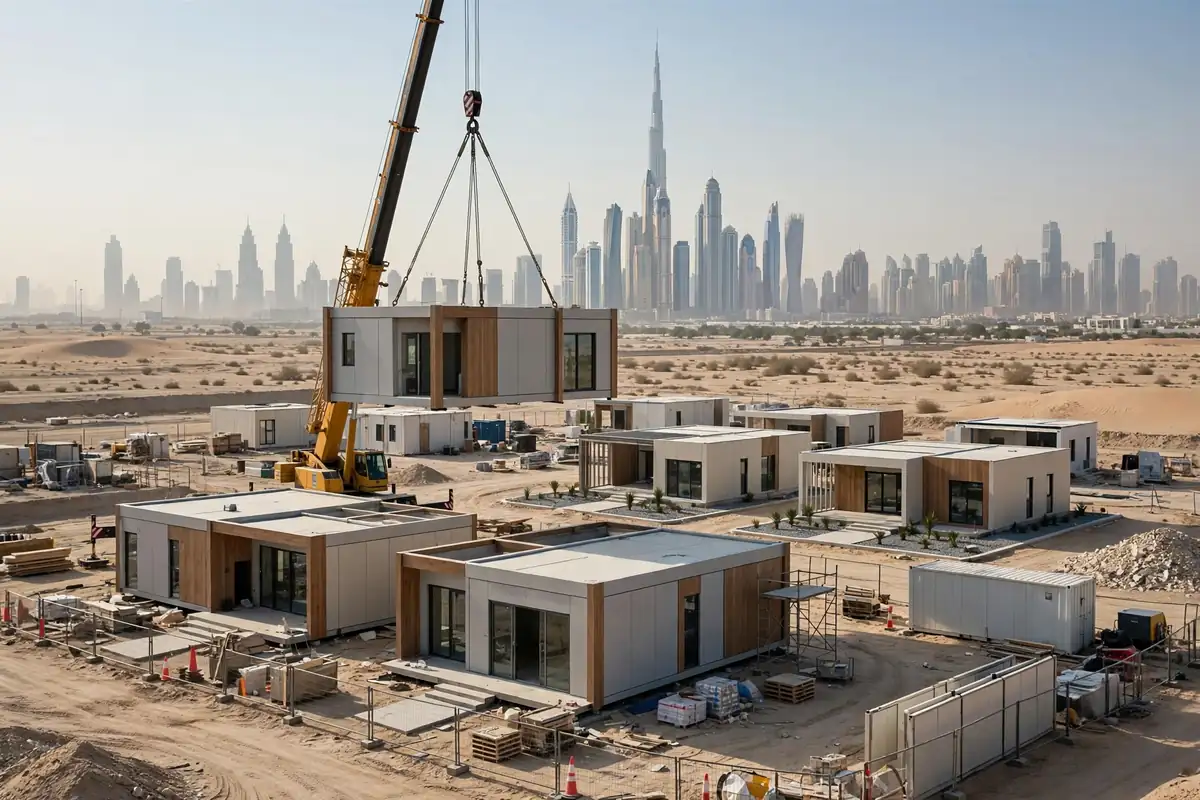
A prefabricated modular building is made from one or more factory-built modules. Each module is a three-dimensional section of the building, complete with walls, floors, ceilings, wiring, plumbing, and finishes. Modules are transported to site on trucks, lifted into place by crane, and joined together, after which connections, cladding, and final finishes are completed.
The result looks and performs like a conventional building, because it is a permanent structure built to the same codes. The difference is where most of the work happens: in a controlled factory, rather than exposed to weather, dust, and site delays. This controlled environment is one reason modular projects in the UAE often finish faster and with fewer defects than fully site-built projects.
Types of Prefabricated Modular Buildings in UAE
Suppliers across the Emirates offer modular solutions for almost every sector, from housing and education to healthcare and industry. The most common types are:
- Modular villas: factory-built villas and majlis extensions with kitchens, bathrooms, and full finishes, popular for private plots and staff housing.
- Modular offices: site offices, sales centres, and portable cabins that can be relocated, extended, or stacked as a business grows.
- Modular classrooms: schools and training centres that add capacity quickly, including libraries, labs, and prayer rooms.
- Labour accommodation: compliant worker housing with bedrooms, dining halls, kitchens, and recreation facilities, built to municipality standards.
- Clinics and healthcare units: medical centres, vaccination rooms, and isolation units with controlled finishes, ventilation, and hygiene systems.
Many villa owners also add automatic gates in UAE for secure site access. For a broader view of the local industry, see our guide to construction companies in Business Bay.
Benefits of Modular Construction
The main advantages are speed, cost control, and consistent quality.
- Faster completion: factory production and site preparation run in parallel, so projects can finish 30–50% sooner than traditional builds.
- Predictable costs: factory pricing, fixed specifications, and fewer weather delays mean fewer surprise variations.
- Quality control: modules are built indoors by specialist teams, inspected at each stage, and tested before delivery.
- Less disruption: most noisy, dusty work happens off site, which matters on occupied plots, school campuses, and busy commercial sites.
Costs of Prefabricated Modular Buildings in UAE
Costs vary widely with size, specification, and location, so treat any single price as a rough guide rather than a quote. As a broad guide, basic portable cabins and site offices cost less per square metre than fully finished villas or medical units, which need higher-grade insulation, joinery, and equipment. Always compare quotes on a like-for-like basis, including delivery, crane hire, foundations, connections, and finishing works.
Several factors drive the final price. Design complexity, the quality of finishes, insulation and air-conditioning specifications, the distance from the factory, site access, and the speed of delivery all matter. Add municipality fees, approvals, and utility connections to your budget from the start so the total cost is clear.
Interior finishing choices also affect the budget; our guide to interior design consultants in UAE explains typical service scopes and costs.
UAE Regulations and Approvals
Modular buildings in the UAE must meet the same building codes and approval requirements as conventional buildings. You will normally need municipality approval for the building, plus civil defence approval for fire safety, and approvals for electrical, plumbing, and drainage connections. Some plots also need approvals from the master developer or community management.
Ask your supplier which approvals they handle and which remain your responsibility. A good supplier provides drawings, structural calculations, material specifications, and test certificates that support your application. Confirm the approval timeline before signing, because permits can affect delivery and installation dates.
Site safety matters during installation, so plan for road safety products in UAE such as barriers and signage around the delivery area.
Choosing a Supplier in UAE
Choose a supplier with a local track record, not just a catalogue. Visit a completed project or a factory if you can, and speak to previous clients about delivery times, snagging, and after-sales support. Check that the company holds the right trade licences and insurance, and that its warranty terms are written into the contract.
Before you sign, confirm:
- Warranty: what is covered, for how long, and how claims are handled.
- Insulation and cooling: wall and roof insulation, glazing, and air-conditioning sized for UAE summers.
- Delivery and installation: who handles transport, crane hire, foundations, and connections.
- Materials and finishes: brands, thicknesses, and fire ratings, listed in the contract.
- After-sales service: response times for repairs and availability of spare parts.
Heavy equipment repair in UAE services keep cranes and transport equipment running during installation. For factory-side machinery, our guide to industrial machinery in UAE covers the equipment behind modular production.
Sustainability and Final Thoughts
Modular construction can also be more sustainable than traditional building. Factory production reduces material waste, allows offcuts to be recycled, and produces less dust and noise on site. Good insulation, efficient air conditioning, and solar-ready roofs can cut long-term running costs, which matters in the UAE climate.
If you are upgrading an existing building instead, renovation services in UAE offer a useful comparison before you decide.
Prefabricated modular buildings in UAE offer a practical route to faster, well-finished buildings across housing, offices, education, and healthcare. With the right supplier, clear approvals, and a contract that covers warranty, delivery, and finishes, modular construction is a reliable choice for many UAE projects.