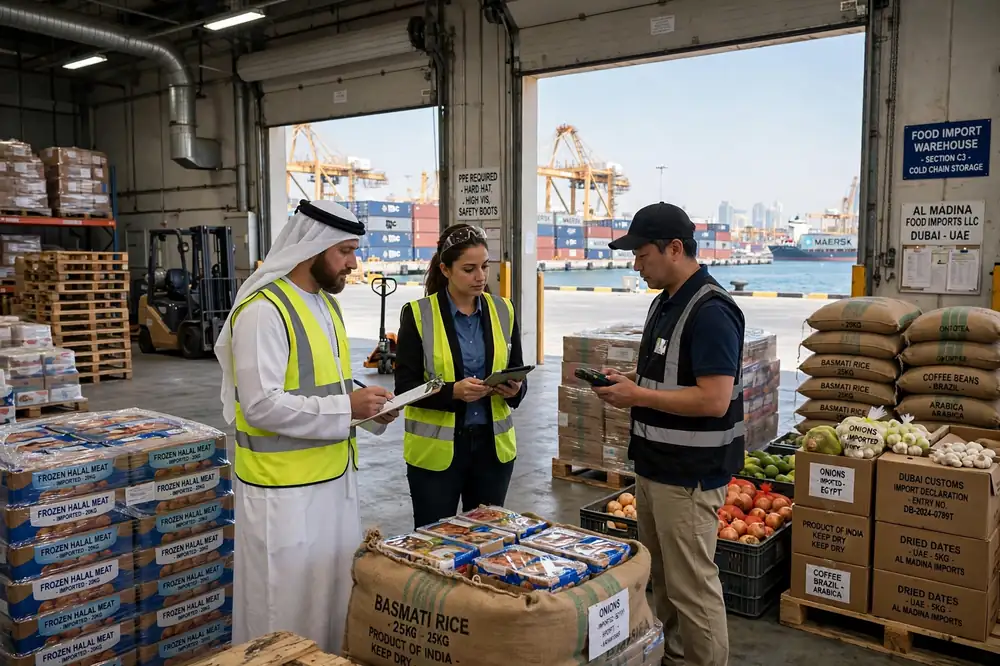
More than 80% of the food consumed in the UAE is imported. With limited farmland, a hot desert climate, and a fast-growing population of residents and visitors, the country depends on food importers in UAE to keep supermarket shelves stocked and restaurant kitchens running. Dubai, with Jebel Ali Port and world-class logistics, acts as the region’s main food trading hub.
Whether you run a supermarket, a restaurant, a hotel, or a food business, this guide explains what food import companies in UAE do, how to import food into UAE, the regulations you must follow, and how to choose the right partner.
What Do Food Importers Do?
Food importers in UAE source food products from producers and suppliers around the world and bring them into the country legally and safely. They handle the full journey from the farm or factory to the buyer’s warehouse. Their work typically covers four areas:
- Sourcing: finding reliable suppliers, negotiating prices, and checking product quality and certifications.
- Shipping: booking sea, air, or land freight and managing temperature-controlled transport. Many work with freight forwarding specialists to move goods efficiently.
- Customs: preparing documents, paying duties, and clearing shipments through UAE Customs.
- Distribution: storing goods in warehouses and delivering them to supermarkets, restaurants, hotels, and retailers. This final leg depends on dependable logistics partners.
How to Import Food into UAE
To import food into UAE, you need a valid trade licence and registration with the right authorities. The basic steps are:
- Get a trade licence: set up a company in the UAE with a food trading activity on its licence.
- Register with Dubai Municipality: food importers in Dubai must register the company and its products with the Food Safety Department.
- Register products: submit product details, ingredients, and labels for approval before the first shipment.
- Arrange shipping and insurance: choose the right transport mode and protect temperature-sensitive goods with cold chain transport. Reliable transport companies make this step far easier.
- Clear customs: present invoices, packing lists, health certificates, and the certificate of origin, then pay the 5% customs duty on most food items.
Food Import Regulations in UAE
The UAE has strict food safety rules, and importers must follow them closely. Key requirements include:
- Halal certification: meat and poultry products must be halal certified by an approved body.
- Labelling: labels must show the product name, ingredients, net weight, country of origin, and expiry date in Arabic, or Arabic and English.
- Expiry rules: products must arrive with enough shelf life remaining, and expiry dates must follow UAE formatting rules.
- Cold chain: chilled and frozen foods must stay at the correct temperature from origin to delivery.
- Banned items: some products, such as certain pork and alcohol items for general sale, face restrictions, so check the latest rules before ordering.
How to Choose a Food Importer in UAE
Choosing the right importer matters as much as choosing the right product. Look for these qualities:
- Experience: a track record importing the categories you need, with references from similar buyers.
- Product range: a broad catalogue saves you from dealing with many suppliers.
- Cold chain: proven refrigerated storage and delivery for chilled and frozen goods.
- Licences and compliance: valid trade licence, Dubai Municipality registration, and clean inspection history.
- Service and reviews: clear pricing, responsive communication, and positive reviews from restaurants, hotels, and retailers.
Ask for samples and a trial order before committing to a long-term contract. A good importer is transparent about origin, pricing, and delivery times.
Food Import Costs in UAE
Costs vary by product, origin, and volume, but these approximate ranges help with planning:
- Trade licence: around AED 10,000 to AED 25,000 per year, depending on the emirate and licence type.
- Shipping: sea freight for a container from major ports can range from AED 3,000 to AED 15,000; air freight is far higher per kilo.
- Customs duty: usually 5% of the CIF value on most food items, plus a small clearance fee.
- Storage and distribution: cold storage and local delivery add to the landed cost, so compare quotes before you commit.
Larger orders usually lower the per-unit cost, but they also increase storage needs and expiry risk.
Top Food Categories Imported
The UAE imports food across almost every category. The largest include:
- Fresh produce: fruits, vegetables, and herbs, flown in daily from many countries.
- Meat and poultry: halal-certified beef, lamb, chicken, and seafood for retail and food service.
- Dairy and eggs: milk, cheese, butter, yoghurt, and eggs, mostly under cold chain.
- Grains and staples: rice, wheat, flour, pulses, and cooking oils in bulk volumes.
- Packaged and speciality foods: snacks, sauces, spices, and international specialities, including popular Indian food products.
Speciality restaurants also depend on importers for authentic ingredients from their home countries.
Tips
- Check licences and registrations before placing an order.
- Verify cold chain handling for chilled and frozen goods.
- Plan stock around lead times and expiry dates to avoid waste.
- Build long-term relationships with a few reliable importers rather than chasing the lowest price each time.
- If you run a restaurant, remember that imported ingredients are only part of the setup; the right restaurant equipment matters too.
FAQs
How do I start importing food into the UAE?
Set up a company with a food trading licence, register with Dubai Municipality, register your products, then arrange shipping and customs clearance.
Do I need a licence to import food?
Yes. You need a valid UAE trade licence with food trading activity, plus product registration with the municipality.
How long does food import take?
Sea freight typically takes two to six weeks depending on origin, while air freight can take a few days. Customs clearance usually adds one to three working days.
What documents are required?
Common documents include the trade licence, invoice, packing list, certificate of origin, health certificate, halal certificate for meat, and product labels.
Food importers in UAE make it possible for businesses to offer fresh, diverse, and affordable food all year round. With the right licence, a compliant process, and a reliable partner, importing food into the UAE is a straightforward and rewarding business.