Distance education in UAE offers a flexible way for working professionals, parents, and school leavers to gain a qualification without attending a campus every day. With strong internet access, accredited providers, and well-designed online platforms, learners can study from Dubai, Abu Dhabi, Sharjah, or anywhere in the Emirates. This guide explains how distance education in UAE works, which courses are available, what it costs, and how to choose a programme employers will recognise.
Whether you want a short professional certificate, a diploma, or a full online degree, distance learning UAE options now cover business, IT, health, engineering, and education. The key is choosing an accredited provider, planning your weekly study time, and confirming that your qualification will be recognised for jobs or further study.
What Is Distance Education?
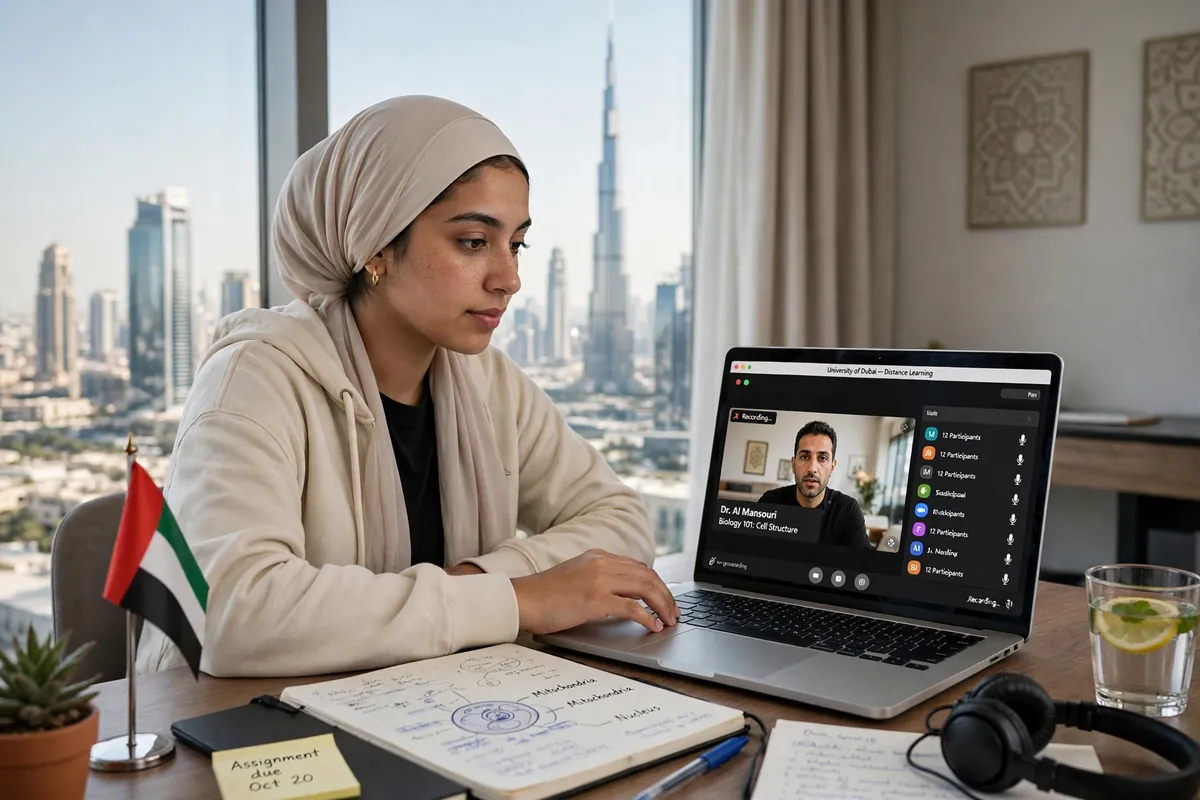
Distance education is learning delivered mainly online, rather than through daily classroom attendance. Students access lectures, readings, and assignments through a learning platform, while tutors provide guidance, feedback, and support. Many programmes combine recorded lessons with live online classes, so learners can study at their own pace and still ask questions in real time.
- Online programmes: fully online, with recorded lectures, digital resources, and online exams.
- Hybrid programmes: mostly online, with occasional workshops, practical sessions, or exams on campus.
- Self-paced courses: learners set their own schedule within a set completion period.
- Accredited programmes: recognised by the UAE Ministry of Education, KHDA in Dubai, or an approved international body.
Distance Education Courses in UAE
Distance education courses in UAE cover a wide range of subjects, from short skill-based certificates to full bachelor’s and master’s degrees. Popular choices include:
- Business: business administration, marketing, finance, human resources, and project management. These suit professionals who want promotion or a move into management, and connect well with online business opportunities in the UAE.
- IT and computing: data analytics, cybersecurity, software development, and cloud computing, with practical projects and labs.
- Engineering and technology: selected engineering management and technical diplomas that combine theory with workplace projects.
- Health and allied fields: healthcare management, public health, and nutrition, where theory is online and any practical work follows provider rules.
- Education and training: teaching, early childhood education, and training qualifications for teachers and trainers.
New graduates can compare jobs in Dubai for freshers to see which qualifications employers ask for.
Distance Education Universities in UAE
When comparing distance education universities in Dubai and across the UAE, look beyond the course name. Check who awards the degree, whether the provider is licensed, and how employers and other universities treat the qualification. A clear accreditation statement, published course details, and honest information about exams and support are strong positive signs.
In Dubai, KHDA oversees licensed higher education providers, while the Ministry of Education (MOE) plays a national role in recognition and equivalency. For on-campus context, see our guide to educational institutions in the UAE. Before enrolling, ask the provider for written confirmation of accreditation, the awarding body, and how your certificate will be verified. If you later need official recognition, you may also need document attestation in the UAE.
How to Choose Distance Education in UAE
Use these checks before you pay any fees:
- Accreditation: confirm MOE, KHDA, or recognised international accreditation, and get it in writing.
- Course fit: match the syllabus, level, and workload to your career goal and weekly availability.
- Fees and total cost: ask for the full cost, including exams, materials, and graduation, not just the first payment.
- Support: check tutor access, response times, library resources, and technical help.
- Recognition: confirm whether employers, professional bodies, and other universities accept the qualification.
Distance Education Fees in UAE
Distance education fees in UAE vary by provider, level, and subject. Use these approximate ranges as a guide and always confirm the current price with the provider:
- Short courses and certificates: about AED 1,000–5,000 per course.
- Diplomas: about AED 5,000–20,000 for a full programme.
- Bachelor’s degrees: about AED 20,000–60,000 in total, depending on provider and duration.
- Master’s degrees: about AED 25,000–80,000 in total for many online programmes.
Fees depend on accreditation, course length, study materials, exam charges, and support services. Ask about instalment plans, scholarships, employer sponsorship, and refund rules before you enrol.
How Distance Learning Works
Most distance learning UAE programmes follow a simple weekly pattern. You log in to a learning platform, watch lectures, read materials, and complete tasks by set deadlines. Tutors answer questions in forums or live sessions, and classmates discuss topics online.
- Learning platform: video lessons, readings, quizzes, and discussion forums in one place.
- Classes: recorded lessons plus live online sessions for questions and group work.
- Exams: online proctored exams, assignments, or on-campus exams, depending on the provider.
- Assignments: essays, projects, case studies, and practical tasks that count toward your grade.
Tips for Distance Learners
- Check accreditation first, before comparing prices or course titles.
- Plan a fixed weekly study schedule and protect it like a work meeting.
- Stay consistent with small daily study blocks rather than long irregular sessions.
- Verify degree recognition with your employer or the relevant authority if you need it for a job or visa step.
- If you are new to the Emirates, read our guide on where to live in Dubai as an expat before you arrange housing.
FAQs: Distance Education in UAE
Is distance education recognised in the UAE?
Yes, when the programme is properly accredited and the awarding body is recognised. Always check MOE or KHDA status and ask for written confirmation before enrolling.
How much does distance education cost in the UAE?
Short courses can cost about AED 1,000–5,000, diplomas about AED 5,000–20,000, and degrees from about AED 20,000 upward. Total fees depend on the provider, level, and subject.
How long does distance education take?
Certificates may take a few weeks or months, diplomas about one to two years, and bachelor’s degrees about three to four years. Many programmes allow flexible pacing within set limits.
Can I work while studying?
Yes. Most distance learners work full time. Flexible schedules and recorded lessons make it possible, and many learners combine study with work-from-home jobs in Dubai or other flexible roles.
Distance education in UAE can open new career options without pausing your work or family life. Choose an accredited provider, confirm recognition, and commit to a steady study routine. With the right programme, flexible learning can lead to real qualifications and lasting career growth.