If you live or work in the United Arab Emirates, fast and reliable internet is part of daily life. From video calls and online classes to streaming, gaming and running a business from home, almost everything depends on a stable connection. That is why Fibre Optics in UAE has become the standard for home and office internet across Dubai, Abu Dhabi, Sharjah and beyond. This guide explains what fibre optics is, how it works in the UAE, what packages cost, how installation works, and what to choose for your home or business.
What Is Fibre Optics?
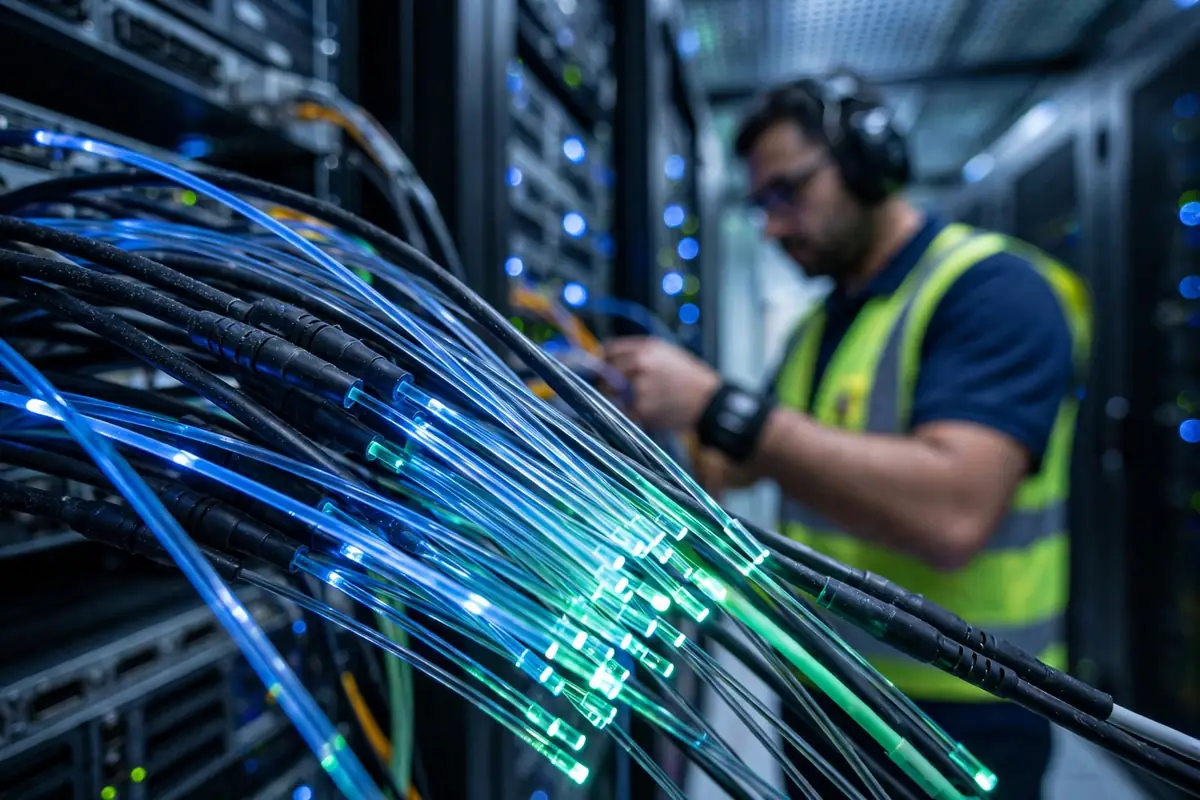
Fibre optics uses thin strands of glass or plastic, called optical fibres, to carry data as pulses of light. Because light travels extremely fast and loses very little strength over distance, fibre can move far more data than older copper cables. Each fibre is thinner than a human hair, yet a single cable containing many fibres can carry thousands of calls, video streams and downloads at the same time without slowing down.
In practical terms, that means quicker downloads, smoother calls and a connection that stays steady when several people are online at once. That consistency is why fibre has become the backbone of the modern telecommunications landscape in the UAE.
How Does Fibre Internet Work in the UAE?
When you order fibre internet in the UAE, your provider connects your building to its national fibre network. Light signals travel through underground fibre cables to a small terminal in your home or office, often called an ONT. The ONT converts those light signals into an electrical signal your router can use, and your router then shares the connection by Wi-Fi and Ethernet cable. Because most of the journey uses light, the connection stays fast and stable over long distances.
Most new buildings in Dubai and Abu Dhabi are already fibre-ready, and many older buildings have been upgraded. If you are moving to one of the best communities to live in Dubai, fibre is usually available on arrival, although you should still confirm coverage with your provider before you sign a tenancy contract.
Etisalat and du: Fibre Packages in the UAE
The UAE has two main consumer providers: Etisalat by e& and du. Both offer fibre packages for homes, usually bundled with TV and a landline. Entry-level packages typically start around 250 Mbps to 500 Mbps, enough for browsing, streaming in HD and working from home. Faster plans of 750 Mbps, 1 Gbps and above suit larger families, gamers, creators and anyone who uploads large files regularly.
When comparing packages, check upload speed, contract length, router, installation fees and TV channels. For people planning an online business in the UAE, a stable upload speed matters even more, because video calls, uploads and cloud tools depend on it.
Fibre vs 5G vs DSL
Fibre, 5G and DSL all connect you to the internet, but they work very differently:
- Fibre: Fastest and most stable, best for homes, offices and heavy use.
- 5G: Wireless and flexible, good speeds where coverage is strong, but speed can vary with signal, congestion and weather.
- DSL: Uses older copper phone lines, much slower and less reliable, now largely replaced by fibre in UAE cities.
For most homes and offices, fibre is the best primary connection. 5G is an excellent backup or a good option for temporary locations, while DSL is worth keeping only if fibre is not yet available in your building.
How Fibre Installation Works for Homes and Offices
Installation is usually straightforward. First, check coverage and choose a package. Second, book an appointment — most providers offer a slot within a few days. On the day, a technician installs or activates the ONT, connects your router, tests the speed and shows you how to connect your devices. The visit usually takes one to two hours if the fibre point is already in place.
If you are moving into apartments for rent in Abu Dhabi, ask where the fibre point is before the visit. Keep the ONT powered on, place the router in a central, open spot, and use Ethernet cable for a desktop PC or smart TV for the most stable speed.
How Much Does Fibre Internet Cost in the UAE?
Home fibre packages in the UAE commonly range from about AED 299 to AED 599 per month for popular speeds, with premium 1 Gbps and bundled TV plans costing more. Prices change often, so treat these figures as a guide and confirm the current offer before you sign. Ask about the total monthly bill, including VAT, router rental, installation fees and any charges if you end the contract early.
Business fibre costs more because it often includes higher speeds, a dedicated line, faster fault repair and a service-level agreement.
Fibre for Businesses: Dedicated Lines and Data Centres
For businesses, fibre is not just about speed. Dedicated fibre lines give a company its own guaranteed bandwidth, which keeps video meetings, cloud software, payments and customer service running smoothly during busy hours. That reliability also supports setting up an office with multiple teams, meeting rooms and smart devices sharing one network without bottlenecks.
Fibre also connects businesses to data centres and cloud platforms with low latency. It makes distance education and hybrid work practical, because large files, live classes and shared documents load without long delays.
The Future: 5G, Fibre Backbone and Smart Cities
Fibre and 5G work together, not against each other. 5G mobile masts need fibre in the ground to carry their traffic, so every new 5G site makes the fibre backbone more important. In the UAE, that backbone supports smart-city projects — connected traffic systems, smart buildings, digital government services and Internet of Things devices — as well as everyday life for people living in Dubai as an expat and long-term residents alike.
Conclusion
Fibre Optics in UAE is the simplest way to get fast, stable and future-ready internet at home or at work. Compare providers on total cost, contract terms and reliability — not headline speed alone — then book installation and enjoy a connection that keeps up with your household or business.