Epoxy flooring in UAE has become one of the most popular choices for warehouses, showrooms, garages, clinics, and modern homes. It turns a plain concrete slab into a smooth, hard-wearing, easy-to-clean surface that looks smart and stands up to heavy use. With the right system, it resists stains, chemicals, and tyre marks, and it can be finished in almost any colour. This guide explains the main types, realistic prices in AED, the installation process, and how to choose an installer, so you can plan a floor that suits the UAE climate and your budget.
What Is Epoxy Flooring?
Epoxy flooring is not paint. It is a two-part resin system — resin and hardener — that is mixed on site and applied over prepared concrete. Once cured, the two parts bond chemically to form a tough layer fixed to the slab. The result is a seamless surface with no grout lines or joints where dirt can collect. Because the coating is continuous, spills stay on the surface and can be wiped away, which is one reason it is used in food areas, clinics, and workshops.
Types of Epoxy Flooring
The right type depends on traffic, chemicals, slip risk, and the look you want. These are the five systems most often installed across the Emirates.
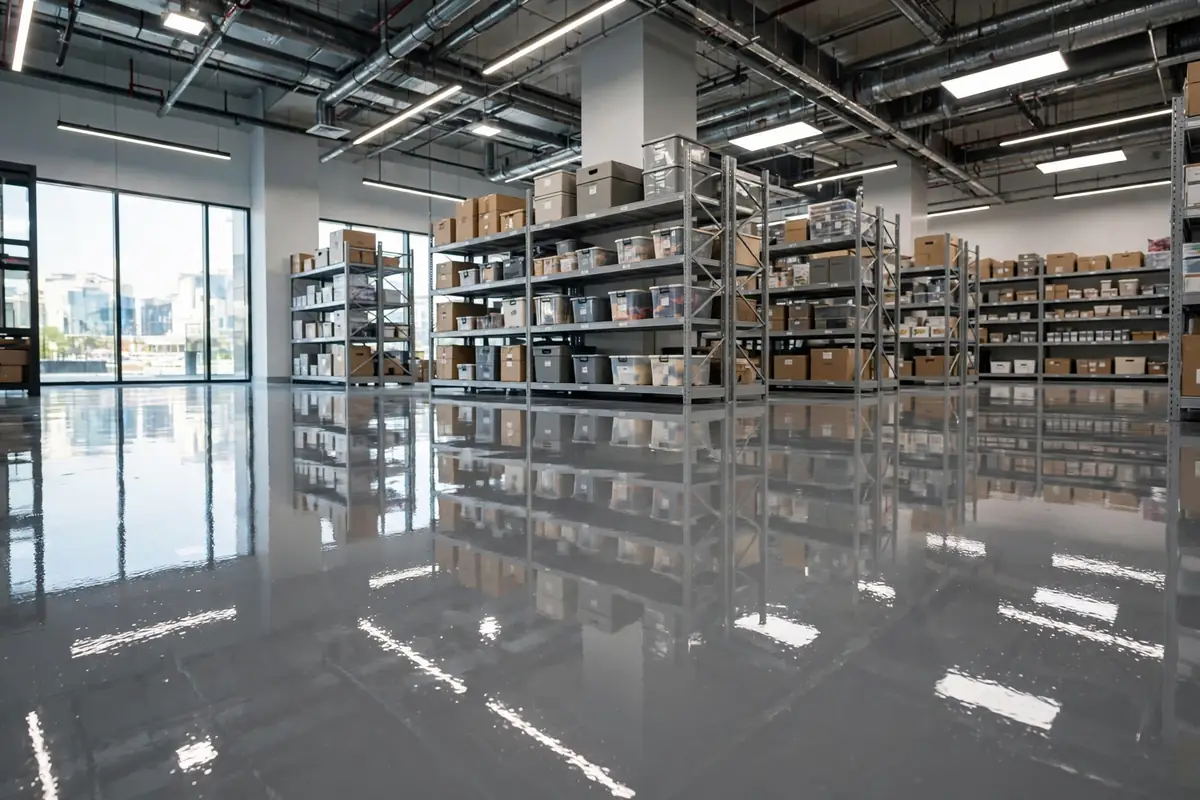
- Self-levelling epoxy gives a smooth, glossy finish in one even layer. It suits showrooms, offices, clinics, and living areas where appearance matters.
- Mortar epoxy is the toughest option. It mixes resin with graded sand to repair worn concrete and build a very hard surface for warehouses.
- Flake epoxy scatters coloured vinyl chips into the resin, then seals them. The textured finish hides dust, adds grip, and works well in garages and gyms.
- Metallic epoxy uses pigments that move as the resin cures, creating swirls and depth. It is decorative and popular for feature floors in villas, restaurants, and showrooms.
- Anti-static (ESD) epoxy controls static charge. It is specified for server rooms, electronics workshops, laboratories, and hospitals where a spark is a real risk.
Where Epoxy Flooring Is Used
Warehouses and logistics centres use epoxy because forklifts, pallets, and trolleys run over it all day without quickly wearing it out. Showrooms and retail spaces use it for a clean, bright floor that makes products stand out. In homes, garages and majlis areas benefit from a surface that shrugs off oil and tyre marks. Hospitals and clinics value the seamless, easy-to-sanitise finish. When flooring is planned as part of a wider project, the same planning goes into any building construction project. The base slab, drainage, and surrounding building materials all affect how the coating performs.
Pros and Cons in UAE Heat and Humidity
Pros: Epoxy is seamless, so there are no grout lines to trap dirt. It resists most workshop chemicals, oils, and cleaning products, and it is easy to mop. A light-coloured finish reflects light and can make a warehouse or garage feel brighter. Colours, markings, and zones can be built into the floor, which helps with safety lines and walkways.
Cons: Resin cures faster in summer heat, so installers must work in sections and avoid the hottest hours. Humidity and moisture in the slab can cause bubbling or peeling if the concrete is not tested and primed properly.
Epoxy Flooring Prices in UAE
Epoxy flooring prices in UAE typically fall in these ranges, including material and labour for a standard job:
- Thin coating: AED 18–30 per sqm.
- Self-levelling (2–3 mm): AED 45–90 per sqm.
- Mortar / heavy-duty: AED 90–160 per sqm.
- Flake or metallic (decorative): AED 70–150 per sqm.
- Anti-static / ESD: AED 120–200+ per sqm.
These are guide prices for 2026. The final quote depends on the condition of the concrete, the area size, and the system chosen. Small rooms cost more per sqm because preparation is spread over fewer metres. Crack repairs, levelling, moisture barriers, and line markings add to the total.
Installation Process and Downtime
Installation usually takes three to five days for a home garage and one to three weeks for a large warehouse, depending on size and drying time. The steps are:
- Inspection and testing — moisture, cracks, and old coatings are checked.
- Preparation — the concrete is diamond-ground or shot-blasted to open the surface, then vacuumed and repaired.
- Priming — a primer coat seals the slab and helps the epoxy bond.
- Base coats — the chosen system is applied, with flakes or pigments added where specified.
- Topcoat and curing — a wear-resistant topcoat is applied, then the floor cures. Light foot traffic is usually possible after 24 hours, with full use after five to seven days.
Move stock and vehicles out before work starts. Workshops that run machine tools need extra care: heavy equipment should stay off the floor until it is fully cured.
Maintenance and Cleaning
Day-to-day cleaning is simple. Sweep or dust-mop daily, and mop weekly with a pH-neutral cleaner. Avoid harsh acids, bleach, and steam cleaners, which can dull the topcoat. Wipe up oil, paint, and chemical spills promptly, and use felt pads under heavy furniture. A routine like the planning behind janitorial supplies for busy facilities keeps the floor looking new for longer.
How to Choose an Installer
Choose an installer on evidence, not price alone. Ask for photos of three recent jobs like yours, and check that the quote names the product brand, thickness, and number of coats. A reliable contractor tests moisture, explains the curing time, and gives a written warranty — typically two to five years for commercial work. For industrial sites, it helps if the installer understands industrial engineering requirements such as load ratings, drainage falls, and chemical resistance. If a quote is far cheaper than the rest, it usually means thinner coats or skipped preparation.
Specialist Spaces
Some spaces need more than a standard coating. Clinics, laboratories, and clean rooms need a seamless, chemical-resistant finish with coved edges that leave nowhere for dust to settle. Modular and prefabricated buildings can also use epoxy, but the floor must be checked for movement and joints before coating.
Final Thoughts
Done well, epoxy flooring in UAE gives you a tough, clean, good-looking floor that handles heat, traffic, and daily spills. Compare systems, confirm the preparation, and choose an installer with proof of past work — then the floor should serve you well for years.