Industrial engineering in UAE is one of the fastest-growing engineering fields in the country. As the UAE expands manufacturing, logistics, construction and technology, companies need professionals who can design better systems, cut waste and improve productivity. Industrial engineers do exactly that, combining engineering knowledge with management, data and problem-solving skills.
Whether you are a student choosing a degree, a graduate looking for your first role, or an experienced engineer planning a move to Dubai or Abu Dhabi, this guide explains what industrial engineering in UAE involves, the careers and courses available, and the salaries you can expect.
What Is Industrial Engineering?
Industrial engineering focuses on how work gets done. Instead of designing a single product or machine, industrial engineers design and improve the systems around them: production lines, supply chains, warehouses, service operations and quality processes. Their goal is to make every process faster, safer, cheaper and more reliable.
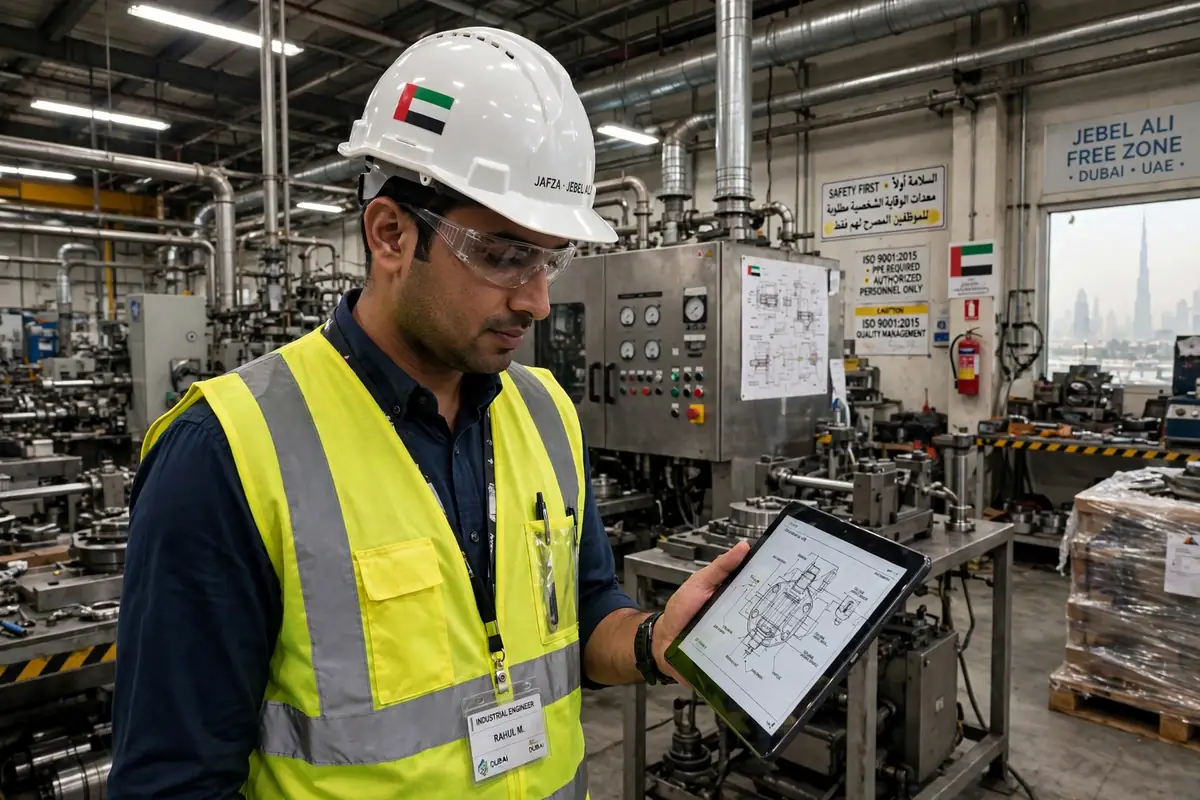
Typical work includes studying workflows, removing bottlenecks, planning factory or warehouse layouts, analysing data and introducing methods such as Lean and Six Sigma. In the UAE, this work is especially valuable because many businesses are scaling quickly and need efficient systems to stay competitive.
Industrial Engineering Careers in UAE
Industrial engineering careers in UAE span manufacturing, logistics, construction, aviation, healthcare and government services. Common roles include industrial engineer, process engineer, production engineer, quality engineer, operations analyst, supply chain analyst and continuous improvement engineer. Employers range from large industrial groups and free-zone manufacturers to logistics providers, airlines, hospitals and consultancies.
Demand is strongest in Dubai and Abu Dhabi, where industrial zones, ports, airports and mega-projects create steady hiring. Sharjah and Ras Al Khaimah also offer opportunities in factories and industrial parks. If you are exploring the wider market, our guide to job vacancies in Dubai is a useful starting point.
Industrial Engineering Courses in UAE
Industrial engineering courses in Dubai and across the UAE include bachelor degrees in industrial engineering, mechanical and systems engineering programmes with industrial options, diplomas in operations and production management, and postgraduate degrees in engineering management. Several universities in Dubai, Abu Dhabi and Sharjah offer these programmes, with flexible options for working professionals.
Short professional certifications can add real value, especially Lean Six Sigma Green Belt or Black Belt, supply chain and logistics certifications, quality management courses and data analytics training. When comparing institutions, check accreditation, industry links and internship support. You can also read our overview of educational institutions in the UAE to compare study options.
Industrial Engineering Companies in UAE
Industrial engineering companies in UAE include manufacturers in food processing, building materials and packaging; logistics and transport operators running warehouses, ports and distribution networks; and construction firms managing infrastructure projects. Many industrial engineers also work for engineering consultancies, government entities and multinational firms with regional headquarters in Dubai or Abu Dhabi.
When choosing an employer, look for structured training, clear promotion paths, exposure to improvement projects, modern systems and a strong safety culture. Companies with Lean or Six Sigma programmes and digital tools offer the best learning ground for early-career engineers. Our guides to transport companies in the UAE and construction companies in Business Bay show the types of employers hiring.
Industrial Engineer Salary in UAE
Industrial engineer salary in UAE varies by experience, industry and employer. As an approximate guide, junior industrial engineers typically earn AED 6,000 to 10,000 per month. Mid-level engineers with three to six years of experience usually earn AED 10,000 to 18,000 per month. Senior engineers, managers and continuous improvement leads can earn AED 18,000 to 30,000 or more per month.
Pay is usually higher in oil and gas, aviation, large logistics operations and multinational firms. Certifications, data skills and a track record of measurable savings can push you into higher bands. Benefits often include housing or transport allowances, annual flights and health insurance, so compare the full package, not just the basic salary.
Skills Needed
Successful industrial engineers combine technical and soft skills. Process design and mapping help you visualise how work flows. Lean and Six Sigma methods help you remove waste and reduce defects. Data analysis, Excel and simulation tools help you test ideas before changing a live operation. Knowledge of quality standards and workplace safety keeps improvements practical.
Communication matters just as much. You will need to explain changes to operators, supervisors and senior managers, and to train teams in new ways of working. Project management, teamwork and a habit of measuring results separate strong industrial engineers from average ones.
How to Start a Career
Start with a recognised degree in industrial engineering or a related engineering field. During your studies, take internships or part-time roles in factories, warehouses or logistics operations to see real processes up close. Add a Lean Six Sigma certification and build skills in Excel, data analysis and process mapping.
Then apply through company career pages, LinkedIn and recruitment consultants in the UAE. Tailor your CV to each role by highlighting improvement projects and measurable results. If you are relocating, check the UAE work visa requirements early so your documents are ready when an offer arrives.
Tips
- Learn Lean and Six Sigma early — they are the core toolkit of the profession.
- Build hands-on experience through internships, site visits and improvement projects.
- Network with engineers, join professional groups and attend industry events in Dubai and Abu Dhabi.
- Stay updated on automation, AI and digital manufacturing trends.
FAQs
What is the salary of an industrial engineer in UAE?
Junior engineers typically earn AED 6,000 to 10,000 per month, mid-level engineers AED 10,000 to 18,000, and senior engineers AED 18,000 to 30,000 or more.
Which courses are best for industrial engineering in UAE?
A bachelor degree in industrial engineering is the standard route. Lean Six Sigma, supply chain, quality management and data analytics certifications add strong value.
Is industrial engineering in demand in UAE?
Yes. Manufacturing growth, logistics expansion, construction projects and the UAE’s focus on efficiency and digital transformation keep demand steady across Dubai, Abu Dhabi and Sharjah.
How can I become an industrial engineer in UAE?
Complete an engineering degree, gain internship experience, earn Lean Six Sigma or similar certification, then apply to manufacturers, logistics firms, construction companies and consultancies.
Industrial engineering in UAE offers a practical, well-paid career at the centre of the country’s growth. With the right degree, certifications and experience, you can build a strong future in manufacturing, logistics or construction. Start by choosing a course, gaining experience and applying to employers who value improvement.