A good tailor is one of the quiet advantages of living in the Emirates. Off-the-rack clothing rarely fits perfectly, formal wear is part of everyday business life, and traditional garments are made to measure almost by definition. Tailors in UAE range from single-machine shops in older districts to polished bespoke studios in Dubai and Abu Dhabi, and they handle everything from a same-day trouser alteration to a fully hand-finished wedding suit. This guide explains what tailors actually do, how pricing and fittings work, and how to choose one whose work you can trust with good fabric.
What Tailors in the Emirates Actually Do
The work falls into three broad groups. Bespoke and made-to-measure work starts from your measurements and produces a garment built for one person: suits, shirts, kanduras, dresses and abayas. Alterations adjust ready-made clothing — hemming trousers, taking in jackets, resizing dresses bought abroad. Repairs and restyling cover everything from replacing linings and zips to updating a favourite garment whose cut has dated.
Many shops combine all three, and the same tailoring culture supports the wider garment trade described in our guide to clothing manufacturers in UAE. For everyday wardrobes, tailors also copy well-loved pieces: bring a shirt or dress that fits perfectly and a good tailor can reproduce it in new fabric, a common request covered in our overview of apparel in UAE.
Bespoke, Made-to-Measure and Alterations Explained
The terms are often used loosely, so it helps to know the difference. Bespoke means a pattern is drafted from scratch for your body and posture, with multiple fittings and the most handwork — the slowest and most expensive route. Made-to-measure starts from a standard pattern adjusted to your measurements, which covers most “custom” suits sold in the Emirates and balances fit, price and speed well.
Alterations are the everyday end of the trade and the best way to test a new tailor. Start with something simple, such as hemming or tapering, before trusting a shop with a full commission. For printed and promotional garments rather than fitted clothing, businesses use a different route entirely, covered in our guide to t-shirt manufacturers in UAE.
Traditional Dress and Formal Wear
Traditional garments are the backbone of many tailoring businesses. The kandura or dishdasha is almost always made to measure, with preferences for collar style, cuffs, tarboush tassel length and fabric weight that vary by family and emirate. Women’s tailoring covers dresses and jalabiyas, and our guide to the abaya in UAE explains the styles and fabrics that tailors work with daily.
Formal wear is the other pillar: business suits, wedding outfits and evening dresses. Women’s occasion wear in particular often blends bought and made elements, a pattern reflected in our overview of women’s clothing in UAE. If you are planning outfits around a celebration, coordinate early with the vendors in our guide to wedding services in UAE, because tailoring deadlines drive the whole schedule.
How Tailoring Pricing Works
Prices split into fabric and making charges. Many customers buy fabric separately — the textile shops of Satwa, Bur Dubai and Sharjah’s souqs are famous for it — and pay the tailor a making charge, while bespoke studios usually quote one figure that includes cloth from their own selections. Making charges rise with handwork: hand-sewn buttonholes, full canvas construction and complex dresses all take hours that a simple hem does not.
Alterations are normally priced per task, and small jobs are cheap enough that rescuing a good garment almost always beats replacing it. Accessories follow the same logic; a well-fitted outfit deserves decent leather, and our guide to leather goods in UAE covers belts, shoes and bags that finish a tailored look. Always confirm whether the quote includes fabric, lining, buttons and any second fitting adjustments before work starts.
Fabric choice deserves its own conversation. Natural fibres breathe better in Gulf heat — lightweight wool, linen and cotton for suits and shirts — while blends resist creasing for travel. A good tailor steers you honestly: some fabrics look rich on the roll but drape badly or cannot take the stitching a design needs. If you are supplying your own cloth, confirm the required length before buying, because patterns with checks or stripes consume more fabric for matching, and running short mid-job is a frustration neither side can fix.
Turnaround Times and Fittings
Simple alterations often take one to three days, and many shops offer express service for a single urgent item. A made-to-measure suit typically needs two to three weeks with one or two fittings in between; fully bespoke work takes longer. Wedding and Eid periods are the peak seasons, and good tailors’ books fill up weeks ahead — the single most common tailoring mistake in the Emirates is arriving with fine fabric and an impossible deadline.
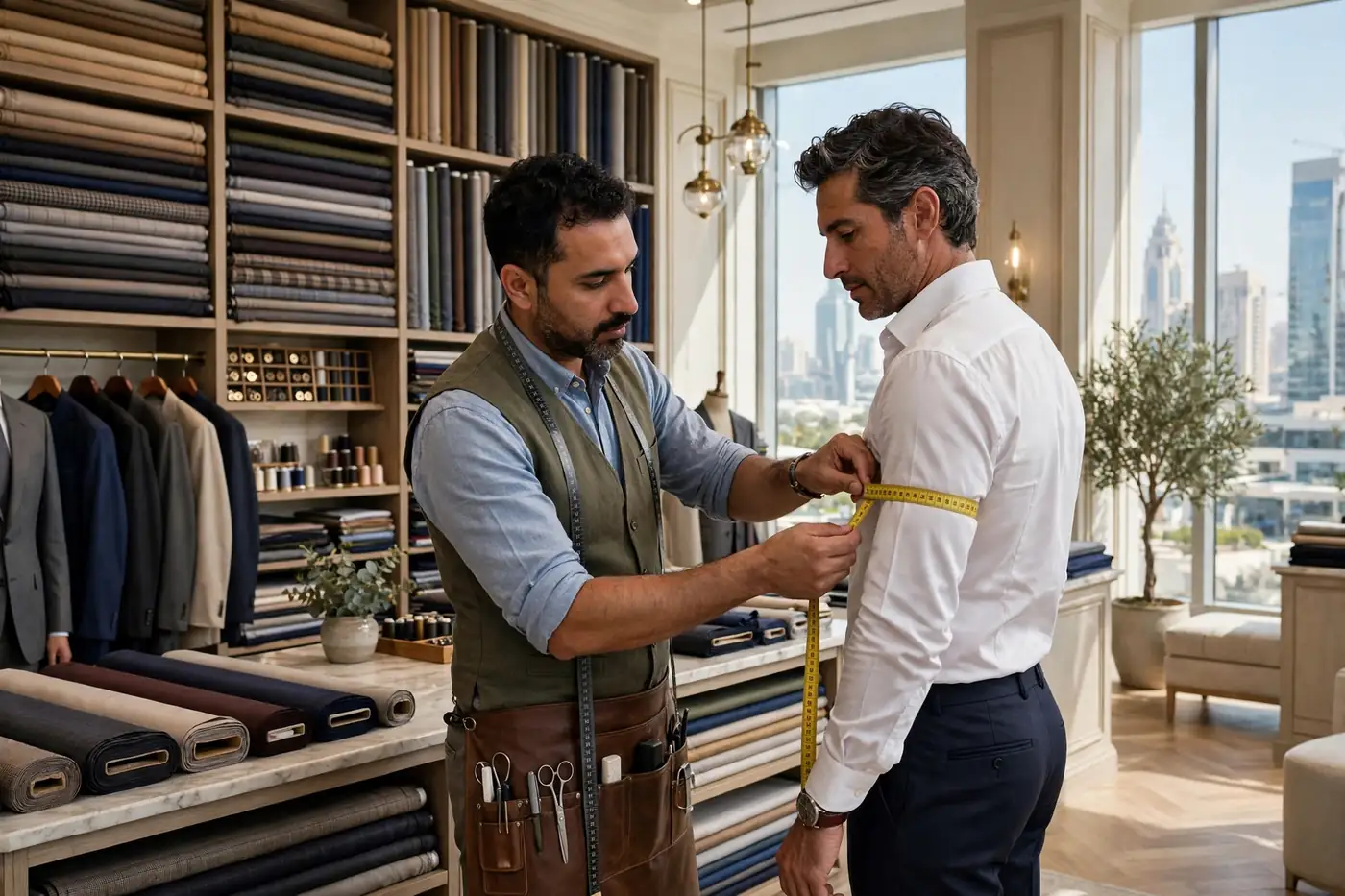
Fittings matter more than speed. The first fitting checks balance and length while the garment can still change; the final fitting confirms the details. Wear the shoes and underlayers you plan to pair with the garment, stand naturally rather than posing, and say honestly what feels wrong — a tailor can only fix what you mention. Keep the shop’s number saved once you find a good one.
Keep records of what works. Once a suit or kandura fits perfectly, ask the tailor to keep your pattern and measurements on file — most established shops do this as routine. Reorders then need a single visit or even a phone call, fabrics can be approved from swatches sent by message, and small weight changes are absorbed at a quick fitting. Families often end up with one tailor serving three generations, which tells you how much of this trade runs on accumulated trust rather than advertising.
Choosing a Tailor You Can Trust
Judge a tailor by finished garments, not promises. Ask to see recent work, check seams and buttonholes up close, and notice whether the shop asks detailed questions about how you wear your clothes. Clear pricing, written receipts with collection dates, and honest advice about what a fabric can and cannot do are all signs of a serious business.
Start small, build the relationship, and give feedback after the first job. A tailor who knows your measurements, posture and preferences becomes faster and more accurate with every order, which is why long-term residents guard the name of a good tailor the way they guard a good mechanic. Ten minutes of care when choosing saves a wardrobe of regret later.