Fiberglass in UAE has become one of the most practical materials for construction, water storage, marine work, and industrial projects across the Emirates. From water tanks on villa roofs in Dubai to grating on walkways in Abu Dhabi and cooling towers at industrial sites in Sharjah, glass-reinforced plastic quietly supports daily life. Buyers choose it because it resists corrosion, stays light for its strength, and holds up in heat, humidity, and salty coastal air. This guide explains what fiberglass is, which products are most common in the UAE, where it is used, what it costs, and how to choose a reliable supplier.
What Is Fiberglass?
Fiberglass, also called glass-reinforced plastic or GRP, is a composite made by embedding fine glass fibres in a resin matrix, usually polyester, vinyl ester, or epoxy. The fibres provide tensile strength, while the resin binds them together, protects them from moisture and chemicals, and gives the finished part its shape. The result is a material that is strong for its weight, does not rust, and can be moulded into tanks, pipes, panels, and complex curved shapes. Manufacturers can adjust the fibre layout, resin type, wall thickness, and surface finish to suit each job. For example, a water tank needs a food-safe inner lining, while a chemical tank needs a resin that resists acids and solvents. A grating panel needs slip resistance, while a facade panel needs colour stability under strong sunlight. This flexibility is one reason fiberglass appears in so many UAE projects.
Common Fiberglass Products in the UAE
Suppliers in the UAE stock standard products and also fabricate custom sizes. The most widely used items include:
- Water tanks: GRP water tanks store potable and non-potable water for villas, apartments, schools, and labour camps. Sectional panel tanks suit roofs and tight plant rooms.
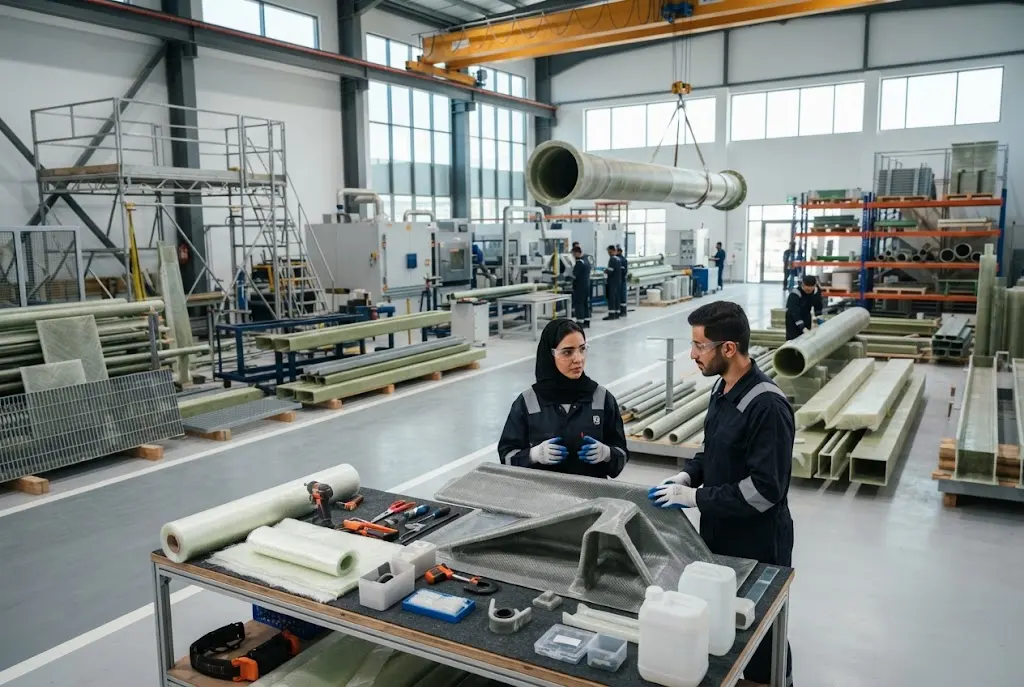
- Pipes and fittings: Fiberglass pipes carry water, sewage, chemicals, and cooling water. They resist scale, corrosion, and many aggressive fluids.
- Grating and walkways: Moulded and pultruded grating gives safe, slip-resistant platforms, stair treads, trench covers, and offshore walkways.
- Pools and spa shells: One-piece and panel pools, fountains, and water features use smooth gel-coat finishes that are easy to clean.
- Roofing and cladding: Fiberglass sheets, domes, skylights, and facade panels add daylight, insulation, and colour without heavy steel frames. Compare options with roofing sheets for your building type.
- Planters and street furniture: Planters, benches, bins, and decorative screens withstand sun, irrigation water, and public use.
- Ducts and covers: Fiberglass ducts, cable trays, and manhole covers handle moisture, chemicals, and traffic loads without rusting.
- Cooling towers and enclosures: Towers, scrubbers, and equipment housings benefit from corrosion resistance in humid, coastal industrial environments.
Where Fiberglass Is Used
The same material serves very different sectors across the Emirates. Typical applications include:
- Construction: Many construction companies in Business Bay and across Dubai specify fiberglass tanks, cladding, grating, and roofing for villas, towers, and fit-outs where weight, corrosion, or speed matters.
- Water storage and treatment: Tanks, manholes, and treatment vessels hold potable water, greywater, and chemicals. Pair them with good waterproofing to protect roofs and plant rooms.
- Marine and coastal: Boat parts, jetties, pontoons, and harbour fittings resist saltwater corrosion far better than untreated steel.
- Infrastructure: Drainage channels, cable covers, and utility enclosures serve roads, airports, and industrial zones. Fiberglass drainage systems suit harsh ground conditions and heavy loads.
- Industrial: Chemical tanks, scrubbers, ducts, and machine guards protect equipment and workers in factories, workshops, and processing plants. Matching valves and fittings must suit the same chemicals and pressures.
Why Fiberglass Suits the UAE Climate
Heat, humidity, dust, and salt put building materials under unusual stress. Fiberglass copes well for several reasons. It does not rust like steel or rot like untreated timber, so maintenance is lower over time. Its low weight reduces transport costs and makes installation faster, especially on roofs and upper floors. The material is a poor conductor of heat and electricity, which helps insulation and safety. It can be finished in light, UV-stable colours that reflect heat and resist fading. With the right resin and gel coat, it resists many chemicals, cleaning agents, and saline water.
How to Choose a Supplier or Manufacturer in the UAE
Price alone is a poor guide. Compare suppliers on manufacturing quality, local experience, and after-sales support. Ask these questions before you order:
- Experience and references: Ask for similar completed projects in the UAE, site photos, and client references. Visit a factory or showroom when the order is large.
- Standards and materials: Confirm the resin, fibre, food-contact approval for potable tanks, and fire or load ratings where they apply.
- Custom fabrication: Check whether the supplier can cut, join, and mould custom sizes, colours, and fittings, including aluminium frames or supports where needed.
- Warranty and delivery: Get the warranty, delivery time, installation scope, and spare-parts availability in writing before you pay a deposit.
- Installation and support: Ask who installs the product, how joints and seals are tested, and what maintenance the supplier recommends.
Cost Factors
Fiberglass prices vary widely because no two jobs are identical. Size, wall thickness, resin type, and finish are the main drivers. A small standard tank costs far less per litre than a custom chemical vessel with special linings and fittings. Mould costs can matter for one-off shapes, while repeat orders spread that cost. Delivery to remote sites, cranes for large tanks, and on-site installation also add to the total. For roofing, compare fiberglass sheets with roofing sheets on installed cost, lifespan, and maintenance, not on material price alone. Always request an itemised quotation that separates supply, delivery, installation, and warranty so you can compare suppliers fairly.
Maintenance and Safety
Fiberglass needs little maintenance, but a simple routine extends its life. Inspect tanks, pipes, and grating at least once a year for cracks, blistering, leaks, and loose fixings. Clean surfaces with mild detergent and water, and avoid abrasive pads or harsh solvents that can damage the gel coat. Keep tank lids closed and screened to prevent dust, insects, and algae. For potable water tanks, follow the supplier’s cleaning and disinfection schedule. On site, wear gloves, eye protection, and a dust mask when cutting or sanding fiberglass, and work in a ventilated area.
Final Thoughts
Fiberglass in UAE offers a practical balance of strength, light weight, and corrosion resistance for construction, water, marine, and industrial use. Define your application, confirm the resin and standards, and choose a supplier with local experience and clear warranty terms. Done well, a fiberglass installation will serve for years with minimal upkeep.