3D wall panels in the UAE have moved from show-homes and hotel lobbies into ordinary apartments and villas across the Emirates. A single feature wall of geometric, fluted or stone-effect panels can change a room more than any other single upgrade, and panels are sold everywhere from specialist interior shops in Dubai to online marketplaces delivering across the country. This guide explains the main materials, where panels work best, what drives the cost, and how to choose panels that survive the UAE’s air-conditioned interiors and humid coastal climate.
What Are 3D Wall Panels?
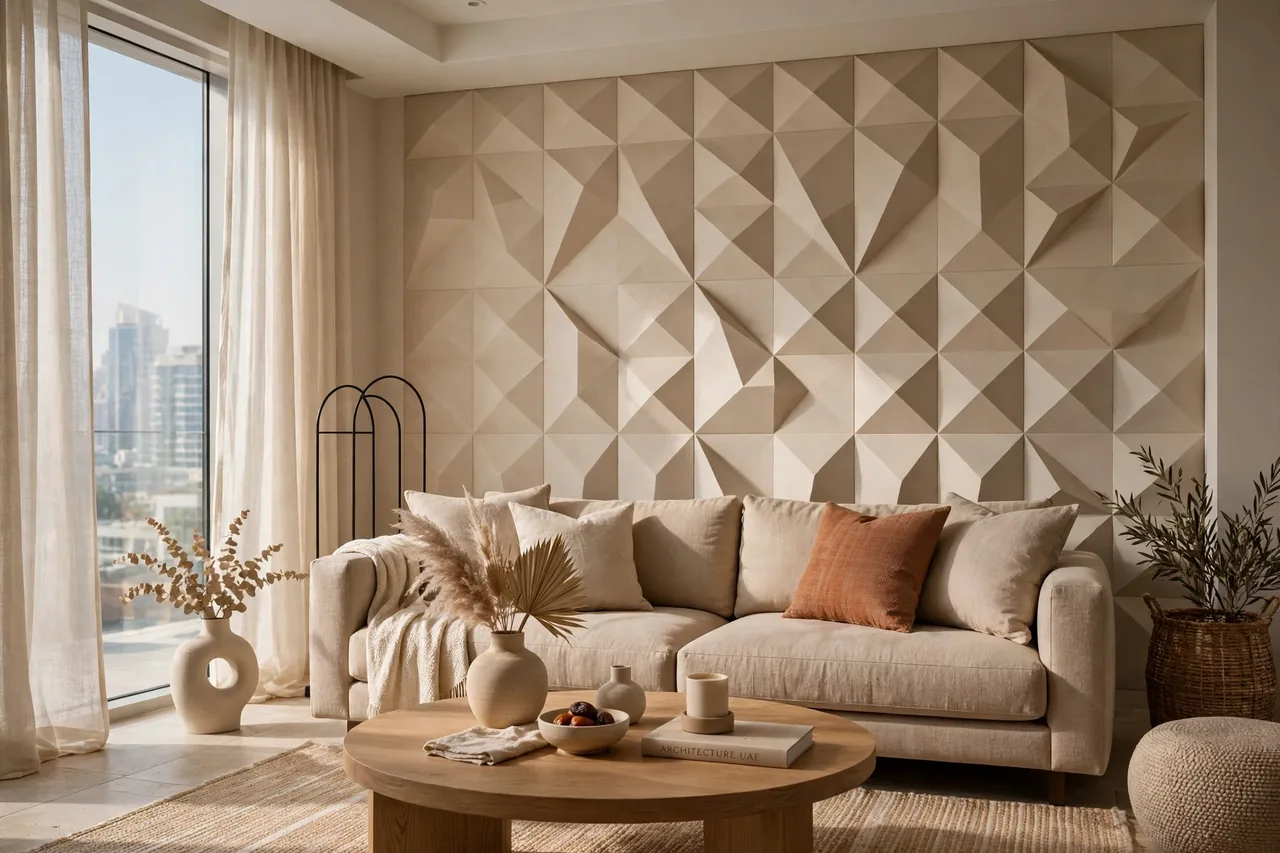
A 3D wall panel is a decorative tile or board with a raised, textured surface, fixed to a wall to create pattern, depth and shadow. Panels come in several materials. PVC panels are light, water-resistant and the most affordable, popular for TV walls and rental-friendly makeovers. MDF panels are denser, take paint beautifully, and are the usual choice for fluted and slatted designs. Gypsum panels give crisp, premium geometric patterns and are commonly painted to match the room. Polyurethane (PU) panels are very light and detailed, often used for stone and brick effects, while bamboo-fibre and wood-plastic composite (WPC) panels market themselves on durability and easier maintenance. Panel sizes and coverage vary by brand, so always calculate how many pieces your wall needs before ordering.
Where 3D Panels Work Best
The classic use is the living-room TV wall, where a fluted or geometric backdrop hides cables and turns a plain wall into the room’s focus. Bedrooms suit softer wave and upholstered-look panels behind the headboard. Entrance halls and dining rooms take well to stone-effect and 3D geometric designs, and commercial spaces — cafes, salons, clinics, offices and hotel corridors — use panels heavily because they refresh a space quickly without structural work. Panels also pair naturally with other surface upgrades: the same room projects often include new wooden flooring in the UAE and soft furnishings such as the rugs covered in our carpets in the UAE guide, so plan the palette for all three together.
Benefits Beyond Looks
Panels earn their keep in practical ways. They cover imperfect walls — cracks, uneven paint, old tile outlines — without replastering. Many designs add a degree of sound softening, useful in echoing open-plan apartments. PVC and WPC panels wipe clean and resist moisture, which suits them to the humidity of coastal cities. They are also reversible compared with stone cladding: a rented apartment can usually return the wall to near-original condition when panels are removed, though you should always get the landlord’s written approval before installation. Finally, panels install fast — a single feature wall is typically a one-day job for a professional team.
What Affects the Cost?
We will not quote fixed prices, because they move with material and supplier, but the drivers are consistent. Material is the biggest factor: PVC sits at the budget end, MDF and WPC in the middle, and gypsum, natural veneer and branded designer panels at the top. Wall size and pattern complexity come next — intricate geometric patterns take longer to align and cut. Add installation labour if you hire a team, adhesive and trims, delivery, and any electrical work for sockets and TV points moved onto the panel face. Painting MDF or gypsum panels adds painters’ time too; our guide to painters in the UAE explains how painting work is usually priced and scheduled. Ask suppliers for an installed price per wall, not just a per-panel price, so quotes are comparable.
Installation: DIY or Professional?
Confident DIYers can fit PVC and PU panels with construction adhesive, a level, a fine saw and patience — the secrets are a flat, clean wall, careful planning of the layout from the centre outwards, and sharp cuts around sockets. MDF, gypsum and full-height fluted installations are better left to professionals: the panels are heavier, joints must disappear, and mistakes are expensive. Whoever installs, think about what sits behind the panels: exterior-facing walls in older buildings sometimes need cleaning and sealing first, and the same logic that drives facade cleaning in the UAE — remove grime and moisture problems before covering a surface — applies indoors too.
Designs in Demand Right Now
Fluted and slatted panels — vertical grooves in warm wood tones or painted MDF — are the most requested look in UAE homes at the moment, because they suit both modern and classic furniture and hide panel joints inside the grooves themselves. Large-format geometric patterns remain the choice for statement walls in living rooms and commercial receptions. Stone-effect and marble-effect panels are growing in bathrooms and kitchens where real stone would be heavy and costly, and upholstered-look soft panels are popular behind beds. Two practical trends are worth copying: integrating LED strip lighting into the panel design from the start rather than adding it later, and using panels on ceiling borders or room dividers, not just main walls, to carry a theme through an open-plan space.
Choosing Panels for UAE Homes: Heat, Light and AC
UAE interiors live under strong sun and constant air conditioning, so choose accordingly. Check that panels are rated for indoor temperature swings and will not warp near windows with direct sun; reputable sellers state material specifications. In kitchens and bathrooms, pick water-resistant PVC or WPC rather than raw MDF. Match the design to the room’s light: deep geometric patterns look dramatic in bright rooms but can feel heavy in small, dim ones, where fine fluting or wave designs are safer. Plan lighting with the panels — wall washers and LED strips in ceiling coves emphasise the 3D effect — and if you are automating lights and blinds at the same time, our guide to home automation in the UAE shows how those systems fit together, while our guide to blinds in the UAE helps coordinate window treatments with the new wall. Order a sample first, live with it for a day, and only then commit to the full wall.