Few purchases change a room like a good carpet, and the Emirates has been a crossroads of the carpet trade for centuries. Carpets in UAE range from hand-knotted Persian and Afghan pieces sold in specialist souqs to affordable machine-made rugs in every home store, with custom and designer options in between. This guide explains the main types and materials, how sizes and pricing work, how to care for carpets in Gulf homes where sand and air conditioning set the rules, and how to buy well whether your budget is modest or serious.
Types of Carpet You Will Find
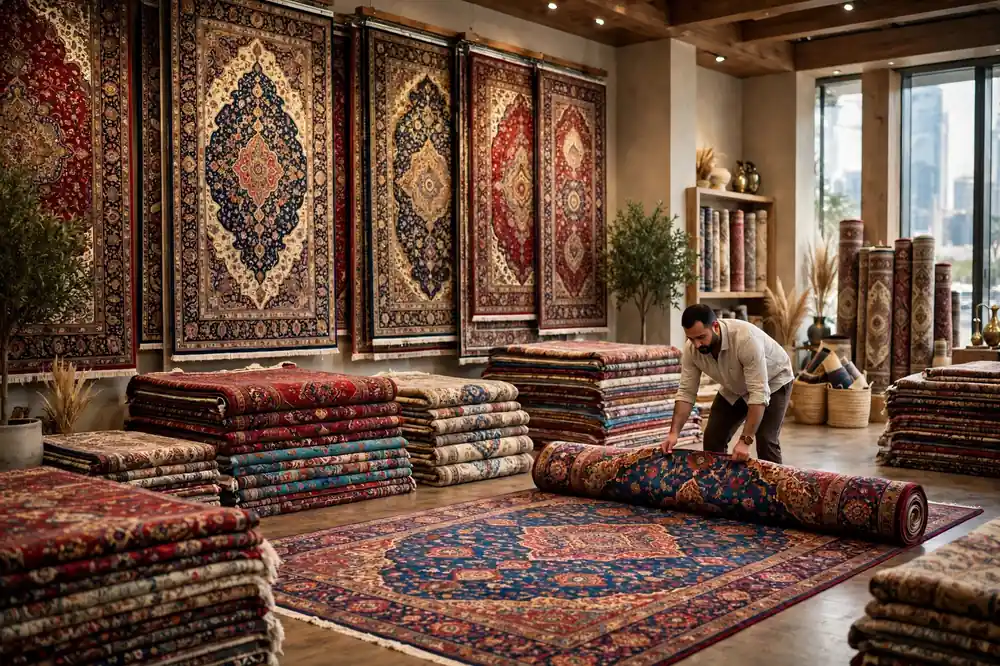
Hand-knotted carpets are the traditional heart of the market: Persian designs from Iran’s weaving cities, Afghan and Pakistani pieces, and Turkish and Caucasian styles, each with recognisable motifs and palettes. They are sold by specialist dealers who will unroll dozens of pieces and explain origins without pressure — an education in itself. At the other end, machine-made carpets from Turkey, Belgium and local production offer consistent quality and modern designs at accessible prices.
Between the two sit hand-tufted and custom carpets, made to a chosen size, colour and design, popular for villas, hotels and offices that need exact dimensions. Runners for hallways, prayer rugs, and children’s and outdoor ranges complete the picture. A carpet anchors the soft furnishings of a room, so plan it alongside the window treatments in our guide to curtains in UAE rather than as an afterthought.
Materials Compared: Wool, Silk and Synthetics
Wool is the classic carpet fibre: resilient, naturally stain-resistant, and comfortable in both summer and winter. Silk adds sheen and fine detail, usually as highlights in a wool ground or in full pieces at the top of the market. Cotton appears in warps and in flatweave kilims. The fibre decides how a carpet ages — good wool improves with wear and cleaning, while cheap synthetics flatten and shine in traffic lanes.
Synthetics have their place. Modern polypropylene and polyester carpets resist stains, tolerate family life and cost a fraction of hand-knotted wool, which is why they dominate nurseries, rentals and high-traffic rooms. Blends try to split the difference. Match the material to the room and the household honestly: a silk-accented piece under a dining table with toddlers is a beautiful mistake, however fine the weaving.
Sizes, Placement and Room Planning
Standard sizes cover most needs, from small bedside pieces to room-filling carpets, and the usual advice applies: in living rooms, at least the front legs of sofas and chairs should sit on the carpet; in dining rooms, chairs should stay on it when pulled out. Villas with large majlis rooms often need custom sizes or two pieces laid together, which dealers handle routinely.
Colour and pattern should be judged in your own light, and reputable dealers let serious buyers view a shortlist at home before deciding. Think about the whole scheme: the furniture in our guide to furniture stores in UAE, the window light softened by the blinds in UAE many homes use against glare, and the wall colours. A carpet bought in isolation often fights the room; one chosen with the room settles everything around it.
Provenance matters in the hand-knotted market. Carpets come with stories — tribal, village or city workshop weaving, natural or synthetic dyes, old or newly made — and the story affects both price and how a piece should be used. A hard-wearing tribal rug shrugs off hallway traffic that would ruin a fine city piece. Dealers who handle serious carpets will discuss weave, dye and origin in detail and show you how to check knot structure and wool quality yourself, which is part of the pleasure of buying in this market.
How Carpet Pricing Works
Hand-knotted prices rest on knot density, materials, origin, age and condition — finer knots and silk raise prices steeply, and antique pieces carry collector value beyond their size. Machine-made pricing is simpler: size, material and brand. In souqs and independent shops, negotiation is expected and unhurried; in malls and chains, prices are fixed but sales events are frequent.
Ask what the price includes: delivery, underlay, and treatment such as fringe repair or a first professional clean. Underlay is not an upsell — it stops slipping, cushions wear and extends the carpet’s life, especially on marble and tile floors. Keep the dealer’s details and any origin or material certificate with your records; documentation matters if you later sell or insure a valuable piece.
Care in Gulf Homes: Sand, Sun and Air Conditioning
Fine sand is the daily enemy: it works into the pile and grinds fibres with every step. Frequent vacuuming on a suction setting — beating and rotating brushes reserved for robust machine-made pieces — plus mats at entrances, keeps grit out. Blot spills immediately, never rub, and test any cleaner on a hidden corner first. Strong sun through glass fades dyes, so rotate carpets periodically and draw blinds at midday in sun-facing rooms.
Professional cleaning every year or two keeps wool healthy, and the methods in our guide to carpet cleaning in UAE explain what proper washing involves. Upholstery in the same rooms benefits from the same schedule — our guide to sofa cleaning in UAE covers the companion service. Store rolled, never folded, with protection against moths, and air pieces in shade occasionally during the humid months.
Do not overlook flatweaves and smaller pieces while shopping. Kilims and dhurries suit kitchens, studies and layering over larger plain carpets, and they are easier to clean and move — practical virtues in homes that rearrange furniture often. Prayer rugs and small mats make meaningful gifts and sensible first purchases while you learn your taste. Many collections in Emirati homes started exactly this way: one modest piece, bought slowly from a dealer who explained it well, followed by larger pieces as confidence grew.
Choosing and Buying Well
Buy from sellers who educate rather than pressure: a good dealer explains why two similar-looking pieces differ in price, shows the back of the carpet — hand-knotted pieces show the pattern clearly through the knots — and checks the foundation by bending and inspecting the weave. Flip any carpet you are considering; the back tells the truth about its making.
Set your budget around the room’s importance, and remember that a quality hand-knotted carpet outlives furniture trends and can move with you between homes and countries. For design-led projects, work with the professionals in our guide to interior design in UAE, who source carpets alongside the rest of a scheme. Chosen patiently, a carpet is the rare purchase that is both practical and heirloom.