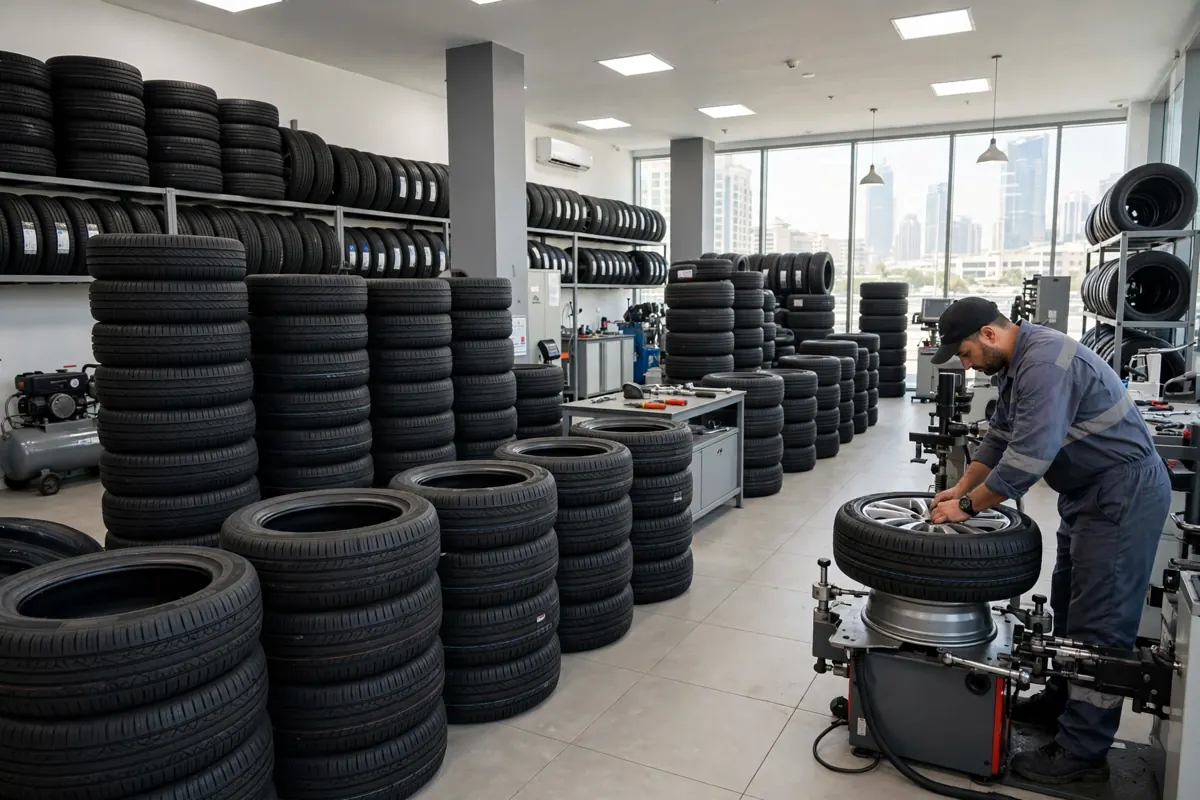
Buying motor vehicle tyres in UAE is not just about finding the cheapest set. Summer temperatures regularly climb above 45°C, long motorway runs between Dubai, Abu Dhabi and Sharjah put constant heat and speed stress on rubber, and sudden rain can turn dusty roads slippery within minutes. The right tyres improve braking, fuel use, comfort and safety, while worn or wrongly sized tyres do the opposite. This guide explains sizes, ratings, brands, prices in AED, where to buy, and when to replace tyres in the UAE, so you can choose with confidence and avoid paying for performance you do not need.
What UAE heat and roads do to tyres
Heat is the biggest enemy of tyres in the UAE. High road temperatures soften rubber, speed up ageing, and raise pressure inside the tyre. That is why summer checks matter more here than in cooler climates. Park in shade when you can, avoid long high-speed driving on under-inflated tyres, and check pressures when tyres are cold. A tyre that looks fine can still be heat-damaged, cracked or hardened after years of desert summers. If you drive often between emirates, choose tyres rated for high temperatures and stable motorway performance. Good tyres also help on sand-dusted roads, where grip can change quickly.
How to read tyre size and ratings
Your tyre sidewall shows a code such as 225/45R17 91W. The first number is width in millimetres, the second is sidewall height as a percentage of width, R means radial, 17 is wheel diameter in inches, 91 is the load index, and W is the speed rating. Match the size and load rating in your manual or driver-door sticker. Never fit lower ratings than specified. Also compare treadwear, traction, temperature, wet grip, fuel efficiency and noise ratings. They make fair comparisons much easier.
Best tyre brands in UAE
Michelin, Bridgestone, Pirelli, Continental and Yokohama are among the most popular tyre brands in the UAE, and each suits different drivers. Michelin is known for comfort, long tread life and strong wet braking. Bridgestone offers durable all-round tyres for family cars and SUVs. Pirelli suits drivers who want sharper handling and sporty feel. Continental balances grip, comfort and road noise well. Yokohama is often a good value choice for everyday driving. The best brand is the one that matches your car, driving style, budget and local climate. Check recent reviews for your exact tyre size, because performance varies by model, not just brand. For manufacturer background, see our guide to tyre manufacturers in the UAE.
Motor vehicle tyre prices in UAE
Prices vary by size, brand, pattern and seller. As a rough guide, a common small-car tyre can cost about AED 200 to AED 400, a mid-size sedan or crossover tyre often costs AED 300 to AED 550, and a larger SUV or premium tyre can cost AED 500 to AED 1,000 or more. Run-flat, EV-specific and high-performance tyres usually cost more. Fitting, balancing, new valves and old-tyre disposal may be extra, so ask for the fitted total before you agree. Seasonal promotions are common, but a very cheap unknown tyre can cost more over time through faster wear, noise or poor wet grip. Compare like for like: same size, load rating, manufacture date and included services.
Where to buy motor vehicle tyres in UAE
You have three main options: specialist tyre shops, online stores and dealerships. Specialist shops are best for advice, same-day fitting, balancing and alignment checks. Online stores suit shoppers who know their exact size and want to compare prices quickly. Dealerships suit newer cars under warranty or drivers who want original-equipment tyres. Avoid sellers who cannot show the DOT manufacture date or warranty terms. Ask whether the price includes fitting, balancing, valves, alignment checks and disposal. If you buy online, confirm delivery time, fitting partners and return rules before paying. Keep the invoice and warranty card safe. If you are also comparing wheels, see our guide to wheels in the UAE.
When to replace your tyres
Replace tyres when tread depth falls to about 3mm, even though the legal minimum is lower in many places. Shallow tread clears less water and lengthens braking distances in rain. Also replace a tyre with sidewall cracks, bulges, cuts or repeated punctures. Check the DOT code: tyres older than five to six years deserve close inspection, even with good tread, because heat ages rubber. Uneven wear can signal wrong pressure, poor alignment or worn suspension parts. After a strong impact with a pothole or kerb, inspect tyres and wheels promptly. If a breakdown leaves you stranded, our guide to towing services in the UAE explains what to expect.
Rotation, balancing and alignment
Rotate tyres every 10,000 to 15,000 km, or as your manual advises, so front and rear tyres wear more evenly. Balancing stops vibration at motorway speeds and protects suspension parts. A wheel alignment check is sensible after new tyres, kerb damage or if the car pulls to one side. Keep pressures at the manufacturer’s recommended level, not the maximum on the sidewall. Check pressures monthly and before long trips. Correct pressure improves grip, braking, tyre life and fuel use. Small habits matter: avoid hard acceleration and braking where possible, and do not overload the vehicle.
Warranty and buying checklist
Before you pay, confirm the warranty length, what it covers, and how claims work. Keep the DOT date, invoice and warranty card together. A short final checklist helps: match size and load rating; check the manufacture date; confirm the fitted total; ask about balancing and alignment; keep proof of purchase. If you are buying a used car and want to plan total costs, our guide to used-car loans in the UAE can help with budgeting. For wider financing comparisons, see our auto loan calculator guide for the UAE, and our car loan calculator guide for the UAE.