If you live in the United Arab Emirates, one card matters more than any other: your Emirates ID. Officially called the Identity Card, it is the main identity document for citizens and residents alike, and you will need it for almost every part of daily life. This guide explains the types, how to apply, what they cost, and how to renew or replace your card.
What Is the Emirates ID?
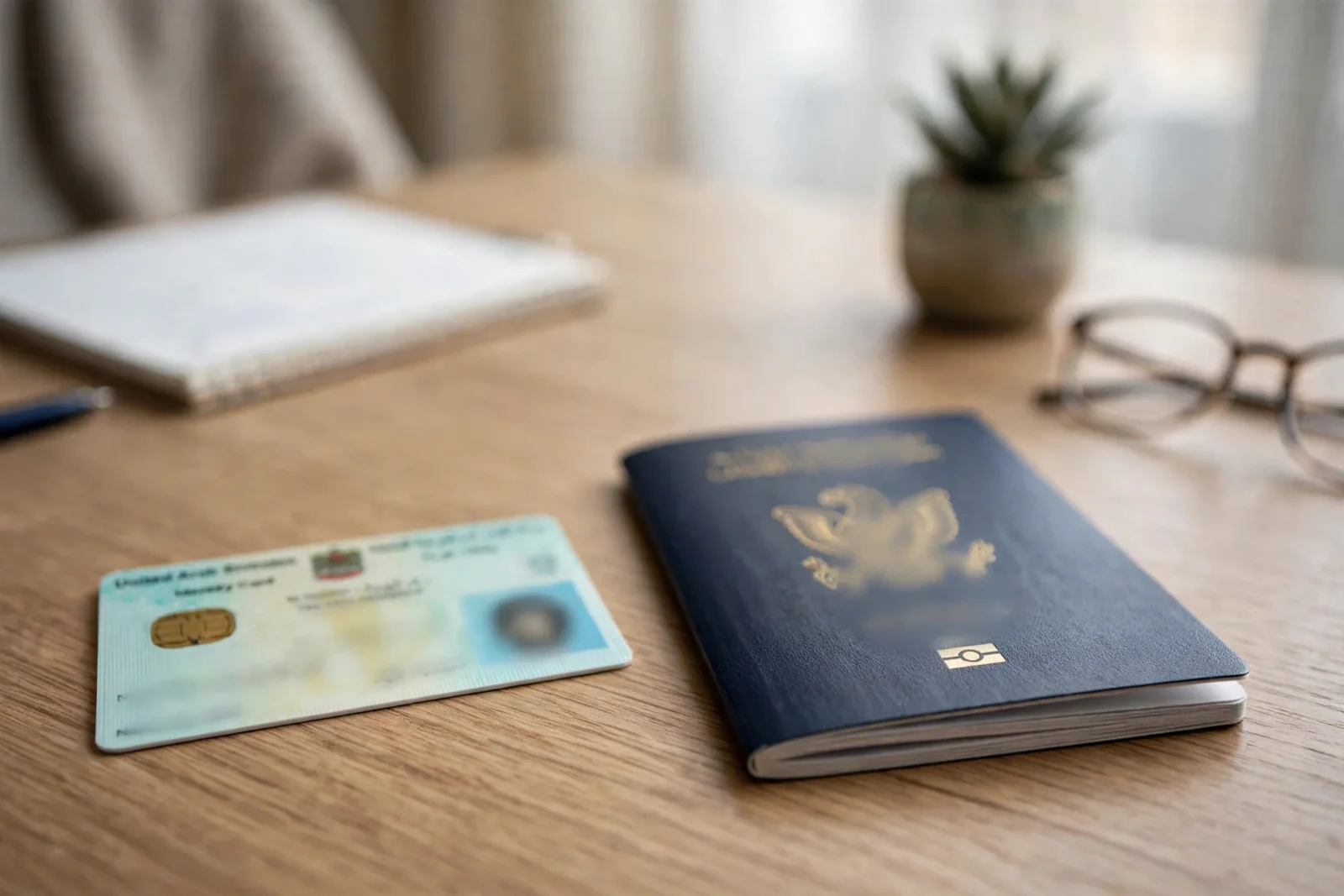
The Emirates ID is a smart identity card issued by the Federal Authority for Identity, Citizenship, Customs and Port Security (ICP). It carries your full name, nationality, date of birth, photograph, a unique 15-digit identity number, and an electronic chip storing your biometric data. That identity number stays with you for life, even if you change jobs, move emirates, or renew your residence visa. You must carry the card and present it whenever an authority asks for identification.
Types of ID Cards in UAE
The type you receive depends on your status. The main categories are:
- UAE citizens: Citizens receive an Emirates ID linked to their family book and passport. The card confirms citizenship and is used for government services, travel within the GCC, and voting in Federal National Council elections where eligible.
- Residents and expatriates: Most expatriates receive an Emirates ID tied to their residence visa. Your employer or sponsor usually starts the process, and the card’s validity normally matches your visa. If you are moving here, see our guide on how to move to Dubai.
- Children: Children also need an Emirates ID, including newborns, whose parents must register them soon after birth. Children under 15 are generally exempt from fingerprint biometrics, but they still need a photograph and a valid passport and visa record.
How to Apply for an Emirates ID
Applying is straightforward once your visa or citizenship paperwork is underway. The exact route depends on whether you are a first-time applicant, renewing, or replacing a card.
- Start your visa or status application. For most residents, the Emirates ID process begins alongside the residence visa, so check the current UAE visa policy before you book medical tests or biometrics.
- Apply through an ICP channel. You can apply through the ICP website or app, an authorised typing centre, or, in some cases, your employer’s PRO.
- Give your biometrics. First-time applicants aged 15 and over usually visit an ICP service centre for fingerprints and a photograph.
- Receive your card. Once approved, the card is printed and delivered, and you can track it through ICP channels.
Documents You Will Need
Requirements vary by category, but most applicants need the following:
- A valid passport, plus your residence visa or entry permit for residents.
- A recent passport-style photograph that meets ICP specifications.
- Proof of relationship for dependants, such as a marriage or birth certificate, when sponsoring a family visa.
Emirates ID Fees in AED
Fees depend on the card’s validity period and the service channel. As a guide, first-time issuance and renewal typically cost around AED 100 per year of validity, plus service and typing fees, so a two-year card costs more than a one-year card. Urgent or express printing, where available, costs extra. Confirm the current total before you pay, because fees can change.
Renewal
Renew before your card expires. Residents usually renew alongside their residence visa, and the ICP typically sends a reminder when renewal opens. The process is similar to a first application: update your details, pay the fee, and, if requested, give fresh biometrics. Do not let the card lapse, because an expired Emirates ID can delay banking, healthcare, and tenancy services. Update your details promptly if your job, marital status, or address changes.
Replacement for Lost, Stolen or Damaged Cards
If your card is lost, stolen, or damaged, report it and apply for a replacement promptly. You can request a replacement through the ICP app or a typing centre, pay the replacement fee, and receive a new card carrying the same identity number. Replace a damaged card too, because readers at banks, clinics, and government offices may reject a card they cannot scan.
Biometrics and Your Digital Identity
Biometrics link your physical card to your official record. They help prevent identity fraud and speed up checks at airports, hospitals, and government counters. The same identity also powers digital services: you can use the ICP app to show a digital Emirates ID, sign documents, and prove who you are without carrying the physical card. Keep your registered mobile number up to date.
How Emirates ID Links to Everyday Services
Your Emirates ID is the key that connects your identity across the UAE. You will use it for:
- Banking: Banks ask for your Emirates ID to open accounts, issue cards, and verify transactions. Sound financial planning in the UAE starts with getting this identification in place.
- Healthcare: Clinics and hospitals use the card to confirm your identity and insurance cover.
- Housing and utilities: Landlords and utility providers need the card for tenancy contracts and account registration.
- Driving and fines: Your identity number is linked to your driving licence and vehicle records, so checking an Abu Dhabi traffic fine is simpler once your details are registered.
- Work and business: Employers record your identity number for payroll and labour files, and entrepreneurs need it for company formation — see our guide to business setup in Sharjah.
Timeline: How Long Does It Take?
For a straightforward application, biometrics and approval often take a few working days, with printing and delivery adding a few more. Delays usually come from incomplete documents or a missed biometrics appointment, so double-check every field before you submit.
Tips to Avoid Delays
- Book biometrics early, especially during busy periods.
- Make sure the name on your application matches your passport exactly.
- Set a reminder to renew at least a month before the expiry date.
Final Thoughts
ID cards in UAE life are not just paperwork — the Emirates ID is your everyday proof of identity, your key to banking, healthcare, housing, and government services, and the document that ties your visa to your life in the country. Apply early, keep your details current, and renew on time, and the card will quietly do its job in the background. For the broader picture of settling in, see our guide to lifestyle in the UAE.