
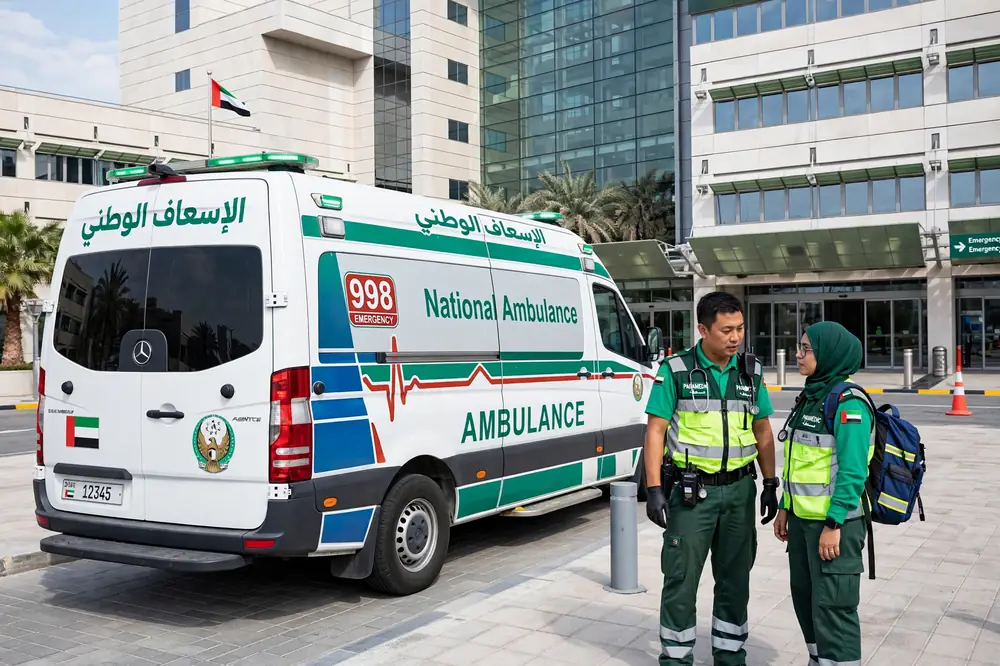
Ambulance and Funeral Services in UAE is a topic most residents prefer not to think about, yet knowing how these services work can make a difficult day far less confusing. The United Arab Emirates has modern emergency care, clear procedures for deaths, and support for families of many faiths and nationalities. Whether you are a long-term resident, a new arrival, or caring for an older relative, this guide explains what to expect, whom to call, and which documents to prepare. It covers two related subjects: emergency ambulance services and funeral services. Both are sensitive, practical, and best understood before they are urgently needed.
Ambulance Services in the UAE
When someone is seriously ill or injured, an ambulance is often the fastest and safest way to reach hospital care. Crews are trained to assess patients, provide emergency treatment at the scene using well-maintained medical equipment, and continue care during transport. They can stabilise breathing, control bleeding, and support a person with chest pain while communicating with the receiving hospital. For families, the key point is simple: call early, stay calm, and give clear information about location and symptoms.
Emergency Numbers and What to Tell the Operator
In the UAE, dial 998 for an ambulance and 999 for police. These numbers work across all seven emirates and are answered around the clock. When you call, state your exact location, including building name, floor, flat number, and a nearby landmark. Describe the patient’s age, whether they are conscious and breathing, and what happened. If you are in a public place, ask someone to meet the crew at the entrance so they are not delayed by security barriers or parking.
Private and Government Ambulance Services
Ambulance services in the UAE are provided by government authorities and licensed private companies. Government ambulances respond to emergency calls and are widely used for road accidents, medical emergencies, and transfers between health centres and hospitals. Private companies often support planned transfers, event medical cover, and non-emergency transport for patients who need monitoring during a journey. Use the emergency number for urgent situations and arrange a licensed provider for planned transport. If you arrange home health care for someone with a serious condition, keep your hospital and ambulance contacts in your phone and in a visible place at home.
Costs and Air Ambulance Services
Costs vary. Emergency government ambulance responses are often provided without a direct charge to the patient, although hospital treatment is charged separately according to insurance or payment arrangements. Private transfers usually charge by distance, level of care, and whether a doctor or nurse travels with the patient. Air ambulance services may be used for serious cases in remote areas or transfers that cannot safely be made by road. Families should ask for a clear written estimate for planned transfers and check what their health insurance and travel insurance cover.
While waiting for the crew, keep the patient still, warm, and reassured. Do not move a person with a suspected spinal injury unless they are in danger. Do not give food, drink, or medicine unless a medical professional advises it. Clear a path for the crew and have identification and insurance details ready.
Funeral Services in the UAE
When a death occurs in the UAE, families face both grief and a set of formal steps. A funeral service provider can guide relatives through those steps with care and patience. Their role often includes arranging transport, preparing documentation, liaising with hospitals, embassies, and burial grounds, and supporting religious rituals. For expatriate families, the most important early decision is whether burial will take place in the UAE or whether the deceased will be repatriated.
Documentation After a Death
Documentation usually begins with a medical report and death certificate from the hospital or health care system. Families may also need the deceased person’s passport, Emirates ID, and visa details, plus the next of kin’s identification. If the death occurred outside a hospital, the police and relevant authority will guide the process. Embassy involvement is common for expatriates, especially when repatriation is planned. Keep original documents safe and make copies, because several offices may ask for them.
Repatriation or Local Burial
Local burial in the UAE is available in designated cemeteries, and arrangements vary by emirate and faith. Muslim burials usually take place promptly, in line with religious practice, while other faiths may use their own cemeteries or designated sections. Repatriation involves preparation, airline requirements, a sealed coffin, and paperwork from both UAE authorities and the receiving country. It generally takes longer and costs more than local burial. Families often weigh religious obligations, the wishes of the deceased, travel costs, and where relatives can most easily visit a grave.
Funeral Costs and Practical Help
Funeral costs depend on burial or repatriation, transport, preparation, religious services, and cemetery or airline fees. A transparent provider should give a written breakdown before families commit, so there are no surprises later. Many families also need practical help: notifying relatives, arranging leave from work, and caring for children or elderly parents during mourning. Community and religious organisations can offer comfort, volunteers, and guidance. Planning ahead, even in a simple written note about wishes, can spare loved ones difficult guesswork.
Cultural and Religious Considerations
Culture and faith shape every part of funeral practice in the UAE. Families should feel free to ask for rituals that matter to them, including washing and shrouding, prayers, viewing, and specific burial customs. Providers, hospitals, and cemeteries are accustomed to serving people of many backgrounds and will usually accommodate requests where possible. Ask for explanations in a language everyone understands and for written summaries of next steps.
Preparing in Advance
Ambulance and funeral services in the UAE share one purpose: to support people at moments of greatest vulnerability. By saving emergency numbers, understanding how ambulance care works, and learning the basic steps after a death, residents can act calmly and protect their families. Keep important documents accessible, discuss wishes with loved ones, and choose licensed providers who explain costs and procedures clearly.