
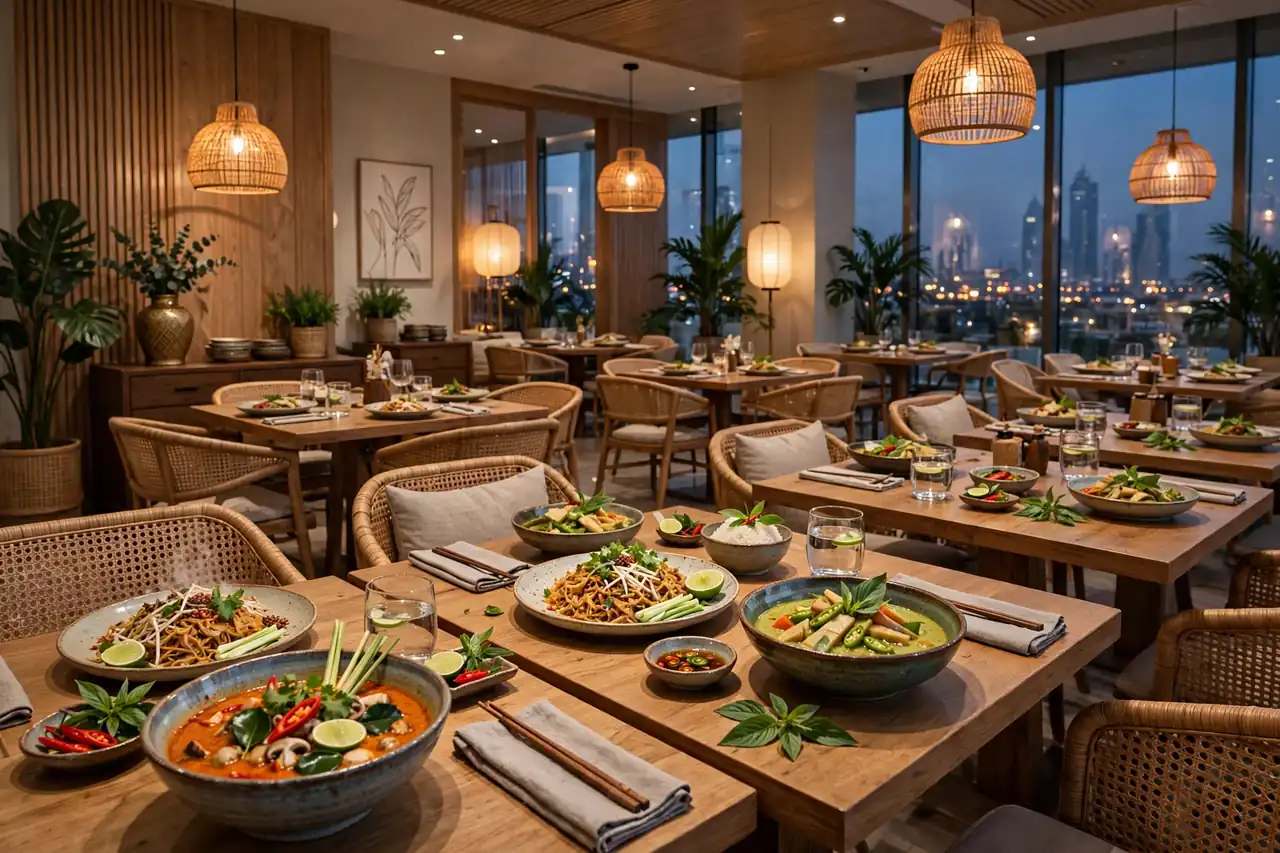
Thai restaurants in the UAE range from small neighbourhood kitchens serving boat noodles to elegant hotel dining rooms plating royal Thai cuisine. The country’s large expatriate population and love of bold flavours have made Thai food one of the most popular Asian cuisines in the Emirates, and you will find Thai restaurants in Dubai, Abu Dhabi, Sharjah and the northern emirates at every budget. This guide explains the dishes to know, the styles of restaurant on offer, and how to choose a place that suits your taste — especially if chilli heat is a concern.
Why Thai Food Is So Popular in the UAE
Thai cooking balances sweet, sour, salty and hot in a single dish, which makes it endlessly interesting to eat. It also travels well across dietary needs: many dishes are naturally centred on rice, vegetables, seafood and herbs, menus usually offer plenty of vegetarian choices, and halal meat is the standard across UAE restaurants. Add generous portions and prices that span from inexpensive to premium, and it is easy to see why Thai restaurants sit alongside the much-loved Indian food in the UAE as a default choice for group dinners where everyone wants something different.
Classic Dishes to Try First
If you are new to Thai food, start with the dishes that made it famous. Tom yum is the hot and sour prawn soup scented with lemongrass and galangal. Pad thai, stir-fried rice noodles with tamarind, egg, bean sprouts and peanuts, is the mild, crowd-pleasing benchmark. Gaeng keow wan (green curry) and massaman curry show the richer, coconut-based side of the cuisine, while som tam, the green papaya salad, is fiery and refreshing at once. For dessert, mango sticky rice with coconut cream is the classic finish — and if your sweet tooth is still curious afterwards, our guide to confectionery in the UAE covers the wider world of sweets and desserts in the Emirates.
Styles of Thai Restaurant You Will Find
At the everyday end are the small, family-run restaurants in older districts, where menus run long, prices are modest and the cooking leans home-style. Mid-range chains and mall restaurants offer consistency, picture menus and spice levels adjusted for a broad audience. At the top end, hotel and fine-dining Thai restaurants serve regional specialities, tasting menus and dishes presented in traditional style. A serious Thai kitchen depends on proper woks, fresh herbs flown in regularly, and the right restaurant equipment to handle high-heat stir-frying — one reason quality varies so much between places that look similar from the street.
Where to Find Thai Restaurants in the Emirates
Dubai has the deepest choice, from long-established neighbourhood spots in areas such as Karama and Deira to polished dining rooms in newer districts; our guide to Business Bay restaurants shows the kind of range a single Dubai neighbourhood can offer. Abu Dhabi’s Thai scene is smaller but well established, particularly around the Corniche and in hotel properties, and Sharjah has a growing cluster of affordable Asian restaurants. Delivery apps list most of them, which makes ratings, photos and recent reviews easy to check before you commit.
Regional Styles on UAE Menus
Thailand’s regions cook quite differently, and better UAE restaurants say which style they serve. Central Thai cooking — Bangkok food — is the balanced, slightly sweet style behind most pad thai and green curry. Isan food from the north-east is punchier and more rustic: som tam, larb (minced meat salad) and grilled chicken with sticky rice. Northern Thai food is milder and herb-driven, famous for khao soi, a curried noodle soup topped with crisp noodles. Southern Thai dishes are the hottest of all, built on turmeric and fresh chillies. If a menu names a region, it usually means the kitchen takes its cooking seriously, and asking staff which dishes represent their style is a reliable way to order the best plate in the house.
Managing the Heat: Spice Levels Explained
The question every first-timer asks is how spicy the food will be. Thai dishes are cooked to order, so you can almost always ask for the heat level you want — mild, medium, Thai hot — and good kitchens adjust without flattening the flavour. Dishes like som tam and some curries carry chilli as a core ingredient and can only be tamed so far, so ask the staff which dishes are naturally gentler. Coconut-based curries, pad thai, fried rice and satay are safe starting points for children and cautious eaters, while grilled dishes (gai yang chicken, for example) keep the flavour without the fire.
Thai Food for Groups and Events
Thai food suits groups because dishes are designed for sharing: a soup, a curry, a stir-fry, a salad and rice in the middle keeps everyone happy, including mixed spice tolerances. Many restaurants offer set menus for larger parties, and Thai dishes now appear regularly on event menus in the Emirates — our guide to catering services in the UAE explains how caterers build multi-cuisine spreads. For a home gathering, several neighbourhood Thai restaurants also sell family-size portions for collection.
Drinks and small rituals complete the meal. Thai iced tea and fresh coconut water are the classic ways to cool a spicy palate, and plain jasmine rice — ordered generously — is the real fire extinguisher at the table. In more traditional places, dishes arrive as they are ready rather than in courses, so expect the table to fill gradually and eat family-style, tasting a little of everything. Tipping follows UAE norms, and a simple thank-you in Thai (“khop khun khrap/kha”) is always appreciated by staff, many of whom come from Thailand and cook food they grew up with.
How to Choose the Right Thai Restaurant
Look for a menu that goes beyond the greatest hits — regional dishes, a proper som tam, and house-made curry pastes are good signs. Check recent reviews for comments on freshness of herbs and seafood rather than décor. Confirm halal sourcing if it matters to your group (almost universal in the UAE, but worth asking for imported specialities). Finally, compare with neighbouring cuisines on the same street before deciding: if your group is split between Thai and something else, the equally rich choice of Korean restaurants in the UAE makes a fine alternative plan. Choose well, order a spread to share, and do not skip the mango sticky rice.