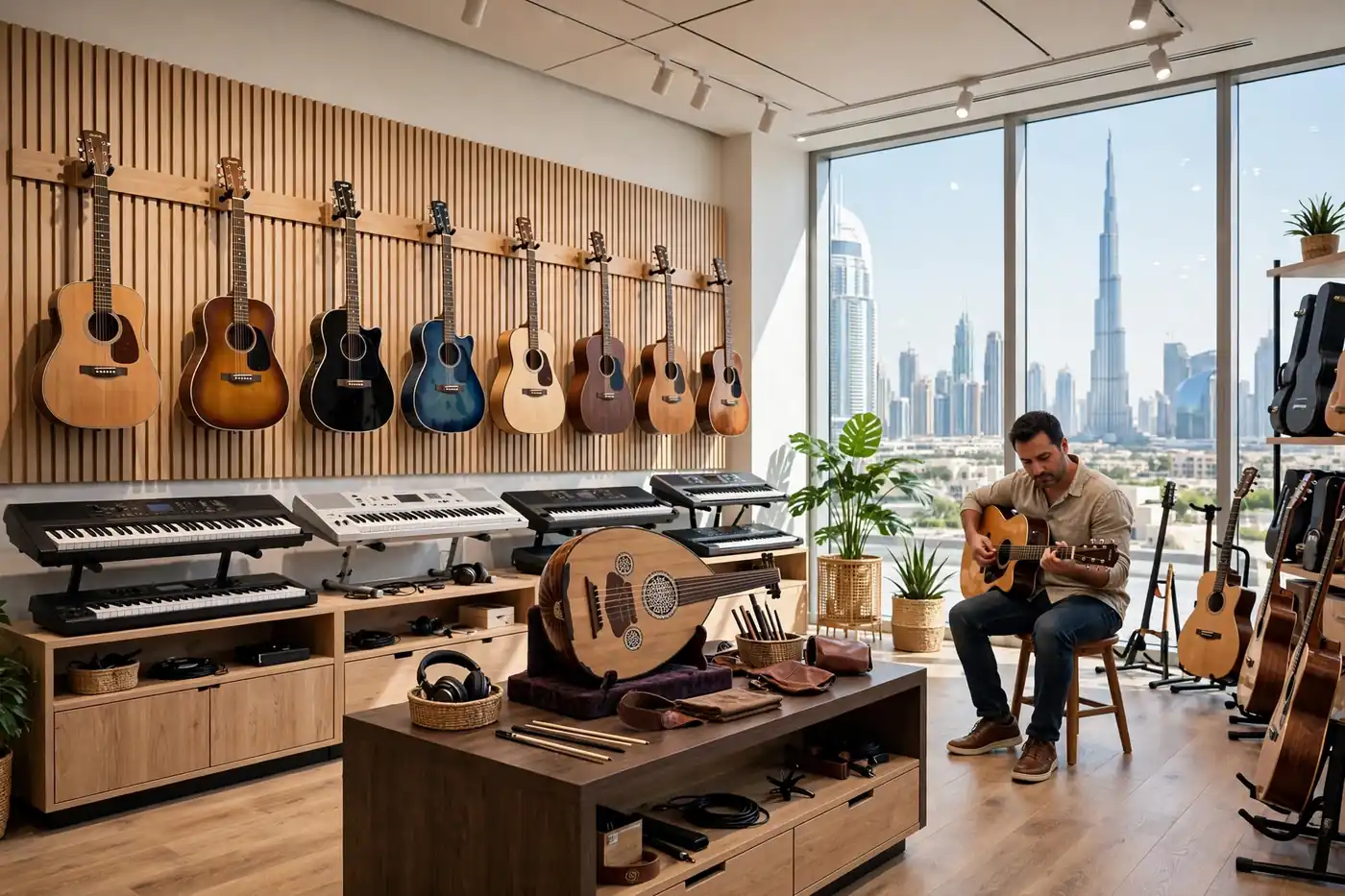
Whether you are buying a first guitar for a teenager, restarting piano after twenty years, or shopping for a proper oud, the Emirates has a deeper music retail scene than most residents realise. Musical instruments in UAE are sold through specialist music stores in Dubai, Abu Dhabi and Sharjah, departments in larger malls, and a lively second-hand market. This guide explains what sells, where to buy, how new and used prices compare, and the practical checks that stop an exciting purchase turning into an expensive mistake — including how instruments survive the Gulf climate.
What Sells in the Emirates
Guitars lead the market — acoustics for beginners, electrics with amplifiers for the growing band scene, and classical nylon-string models for graded study. Keyboards and digital pianos follow closely, because they suit apartment living and the exam syllabuses many children follow. Traditional instruments hold a proud place too: the oud is widely stocked and taught, alongside tabla, qanun and Arabic percussion.
Schools and private teachers drive steady demand for violins, flutes, clarinets and cellos in fractional and full sizes, while drums split between acoustic kits for villas and electronic kits for flats. DJ and production gear blurs into instruments at many stores, which connects to the creative scene covered in our guide to video production in UAE — home studios here often start with one keyboard and a laptop.
Where to Buy: Specialist Stores and Beyond
Specialist music stores are the best starting point. Staff are usually musicians, instruments are set up properly, and you can compare several models side by side with honest advice about what a learner actually needs. The main clusters sit in Dubai’s older commercial districts and malls, with Abu Dhabi and Sharjah well served too. Trying before buying matters: action height on a guitar, key weight on a piano and the voice of an oud cannot be judged from photographs.
General retailers and online marketplaces compete on price for entry-level instruments and accessories, and delivery across the emirates is fast. The trade-off is setup and after-sales — a guitar that arrives with poor action discourages a beginner more than a slightly higher shop price. For gift purchases, our guide to gifts in UAE has ideas for the accessories — cases, stands, tuners — that complete an instrument present.
New vs Used Instruments
The used market is active, fed by expat turnover, and it is where patient buyers find quality instruments at fair prices. Classified platforms and community groups list everything from student violins to professional keyboards. Used makes most sense for solid, durable instruments — guitars, keyboards, brass — where condition is easy to inspect, and least sense for consumable-heavy purchases unless you budget for servicing.
Inspect methodically: cracks in wooden soundboards, warped necks, worn frets, sticking piano keys, and for electronic instruments, every knob, key and output tested. Ask why the seller is parting with it and whether it has been serviced. A short trial or a meeting at a music shop, where staff can glance over the instrument, protects both sides. Factor in new strings, a setup or a service as part of the real price, not an afterthought.
Rentals and school schemes deserve a mention. Several stores rent instruments by the term — ideal for a child’s first year, when enthusiasm is unproven — and some schools run instrument libraries or bulk purchase schemes through local suppliers. Renting also suits short assignments: an expat posted for eighteen months can keep playing without shipping a piano across the world. Ask about rent-to-own terms, because part of the rental often converts into purchase credit if the instrument wins a permanent place.
Prices and What Affects Them
Entry-level instruments are genuinely affordable — serviceable beginner guitars, keyboards and violins sit in a band most families can manage — while prices climb steeply with materials, handwork and brand heritage. Solid wood costs more than laminate, hand-finished instruments more than factory output, and professional models are priced as tools of a trade. Accessories add up: cases, amplifiers, stands, bows and strings belong in the budget from the start.
Seasonal sales around the school year and festive periods are real in this market, and last year’s model is often the smartest buy in keyboards and electronics. For instruments bought for events work — weddings and corporate functions pay many local musicians — reliability matters more than badge, which is why performers coordinate closely with the organisers in our guide to event management in UAE about backup gear and sound checks.
Lessons, Teachers and Getting Started
An instrument without lessons usually becomes furniture, so plan the teaching alongside the purchase. Music institutes across the emirates offer structured programmes with graded exams, while independent teachers advertise locally for home tuition. Many stores keep lists of teachers and can match a beginner to the right one — ask when you buy, especially for oud and Arabic instruments where teaching traditions are specific.
Children benefit from starting on correctly sized instruments, and rental or rent-to-own schemes at some stores reduce the risk of an abandoned hobby. Adult learners are a growing share of students; evening and weekend slots exist for exactly this market. If performing is the goal, the streaming setups in our guide to live video streaming in UAE show how musicians here share practice and performances from home.
Repairs and servicing are part of ownership, so ask where an instrument will be maintained before you buy it. Guitar setups, piano tuning, violin bow rehairing and brass servicing are all available locally through stores and independent technicians, and a newly bought piano should be tuned after it settles into your home’s climate. Budget for these services the way you budget for strings and reeds — they are what keep a good instrument good across years of Gulf summers.
Care in the Gulf Climate and Final Checks
Heat and humidity swings are the enemy of wooden instruments. Air conditioning dries indoor air while outdoor humidity soaks it, and that cycling cracks soundboards and lifts frets. Keep instruments in their cases away from direct sun and car boots, consider a small room humidifier for valuable acoustics, and let a cold instrument warm up gradually before playing. Strings corrode faster near the coast, so wipe them down and replace them more often than you would in Europe.
Before any purchase, run a final checklist: play every note or key, check electronics at volume, confirm the warranty and return terms, and ask about servicing costs and intervals. Musicians preparing for celebrations can plan outfits and bookings through our guide to wedding services in UAE, and capture the results with the help of photographers in UAE. Buy the best instrument you can sensibly afford, from a shop that will still be there when it needs its first service.