Finding good massage therapists in UAE cities is easy; finding properly licensed, professional care takes a little more care. The Emirates is home to thousands of spas, wellness centres and hotel treatment rooms, and massage is one of the most requested services in all of them. Quality, however, varies widely — and so does legality. This guide explains how massage therapy is regulated in the UAE, where to find qualified therapists, which treatments suit which problems, and the standards you should expect before you book.
Why demand for massage therapy keeps growing in the UAE
The UAE’s working culture is intense: long desk hours, long commutes and a climate that pushes exercise indoors for much of the year. Add a large hospitality sector built around wellness tourism, and massage has moved from an occasional luxury to a regular part of how residents manage back pain, training fatigue, stress and poor sleep. Employers increasingly treat wellbeing as a productivity issue, and residents who would once have booked a massage only on holiday now book monthly.
That growth has a practical side. A good therapist does far more than help you relax for an hour: regular treatment eases muscular tension from desk work, supports recovery between training sessions and helps manage the aches that come with flying frequently — a routine part of life for many UAE residents.
Licensing and regulation: who is allowed to practise
Massage in the UAE is a regulated activity, and understanding the rules is the simplest way to separate professional care from risky imitations.
Therapists working inside healthcare facilities — physiotherapy and rehabilitation clinics, for example — are licensed by the local health authority: the Dubai Health Authority (DHA) in Dubai, the Department of Health in Abu Dhabi, and the Ministry of Health and Prevention in the northern emirates. Spas and massage centres outside healthcare settings operate under trade licences issued by the emirate’s economy department, and the premises themselves must be licensed for massage activities specifically.
Two practical consequences follow. First, a legitimate therapist works from licensed premises or for a licensed provider — a therapist advertising only through social media with no centre behind them is a red flag. Second, the UAE applies strict professional-conduct rules to massage services: many centres are gender-specific or staff appointments so that male guests are treated by male therapists and female guests by female therapists, and any service that drifts beyond therapeutic or relaxation massage is illegal, whatever the advert suggests. Licensed centres follow these rules visibly and without embarrassment; treat hesitation about them as a warning sign.
Home-service massage follows the same logic. Reputable home-visit providers are licensed businesses that send identifiable, uniformed therapists with proper equipment and a booking record. If none of that structure exists, neither does the accountability.
The main types of massage — and who they suit
Swedish massage is the classic relaxation treatment: long, flowing strokes at light-to-medium pressure. It suits first-timers and anyone whose goal is stress relief rather than repair.
Deep tissue massage works the same muscle groups more slowly and firmly, targeting chronic knots in the back, neck and shoulders. It is the most requested treatment among office workers — and the one where therapist skill matters most, because pressure without technique just hurts.
Sports massage focuses on the muscles a particular sport loads hardest, combining deep work with stretching. Runners, padel players and gym regulars use it between training blocks; many of the venues listed in our guide to sports academies in the UAE either offer it in-house or can recommend therapists nearby.
Thai massage is performed on a mat, fully clothed, and blends pressure along energy lines with assisted stretches — closer to passive yoga than to oil massage. Aromatherapy massage pairs gentle strokes with essential oils chosen for calm, sleep or alertness; oil quality varies enormously between centres, which is why fragrance standards matter — the same reason we covered how to judge quality in our guide to perfumes in the UAE. Hot stone and reflexology sessions round out most menus: the former for deep warmth and relaxation, the latter concentrating on the feet.
Where to find massage therapists in the UAE
Hotel spas set the benchmark for facilities and training, and their therapists are typically the most experienced — at the highest prices. Independent wellness centres in residential districts offer the best value for regular visits; the spa scene in Business Bay is a good example of how competitive central Dubai has become. Clinics are the right choice when pain, injury or a medical condition is the reason for booking, because treatment there sits inside a proper assessment. Licensed home-service companies suit residents who value privacy and time over facilities.
Massage also sits naturally inside a wider grooming and wellbeing routine: many residents pair a monthly massage with regular salon care from our guide to beauty salons in the UAE, or balance intensive treatments with gentler practices at yoga studios in the UAE. For training-related aches, therapists working alongside facilities such as a gym in Business Bay tend to understand athletic recovery better than generalist spas.
What to expect at a professional appointment
A proper session starts with questions: where it hurts, what you do for work, injuries, medications, pregnancy. You should be told clearly what the treatment involves, given privacy to change, and kept professionally draped throughout — with pressure checked and adjusted as the therapist works. Afterwards, expect simple guidance: hydrate, avoid intense training for a few hours after deep work, and note that mild soreness for a day after deep tissue treatment is normal while sharp pain is not.
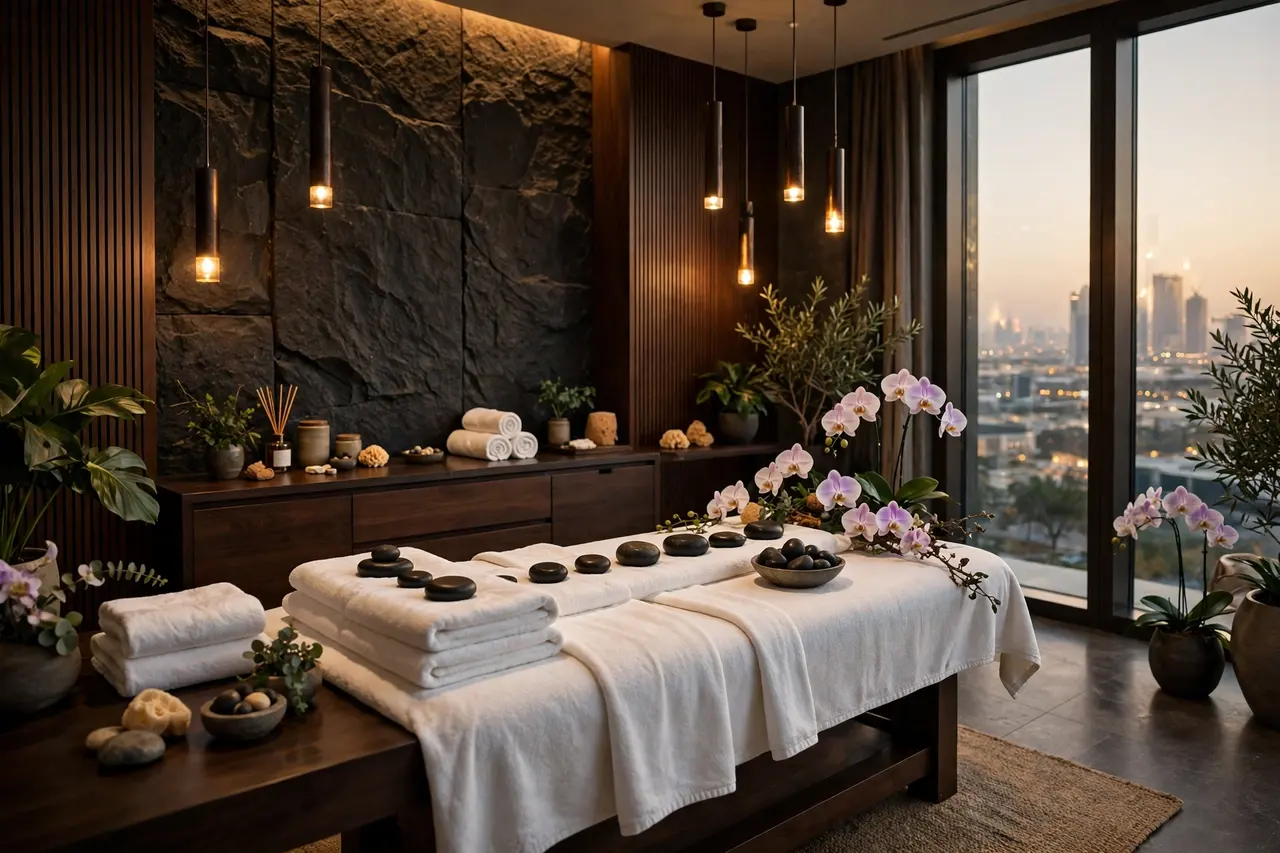
Hygiene is non-negotiable: fresh linens for every guest, sanitised stones and equipment, and a treatment room that looks and smells clean. A centre that cuts corners on visible hygiene is cutting them elsewhere too.
Choosing the right therapist
Work through a short checklist. Is the business licensed, with the licence displayed or easily verifiable? Does the therapist have recognised training and experience with your specific issue? Do recent reviews mention professionalism and cleanliness rather than only price? Does the centre ask about your health before treatment? And does the pricing make sense — hotel spas charge premium rates, independent centres sit in the middle, and prices far below the local norm usually mean an unlicensed operation.
Book one session before committing to a package. The right therapist communicates clearly, works methodically and leaves you better than you arrived — and in a market as large as the UAE’s, there is no reason to settle for less.