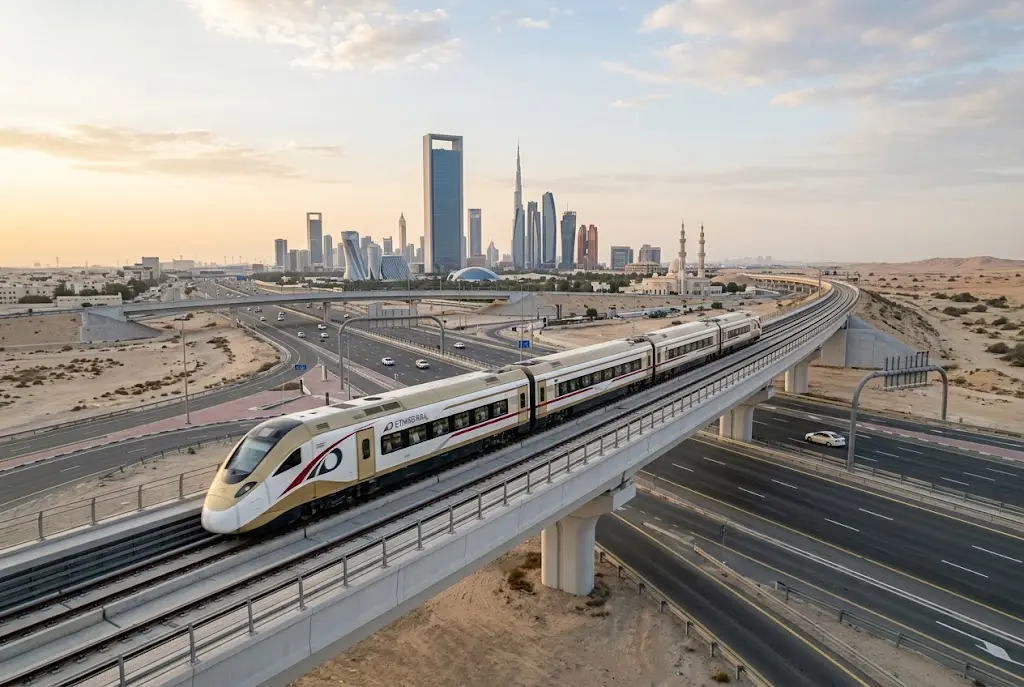
Etihad Rail is transforming the way people and goods move across the United Arab Emirates. What began as a national railway infrastructure project has developed into an integrated network supporting freight transportation and a new era of passenger travel. With passenger services already operating on the initial Abu Dhabi–Fujairah route and additional stations scheduled to open in phases, rail is becoming an increasingly important part of the UAE’s transport system.
For residents, commuters, business travellers and tourists, the development of the national railway creates another option for travelling between emirates. At the same time, freight rail is helping connect industrial areas, ports and logistics hubs. This guide explains what Etihad Rail is, how its passenger network is developing, what routes and stations are planned, and why the project matters for the UAE.
What Is Etihad Rail?
Etihad Rail is the developer and operator of the UAE’s National Rail Network. The company was established in 2009 under Federal Law No. 2 with responsibility for developing, constructing and operating the country’s national freight and passenger railway network.
The national network extends approximately 900 kilometres from Al Ghuwaifat in the west to Fujairah in the east. It is designed to connect major population centres, industrial areas, ports and logistics hubs while creating a more integrated transportation system across the Emirates.
The project is therefore much broader than a passenger train service. It combines freight transportation, passenger mobility, logistics connectivity and long-term infrastructure development within one national rail system.
Etihad Rail Passenger Services in the UAE
Passenger rail marks a major new stage in the UAE’s transportation development. The first scheduled passenger service began on June 30, 2026, connecting Fujairah with Abu Dhabi.
During its introductory operational phase, the passenger service provides a new way to travel between the two emirates. The inaugural scheduled journey departed Fujairah at 5:34am and arrived at Mohammed Bin Zayed City Station in Abu Dhabi at 7:19am.
The initial journey demonstrates the practical role that rail can play for commuters, families, leisure travellers and other passengers who need to move between cities without relying exclusively on private vehicles or other road-based options.
Etihad Rail Routes and Station Expansion
The passenger network is being introduced in phases rather than opening across the entire UAE at once. This approach allows additional stations and routes to be introduced progressively while the service expands.
Abu Dhabi to Fujairah
The Abu Dhabi–Fujairah connection is the first passenger route to enter scheduled operation. The journey links the eastern emirate with Abu Dhabi and provides an important first step toward a broader national passenger network.
Dubai and Al Dhaid
Dubai and Al Dhaid stations are scheduled to open on September 30, 2026. Their addition will significantly expand the passenger network and create another rail connection between important population and economic centres.
Liwa and Madinat Zayed
The passenger network is also scheduled to expand into the Al Dhafra region. Liwa and Madinat Zayed stations are scheduled for November 30, 2026, supporting connectivity to destinations in the western part of Abu Dhabi emirate.
Additional Al Dhafra Stations
Further stations in the Al Dhafra region are scheduled to become operational on December 30, 2026. This expansion is expected to improve access to communities and destinations across the region.
Sharjah Station
Sharjah Station is scheduled to open on March 30, 2027. Its planned addition will further strengthen connections between the northern Emirates and the wider national passenger network.
Because the passenger network is expanding in stages, travellers should check the latest official schedule before planning a journey. Opening dates and operational details can change as the network develops.
What Can Passengers Expect From Etihad Rail?
The passenger service has been designed around comfort, reliability and convenience. The initial passenger experience includes guaranteed seating, complimentary wireless internet, charging ports at seats and luggage space.
Premium Class services are also available for passengers looking for an enhanced travel experience. These features are intended to make rail travel practical for different types of journeys, including daily commuting, family trips, business travel and leisure.
The service is also designed to integrate with other forms of transportation. This is important because a national railway does not need to replace cars, buses or other transport options. Instead, it can become one part of a connected journey from one destination to another.
Etihad Rail and Freight Transportation
While passenger services are receiving significant public attention, freight remains a major part of the national railway network. Freight rail has been operational since 2023 and is designed to transport bulk and industrial cargo across the UAE.
The freight network connects industrial zones, logistics hubs and major ports. This gives businesses an alternative to relying entirely on road transportation for large-volume movements.
Rail can be particularly useful for businesses that need predictable movement of substantial quantities of goods. By moving freight through a dedicated rail network, companies can integrate rail into wider supply-chain and logistics strategies.
This makes Etihad Rail relevant not only to individual travellers but also to sectors such as construction, manufacturing, energy, resources and international trade.
How Etihad Rail Could Change UAE Transportation
The UAE already has an extensive road network and well-developed air transportation system. The introduction of national passenger rail adds another major option to this existing infrastructure.
For longer journeys between emirates, rail can provide an alternative to driving. This may be particularly useful for people who want a predictable journey without spending the entire trip behind the wheel.
The wider network can also improve connectivity between economic centres and tourism destinations. As more stations open, passengers will have additional options for planning journeys around the country.
For readers interested in comparing different ways of travelling between major UAE cities, our guide to the best way to travel from Dubai to Abu Dhabi provides another useful transportation resource.
Etihad Rail and Sustainable Mobility
Rail is widely regarded as an important component of more integrated and efficient transportation systems. In the UAE, the national railway is intended to support sustainable mobility while improving connectivity between communities and economic centres.
The benefits extend beyond passenger journeys. Moving substantial volumes of freight by rail can provide an alternative to large numbers of individual road journeys. This creates opportunities for businesses to reconsider how goods are moved between industrial locations, ports and distribution points.
The national rail network is therefore connected to broader infrastructure and economic objectives rather than being simply another passenger transport service.
Etihad Rail for Tourists and Leisure Travellers
As the passenger network expands, rail could become increasingly useful for visitors who want to explore different parts of the UAE. A connected rail system can make it easier to combine multiple destinations without depending entirely on private car travel.
For tourists arriving in the country, transport planning is an important part of a successful trip. Visitors may also want to understand travel insurance, accommodation and transportation options before travelling. Our guide to travel insurance in Dubai is another relevant resource for people preparing for travel in the UAE.
Rail can also complement existing tourism infrastructure rather than replace it. As new stations become operational, destinations that are already popular with residents and visitors may become easier to access through a wider range of transport choices.
Etihad Rail and Connections With Other Transport Systems
A modern railway works best when it connects smoothly with other forms of transport. The UAE’s national rail project is being developed as part of a broader integrated transportation system involving roads, ports, logistics facilities and other mobility services.
This integration is particularly important for freight. A shipment may travel by ship to a UAE port, continue by rail to an industrial or logistics location, and then move through road transportation for its final delivery.
For passengers, the same principle can apply at a different scale. Travellers may use a taxi, bus or private vehicle to reach a station and then use rail for the longer part of their journey.
The sitemap also includes information about UAE transport companies, which provides a related resource for readers researching the wider transportation sector.
Etihad Rail and the Future of UAE Mobility
The significance of the national railway will become clearer as more passenger stations open and more people begin incorporating rail into their daily routines. The planned expansion through Dubai, Al Dhaid, Al Dhafra and Sharjah will broaden the network’s reach considerably.
Over time, the railway can support different types of journeys. Commuters may use it for work, families may use it for leisure trips, students may use it for education-related travel, and businesses can benefit from improved connections between economic centres.
The network can also contribute to a more diverse transportation landscape. Instead of depending on one mode for every journey, residents and visitors will have more opportunities to choose the option that best fits their destination, timing and circumstances.
How to Plan an Etihad Rail Journey
If you are planning to travel by train, check the official passenger platform before making arrangements. Confirm the available route, station, departure time, ticket requirements and any applicable travel conditions.
It is also worth allowing sufficient time to reach the station. If you are connecting from another transport mode, consider traffic conditions and the time required to reach the platform.
For international visitors or residents planning longer trips, it can be helpful to organise accommodation and other travel arrangements around the confirmed rail schedule rather than relying on assumptions about future station openings.
Final Thoughts on Etihad Rail
Etihad Rail represents a major development in the UAE’s transportation infrastructure. Its 900-kilometre national network connects key cities, ports and industrial hubs, while the introduction of passenger services is creating a new option for travelling between emirates.
The first passenger services between Abu Dhabi and Fujairah began in June 2026, with further stations scheduled to open progressively through 2027. At the same time, freight operations continue to support businesses and supply chains across the country.
As the network expands, rail is likely to become an increasingly visible part of everyday mobility in the UAE. For commuters, businesses, tourists and logistics operators, its biggest value may ultimately come from giving them another reliable way to connect people, places and economic activity across the Emirates.