Finding the right jewellery manufacturers in UAE is the first step if you want a piece made well, priced fairly, and delivered on time. Whether you are ordering one bespoke ring, building a boutique collection, or restocking bestsellers, the UAE offers a complete jewellery ecosystem. Small family workshops near the Dubai Gold Souk work alongside larger factories in Sharjah and Ajman, combining skilled handwork with modern CAD design, casting, and stone-setting. This guide explains what manufacturers do, what they charge, how long they take, and how to choose a partner you can trust.
Most buyers start with gold. The UAE is known for 22K and 21K gold, competitive making charges, and wide design choice, so understand local pricing before you commission anything. Our guide to gold jewellery in UAE is a useful starting point for the designs, purities, and finishes most workshops produce.
What Jewellery Manufacturers in UAE Do
A jewellery manufacturer turns raw metal and stones into finished pieces. A good workshop manages every stage: design, metal sourcing, casting, assembly, stone setting, polishing, plating, quality control, and packaging. Some workshops specialise in one stage, such as casting or setting, while full-service factories handle the whole journey. Full-service manufacturers are usually easier because one team is accountable for quality, timing, and cost.
Custom and Bespoke Jewellery Making
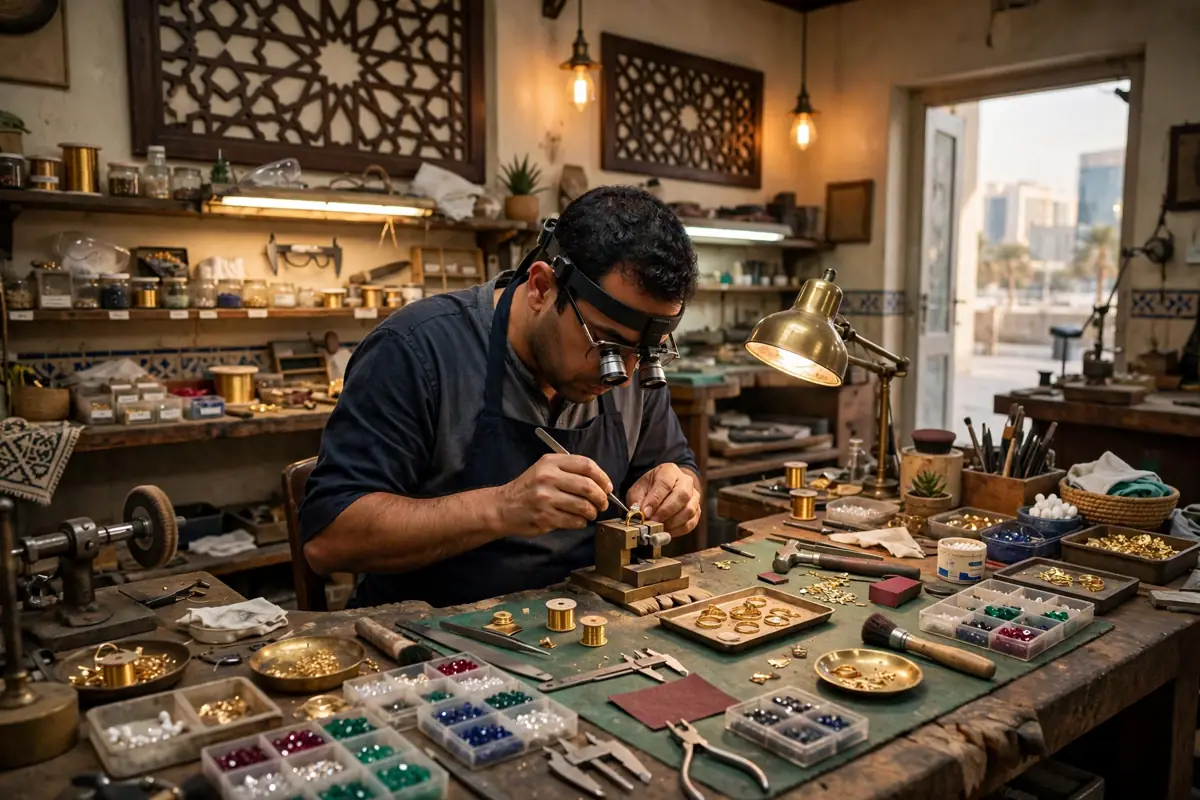
Custom or bespoke jewellery making is the most personal service manufacturers offer. You bring an idea, a sketch, a photo, or an heirloom to remake, and the workshop develops it into a one-off piece. Expect a consultation about metal, purity, stones, budget, and wearability, followed by a CAD design or hand sketch, a quote, and a production schedule. Many workshops show you a wax model or a 3D render before casting, which is the best moment to adjust proportions, stone size, or band width. If your design draws on older styles, period jewellery in UAE offers inspiration for vintage silhouettes, engraving, and stone cuts that still feel current.
For a smooth bespoke order, share clear references, agree the exact stone specifications in writing, and ask what is included in the price. A clear brief might say: 21K yellow gold, 4.2 grams finished weight, one 0.50-carat round brilliant diamond, VS2 clarity, G colour, with a comfort-fit band. The more precise your brief, the fewer surprises in cost and timing. Always ask for a written quote listing metal, stones, making charges, hallmarking, and aftercare.
Wholesale Jewellery Manufacturing
Wholesale manufacturing suits boutiques, online sellers, and brands that need consistent stock. Instead of one piece, you order a range: rings, earrings, pendants, bangles, and chains in set sizes and finishes. Manufacturers usually work from your tech packs or their own catalogues, then produce samples for approval before the full run. Sampling lets you check weight, clasp strength, stone security, plating quality, and how the piece looks when worn. Once the sample is signed off, the factory can repeat it reliably, which matters when customers expect the same quality in every reorder. If you are planning a new venture, reading about business opportunities in Dubai can help you place a jewellery line inside a realistic plan.
Where the Workshops Are: Dubai, Sharjah and Ajman
Dubai is the natural starting point. Workshops cluster around the Dubai Gold Souk in Deira, where you can compare designs, get quotes, and meet makers in a single visit. The Gold Souk area is best for bespoke work, repairs, remodelling, and small batches, because many workshops sit close to retail shops and can turn work around quickly. Larger orders often move to Sharjah or Ajman, where factory space is bigger and production lines can run longer. Sharjah offers skilled goldsmiths and competitive making charges, while Ajman serves wholesale buyers across the Emirates. If you are visiting workshops in person, the busy lanes around Rolla Market in Sharjah show how much of the UAE jewellery trade still runs on face-to-face relationships and repeat trust.
From CAD Design to Finished Piece
Modern UAE workshops blend handcraft with digital tools. Production usually starts with a consultation and a CAD model, which lets you rotate the design, check proportions, and confirm stone placement before anything is cast. The approved CAD file is printed as a wax or resin model, then cast in gold, platinum, or silver using the lost-wax method. After casting, goldsmiths clean, file, and assemble the piece, setters secure each stone, and polishers bring the metal to its final finish. Plating, engraving, and hallmarking usually come last, followed by a final inspection under magnification. For high-value orders, ask to see the piece before polishing, when adjustments are still easy.
Minimum Orders, Lead Times and Costs in AED
Costs in the UAE are usually quoted in AED and split into three parts: metal, stones, and making charges. Metal is priced by daily gold or platinum rates and finished weight, stones by carat, cut, clarity, and colour, and making charges by the complexity of the work. A simple gold band costs far less to make than a pavé diamond ring, even at the same weight. The table below gives realistic starting ranges for planning. Confirm the day’s metal rate and get the quote in writing before approving production.
| Service | Typical MOQ | Typical lead time | Making charge |
|---|---|---|---|
| Simple bespoke ring | 1 piece | 7-14 days | AED 150-400 |
| Diamond or gemstone ring | 1 piece | 14-21 days | AED 400-1,200 |
| Wholesale gold range | 50-100 pieces | 3-6 weeks | AED 40-150 per piece |
These are starting ranges, not fixed prices. Intricate filigree, heavy setting, and urgent deadlines all raise the making charge. For buyers on a budget, semi-precious jewellery in UAE is a practical middle ground: coloured stones with silver or lower-karat gold keep costs down while allowing distinctive designs.
How to Choose a Manufacturer
Choose a manufacturer on evidence, not promises. Ask to see finished pieces, check stone setting under magnification, and confirm how they handle rework if something fails inspection. Get the quote in writing, agree a delivery date with a buffer for hallmarking, and pay by stages: a deposit, a payment at sample approval, and the balance on delivery.
Hallmarking and Quality Checks
Hallmarking confirms metal purity. Ask which assay office the workshop uses, what marks will appear on the piece, and whether diamonds and major gemstones come with certificates. Keep the certificate, invoice, and specifications together for future repairs or resale.