Emirates homes are generous, but life here generates more belongings than any apartment can hold: furniture between leases, business stock, sports kit, seasonal decorations, the contents of a nursery that a toddler has outgrown. Self storage in UAE has grown into a mature industry answering that pressure, with modern facilities in Dubai, Abu Dhabi and Sharjah offering units from locker size to full warehouse bays, rented by the month with round-the-clock access. This guide explains how self storage works here, what people store, how pricing is calculated, and the questions to ask before your belongings go behind a roller door.
How Self Storage Works in the Emirates
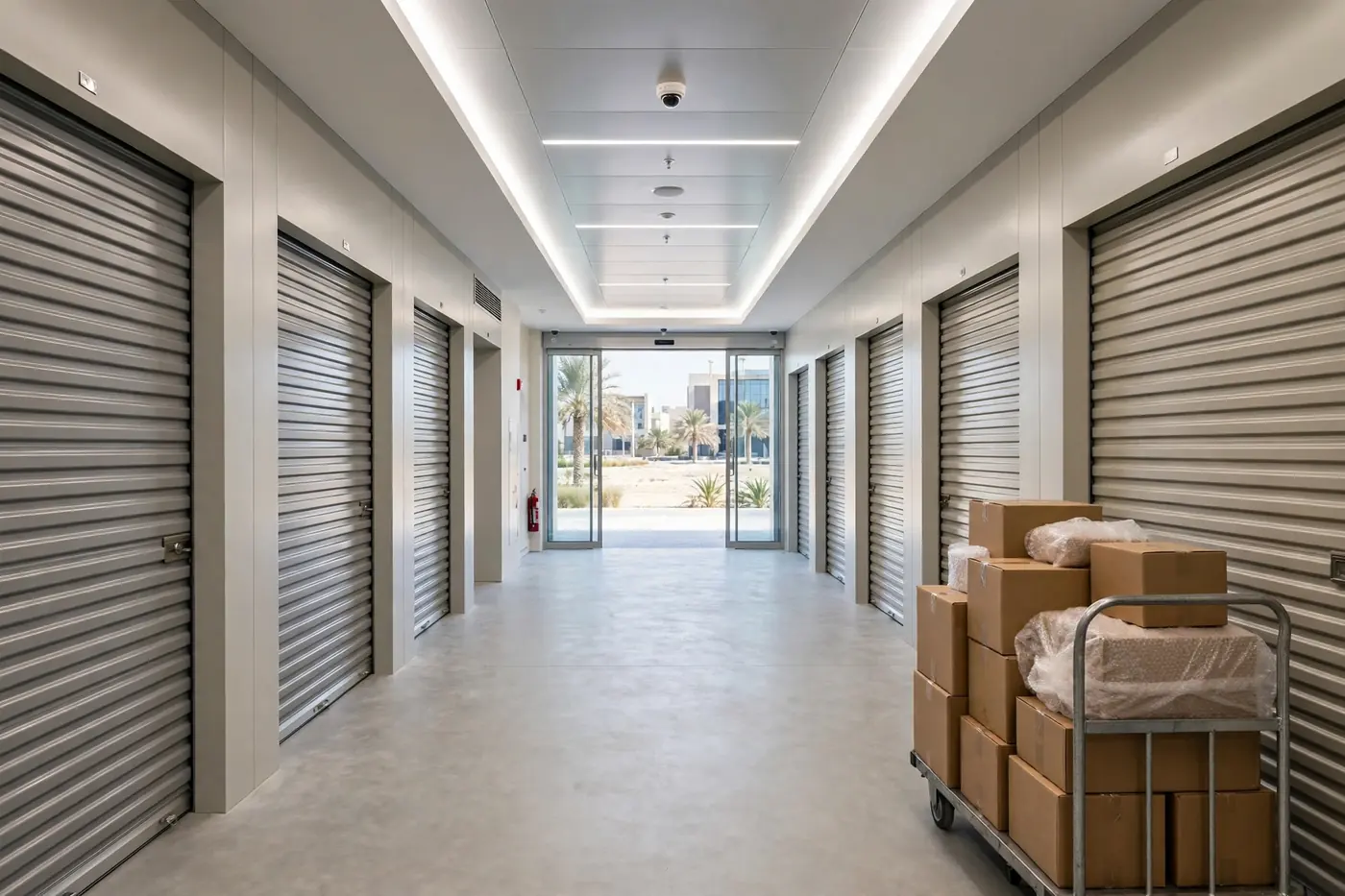
The model is simple: you rent a private, lockable unit inside a managed facility, load it yourself or with help, and access it whenever you need during the facility’s hours, which at the better sites means 24 hours a day. Units are individually alarmed or CCTV-monitored, access is controlled by gate codes or cards, and you hold the only key to your own padlock. Contracts are usually monthly with no long commitment, which suits the rhythm of expatriate life where plans change with contracts and postings.
Most customers arrive at a predictable moment: moving house, renovating, relocating here or leaving, starting a business, or simply running out of space. Storage pairs naturally with the moving process itself, and our guide to packers and movers in UAE explains how movers handle the transport side when your belongings are coming from a home rather than a warehouse. Facilities sit inside the wider logistics in the UAE ecosystem, usually in industrial districts with easy highway access and room for trucks.
Climate Control: The UAE Question That Matters Most
The single most important decision is whether you need a climate-controlled unit. Standard units in a shaded warehouse still get hot in an Emirates summer, and heat plus humidity is hard on wooden furniture, leather, electronics, documents, photographs, musical instruments and clothing. Climate-controlled facilities hold temperature and humidity in a safe band all year, and for anything you would not leave in a parked car in August, that is the correct choice.
Non-sensitive loads are different: properly packed plastic items, metal tools, business overflow and palletised stock often do fine in standard units, and the saving is real. Ask the facility exactly what their climate control holds through the summer, not just whether the building has air conditioning in the office. If you are storing furniture long term, our guide to surplus furniture stock in the UAE gives a sense of how the second-hand market treats stored pieces, which helps you decide what is worth paying to keep.
Unit Sizes and How Pricing Works
Facilities rent by unit size, from small lockers and one-square-metre cages up through the popular mid-sizes that hold the contents of a studio or one-bedroom apartment, to large units that swallow a villa’s furniture or a trading company’s stock. Pricing follows size, climate control, floor level and access, and most operators run introductory offers for the first month or two. The honest comparison is total cost over your expected stay, including any minimum term, deposit, lock purchase and insurance.
Insurance deserves a direct question: your goods are typically not covered by the facility’s policy, and operators either require you to arrange cover or sell a simple policy at sign-up. Get the valuation basis in writing. Also ask about access charges, late payment terms and how much notice ends the contract, because a unit you only needed for two months has a way of being paid for six if nobody diarises the exit.
What People Store, and What They Should Not
Household storage is the biggest category: furniture during a move or renovation, appliances between tenancies, and the archived clutter of family life. Relocation storage is the classic use case: people arriving ahead of their shipment, or leaving with theirs following later, in exactly the transition described in our guide to moving to Dubai from the UK. Businesses store documents, samples, exhibition stands, e-commerce stock and seasonal inventory, often treating the unit as a mini distribution point linked to their wider global transport arrangements.
Every facility prohibits the obvious categories: perishable food, flammable and hazardous materials, illegal items, and living things. Tyres, fuel and gas bottles are commonly restricted too. Pack properly for the climate: clean and dry everything before it goes in, use sturdy boxes rather than thin plastic bags, cover furniture, and leave an aisle so you can reach the back without unloading the unit onto the corridor.
Packing and Organising so Storage Actually Works
How you load the unit decides how useful it is. Keep an inventory list on your phone as you pack, photograph the contents of boxes before sealing them, and store the things you are most likely to need near the door rather than at the back. Fragile and valuable items go in the middle of the unit, off the floor on pallets or shelving, with heavy boxes at the bottom of every stack. For business users, label by project or season and keep a simple map of what is where; the ten minutes spent organising at load-in saves an afternoon of unloading later. Facilities generally allow shelving and racking inside units, and fitting it at the start is far easier than retrofitting around a full unit.
Choosing a Facility
Visit before you book. A good facility is clean, dry, well lit and visibly secure, with staff who can explain access, alarms and fire systems without hesitation. Check the access hours against your real life, the loading area and trolleys, and whether trucks and movers can get in easily, which matters if your move follows the steps in our guide to how to move to Dubai. Location is a trade-off between price and convenience: industrial-zone facilities cost less, and if you only visit twice a year, that is the right trade.
Self storage in UAE works best when it is a planned, temporary answer to a defined problem. Choose the right size and climate class, insure the contents, review the contract quarterly, and the unit quietly does its job until the day you clear it and stop paying.