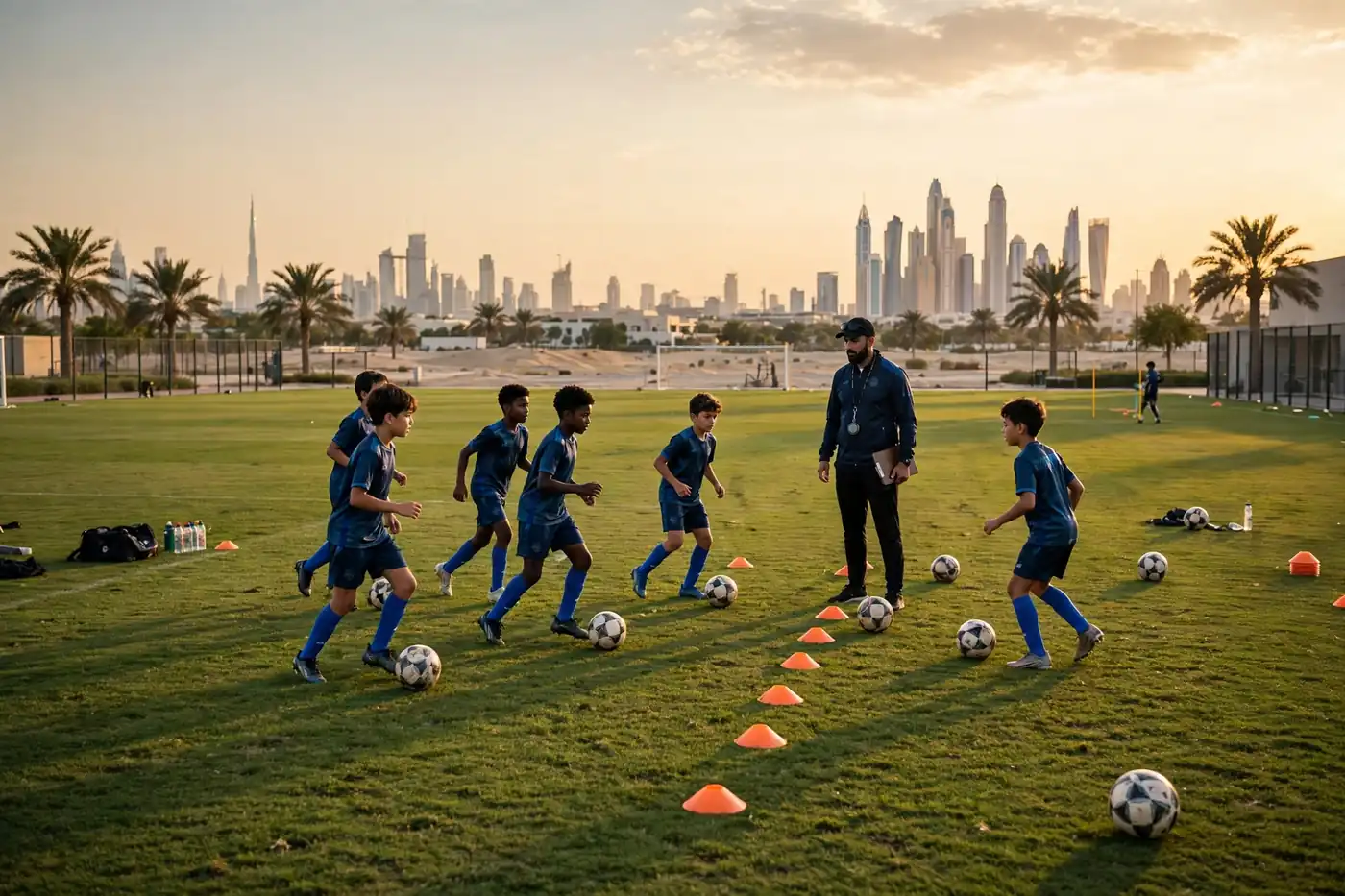
On any afternoon in Dubai or Abu Dhabi, thousands of children are at training — dribbling on floodlit pitches, bowling in indoor nets, or doing lengths before school. Sports academies in the UAE have become the default route into organised sport for families, offering professional coaching, structured progression and facilities that school PE cannot match. Adults use them too, for everything from tennis ladders to martial arts. This guide explains how academies work, the main sports on offer, what fees typically look like, and how to choose a programme that actually develops your child.
Why Sports Academies Thrive in the UAE
The ingredients are unusually favourable. A young, international population brings demand for every sport at once; world-class venues built for events double as training bases; and the climate — unplayable outdoors for much of the summer — pushed investment into indoor facilities that keep programmes running twelve months a year. Many academies carry famous affiliations, operating under the banners of European football clubs, international cricket bodies or Olympic swimming programmes, which sets coaching curricula and gives talented players a visible pathway.
For parents, academies also solve logistics: sessions run after school and on weekends, squads are graded by age and ability, and progress is coached rather than left to chance. Choosing sport often sits alongside choosing schooling itself — families comparing our guide to nurseries in the UAE for younger children will recognise the same questions about quality, safety and fit.
The Main Sports on Offer
Football is the giant: academies range from community programmes to elite development squads tied to professional clubs, with leagues, tours and trials for the strongest players. Cricket follows close behind, powered by the South Asian community and world-class grounds in Dubai, Sharjah and Abu Dhabi; indoor nets keep technique work going through summer. Swimming academies teach everything from water confidence to competitive squads, and are often a child’s first academy experience.
Tennis and padel have grown fast — padel especially, with clubs adding junior coaching to a booming adult scene. Martial arts (karate, taekwondo, judo, Brazilian jiu-jitsu) remain perennial favourites for discipline and confidence, while basketball, gymnastics, athletics and golf round out the mainstream offer. Riding belongs in the same family: our guide to equestrian centres in the UAE covers the lesson and competition structure at the country’s stables.
How Academies Are Structured
Most run on the school-term calendar, with three terms a year and holiday camps between them. Children are grouped by age band, then streamed by ability within it; the better academies assess at entry, review each term, and move players between groups as they develop. A typical week is one or two sessions for foundation ages, rising to three plus matches for development and elite squads.
Progression pathways are the point of difference. A recreational academy optimises for fun and fitness; a performance academy adds strength and conditioning, video analysis, nutrition guidance and tournament exposure — the same conditioning culture adults pursue at a gym in Business Bay or a gym in DSO, adapted for growing bodies. Ask any academy how many players progressed — to higher squads, school teams or beyond — and listen for specifics rather than slogans.
What Academy Training Typically Costs
Fees are usually charged per term. As a broad guide, mainstream academies commonly price group coaching in the region of AED 800–2,500 per term for one session a week, with elite programmes, individual sports like tennis and swimming, and multi-session weeks costing more; holiday camps are priced per week on top. Registration fees, kit packages and league entry are frequent extras, so compare the full-year cost, not the headline term fee.
Trials are the market’s gift to parents: almost every academy offers a free or low-cost trial session, and reputable ones insist on it. Use trials at two or three academies before committing — coaching style and group chemistry matter more to a seven-year-old’s progress than facilities do. Sibling discounts and early-bird term offers are common, and some employers’ education allowances stretch to academy fees, so it is worth asking.
Facilities and Coaching Standards
Judge coaching before facilities. Ask about qualifications — UEFA, ICC, ASA and equivalent licences exist for a reason — plus safeguarding policies, first-aid cover and coach-to-child ratios for your age group. Facilities then tell you about year-round practicality: indoor or shaded options for summer, water stations, clean changing areas, and viewing space for parents.
Recovery and flexibility work is increasingly built into good programmes; the stretching and mobility habits taught at yoga studios in the UAE translate directly into fewer young-athlete injuries. And watch how coaches speak to children at the youngest ages — the academies that keep players for years are the ones where five-year-olds leave smiling and asking when the next session is.
How to Choose the Right Academy
Start with your child’s goal, honestly assessed: fun and fitness, school-team ambitions, or a genuine performance pathway. Match the academy to that goal, check travel time against your weekly reality — a forty-minute drive each way kills more sporting childhoods than any coach — and take the trial.
Then ask the practical questions: make-up sessions for missed weeks, kit costs, league participation, refund terms, and how the academy communicates progress to parents. Choose the place that answers plainly, coaches kindly and develops visibly, and a sports academy becomes what it should be — the part of the week your child counts down to, and a foundation of fitness and confidence that lasts well beyond any single season.