
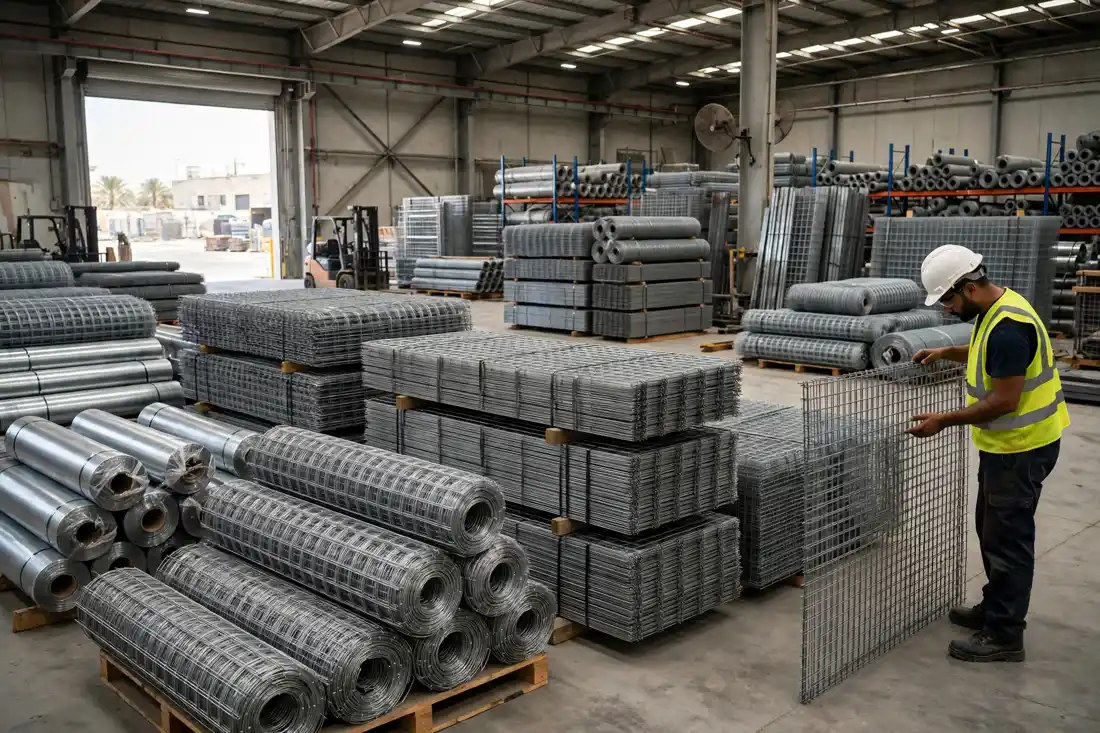
Woven wire mesh is one of those materials that quietly holds the UAE together. It screens sand and aggregate on construction sites, secures warehouse perimeters, filters liquids in industrial plants and keeps birds out of ventilation openings, yet most buyers only think about it when a project specification lands on their desk. If you need to source woven wire mesh in the UAE, the choice is wider than it first looks: weave patterns, wire diameters, aperture sizes and base metals all change how the mesh performs in Gulf conditions. This guide explains the main types, where each one is used, and how to choose the right specification before you order.
What Is Woven Wire Mesh?
Woven wire mesh is made by weaving metal wires over and under each other on industrial looms, much like cloth, except the threads are steel, stainless steel, brass or other metals. The weaving locks every wire in place, so the finished mesh is strong, stable and accurate: the openings stay the size they were woven, even after cutting and handling. It is different from welded mesh, where wires are spot-welded at each crossing. Woven mesh is generally more flexible and precise, while welded mesh is more rigid. Both are common in the Emirates, and the right choice depends on whether you need fine, accurate openings or stiff panels.
Two measurements define any woven mesh. The mesh count is the number of openings per linear inch, and the aperture is the clear space between wires. Together with the wire diameter, they decide what passes through, what is held back and how strong the sheet is. Suppliers in the UAE quote all three figures, so a request that simply says “wire mesh” will always lead to follow-up questions.
The Main Weave Types
Plain Weave
The most common pattern: each warp wire passes alternately over and under each weft wire. Plain weave gives accurate, square openings and is the default choice for general screening, sieving and protective guards. Most fine filter meshes and insect-screen-style industrial meshes use a plain weave.
Twill Weave
In a twill weave, wires pass over two and under two, which allows heavier wires to be woven at finer counts than a plain weave could handle. The result is a stronger mesh for its aperture size, used where the material being screened is heavy or abrasive.
Dutch Weave
Dutch weaves use different wire diameters in each direction and pack the wires tightly, producing a dense mesh with very fine filtration and high strength. Plain Dutch and twill Dutch meshes appear in filtration work — separating solids from liquids and gases — rather than in fencing or screening.
Crimped Weaves
For coarse meshes, wires are pre-crimped before weaving so the intersections lock firmly. Lock crimp, double crimp and intercrimp patterns are used for heavy-duty screens, partitions, security grilles and architectural panels where the mesh must stay rigid and resist impact.
Materials: What Survives the Gulf Climate
The base metal matters more in the UAE than in milder climates. Coastal humidity, salt-laden air and extreme heat punish the wrong choice quickly.
- Galvanised steel is the economical workhorse for fencing, cages and general construction screening inland. The zinc coating slows rust, but near the coast it will eventually weather through.
- Stainless steel 304 is the standard upgrade for food processing, water treatment and general outdoor use, offering good corrosion resistance at a moderate cost.
- Stainless steel 316 adds molybdenum and is the sensible choice for marine, coastal and chemical environments around Dubai, Sharjah and Abu Dhabi, where salt spray is constant.
- Brass and copper meshes appear in decorative screens, filtration and shielding work rather than structural roles.
Facilities that already work with fabricated metal — as described in our guide to metal fabrication in the UAE — often specify 316 stainless for any mesh that will live outdoors within a few kilometres of the sea.
Common Uses of Woven Wire Mesh in the UAE
Construction and safety. Mesh screens separate sand, gravel and aggregate into graded sizes, guard machinery and form safety barriers on sites across the Emirates. The companies in our roundup of construction companies in Business Bay source screening mesh continuously for exactly this work.
Security fencing and enclosures. Heavier woven and crimped meshes form perimeter panels, window grilles, equipment cages and animal enclosures. Woven mesh is also paired with laser-cut panels in architectural screens and mashrabiya-style facades.
Industrial filtration and sieving. Food processors, paint plants, water treatment facilities and chemical works rely on Dutch and plain weave meshes to filter and classify material. Accuracy matters here: a mesh that drifts off specification changes the product.
Ventilation and large spaces. Fine mesh keeps birds and debris out of louvres and intake openings, including the big air-moving installations covered in our guide to HVLS industrial fans in Dubai.
Agriculture and landscaping. Greenhouses and nurseries use mesh for shading support, soil sieving and protection from birds, while landscapers use it to hold embankments and line planters.
How to Choose the Right Specification
Start with the job, not the catalogue. Ask four questions:
- What must pass through, and what must not? That fixes your aperture and mesh count. For sieving, match the aperture to the particle size you are grading.
- How much load or abuse will it take? Heavier wire diameters and crimped weaves suit impact and vibration; fine filtration meshes need support frames instead.
- What is the environment? Indoor dry use can stay galvanised; coastal, chemical or food environments point to stainless 304 or 316.
- Roll or cut panels? Rolls suit fencing runs and screening; pre-cut pieces suit filters, guards and architectural work. Confirm the supplier can cut to size so you are not paying for waste.
When comparing quotes from different suppliers — many cluster in the industrial areas alongside the traders in our guide to building materials in the UAE — make sure every quote states mesh count, wire diameter, aperture and grade of metal. A cheaper quote with a thinner wire or a lower stainless grade is not the same product.
Care and Maintenance
Woven mesh needs little care, but in Gulf conditions a quick routine extends its life: rinse salt deposits off coastal installations with fresh water, clear trapped debris from screens before it hardens, and touch up damaged galvanising with zinc-rich paint before rust spreads. Stainless mesh should be kept free of carbon-steel contamination — brushing it with a carbon steel brush can embed particles that later rust and stain the surface.
The Bottom Line
Woven wire mesh looks like a commodity, but the specification decides whether it lasts two seasons or twenty years. Match the weave to the job, the metal to the environment — stainless 316 anywhere near the coast — and compare suppliers on full specifications rather than headline price. Get those three right and the mesh will simply do its work, quietly, for years.