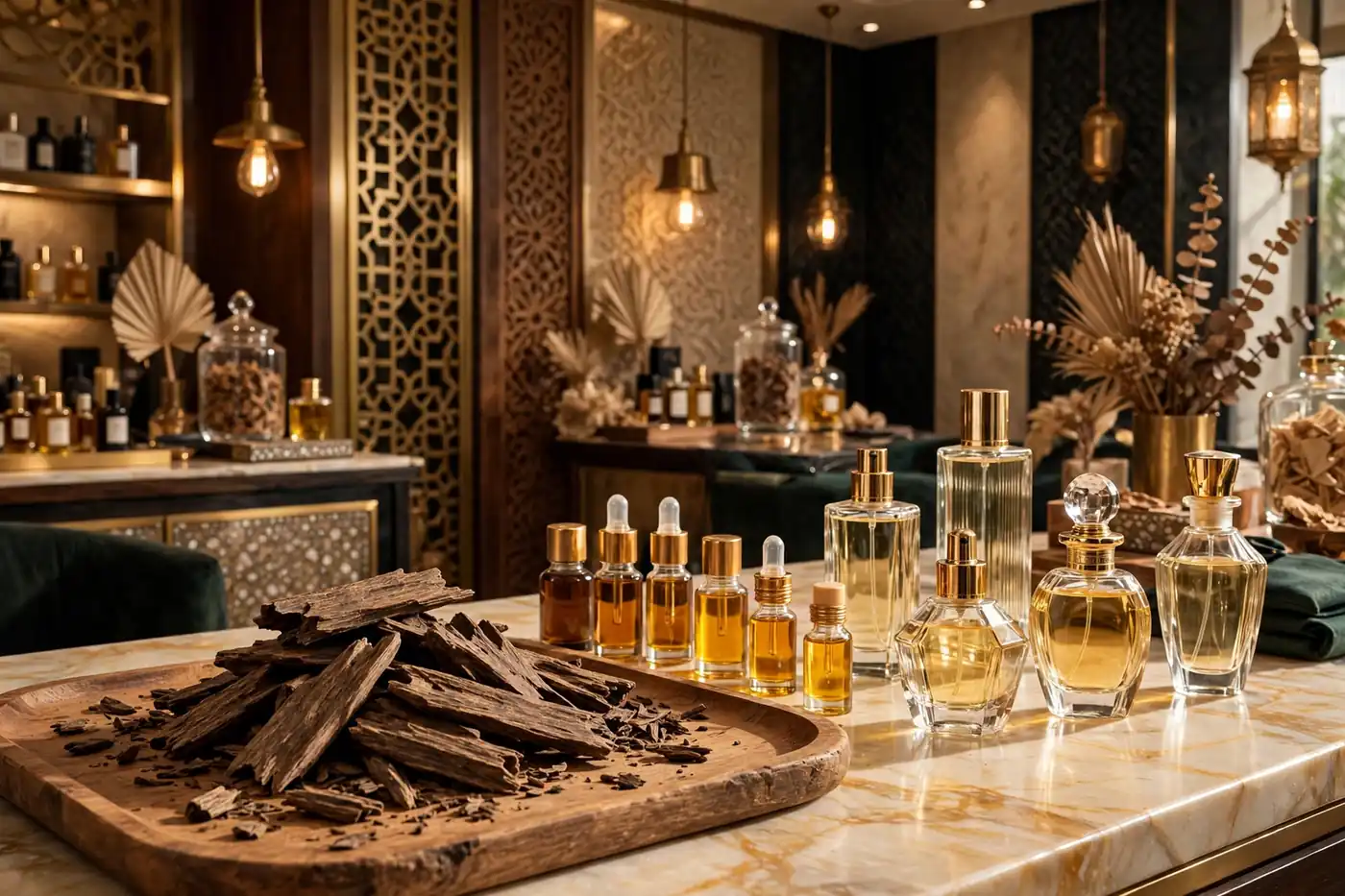
Fragrance is woven into daily life in the Emirates in a way that surprises many newcomers: oud chips burning in hotel lobbies, attar oils offered to guests, and perfume counters that run the length of every mall. Perfumes in UAE span two great traditions — the Arabic world of oud, musk and bakhoor, and the French designer houses — plus a growing scene of local and niche brands. This guide explains the main fragrance families, where people buy them, what drives prices, and how to choose a scent that survives the Gulf climate and suits you.
Arabic and French Perfumery, Side by Side
Arabic perfumery is built around intensity and longevity. Oud — oil or wood from agarwood — is the prestige ingredient, prized in grades that connoisseurs discuss the way others discuss wine. Attars are concentrated perfume oils, usually alcohol-free, applied directly to skin or hair, and musk, amber and saffron round out the traditional palette. Bakhoor, scented wood chips burned on charcoal or electric burners, perfumes homes, clothes and hair rather than the skin directly.
French and Western perfumery works differently: alcohol-based sprays, lighter structures that open with citrus and florals, and concentration grades from eau de toilette to parfum. Neither tradition is better — they suit different moments. Many residents wear both, keeping an oil for evenings and occasions and a fresher spray for the office. Local brands increasingly blend the two, and the manufacturing side of that scene is covered in our guide to private label perfumes in UAE.
Oud, Attars and Bakhoor Explained
Oud quality varies enormously. Wild aged Hindi and Cambodi oud sits at the top of the market, while cultivated and blended oils make the scent accessible at everyday prices. Dehn oud — the pure oil — is worn in tiny dabs and can last on skin and fabric for days. If you are new to oud, start with a blended oil from a reputable shop and let staff guide you through grades rather than buying the most expensive bottle first.
Attars come in small roll-on or dipstick bottles and are the most economical way to explore Arabic scents, while bakhoor quality shows in the wood and the oil it carries. A good shop will burn a chip for you to judge. These are also classic gifts — our guide to gifts in UAE has more ideas for presents that travel well and say something about the place.
Where People Buy Perfume
The traditional souqs remain the heart of the trade. Dubai’s Perfume Souq in Deira and the gold and spice souq lanes nearby are where oud, attars and bakhoor are sold by weight and negotiation, often steps from the jewellers in our guide to gold jewellery in UAE. Prices there reward comparison between shops, and small quantities let you test before committing.
Malls and department stores cover the designer and niche end, with brand boutiques, counters and seasonal gift sets, while Sharjah’s older shopping streets — our guide to Rolla Market Sharjah gives a flavour of them — mix both worlds. Online buying has grown quickly for repeat purchases of known scents; our overview of fashion online shopping in UAE explains the delivery and returns landscape that applies to fragrance orders too.
Seasonality shapes the market as well. Ramadan and Eid are the great fragrance seasons, when gifting drives launches and special editions, and oud and bakhoor move in family quantities for majlis hosting. Wedding seasons bring their own demand for bridal scent packages and dukhoon for celebrations. Shopping just before these peaks gives the widest choice; shopping just after often gives the keenest prices on gift sets, which are bought in depth for the season and discounted once it passes.
Price Ranges and What Drives Them
Prices stretch from a few dirhams for a simple attar to many thousands for rare oud or limited editions. The drivers are ingredient cost (natural oud, ambergris-style musks and saffron are expensive), concentration, brand positioning and packaging. Designer sprays cluster in a familiar mid-range band, Arabic oils span the widest range of all, and gift sets in festive seasons often carry the best value in the designer segment.
What you should not pay for is mystery. Reputable sellers explain what a product is — natural, blended or synthetic — and price accordingly. Be wary of “pure oud” at prices that could not cover the raw material, and of market stalls selling sealed designer boxes far below every other price on the street. The adjacent beauty trade has the same tiers, as our guide to private label cosmetics in UAE shows for locally made products.
Spotting Authentic Bottles
Counterfeit fragrance is the market’s persistent problem, mostly in designer sprays sold through informal channels. Check the cellophane and box printing, batch codes that match between box and bottle, and the sprayer’s finish. Authorised retailers, brand boutiques and established souq shops with fixed premises are the safe routes; a receipt and a shop you can return to are worth more than a small discount.
Your nose helps too: fakes often smell harsh or alcoholic in the opening and fade within the hour, while a genuine perfume develops through stages. If a scent you know well smells wrong, trust that instinct. For Arabic oils, buy from shops that let you test from the actual stock bottle, and keep purchases in a cool, dark place at home — heat and light are the enemies of every fragrance, however genuine.
Storage and application habits extend a fragrance’s life. Keep bottles away from bathroom humidity and direct light — a drawer or shaded shelf in a cooled room is ideal — and avoid leaving perfume in a car, where summer cabin temperatures can ruin a bottle in days. Apply oils before dressing to avoid staining delicate fabrics, and small decants are the traveller’s friend and a low-risk way to test a scent through a full working week.
Choosing a Scent for the Gulf Climate
Heat amplifies fragrance. Sweet and heavy scents project further and can overwhelm in summer, which is why fresh citrus, aquatic and light musk compositions dominate daytime wear, while oud and amber come into their own in air-conditioned evenings and the cooler months. Apply oils to pulse points and sprays lightly before leaving home; reapplying an attar at midday is normal practice here.
Test properly before buying: spray on skin, not just a card, and live with it for a few hours through the dry-down. Buy smaller bottles while you explore, and consider layering — a light musk under a French spray is a combination many residents settle on. Complete the routine with grooming from our guide to beauty salons in UAE, and remember that in a country where fragrance is a form of hospitality, the best scent is the one worn with a little restraint.