Dates are far more than a fruit in the Emirates. They are the traditional way to break a fast, the first thing offered to a guest alongside Arabic coffee, and one of the UAE’s oldest agricultural products. Walk into any supermarket, souk or speciality shop and you will find dozens of varieties at every price level, from everyday lunchbox packs to gift boxes that cost more than a fine box of chocolates. This guide explains the main types of dates in the UAE, how to buy them well, and how they are used in cooking and gifting.
The Place of Dates in Emirati Life
Date palms have been cultivated in the oases of the region for thousands of years. The Al Ain Oasis, a UNESCO World Heritage site, still holds tens of thousands of palms irrigated by the traditional falaj system, and the annual Liwa Date Festival celebrates the harvest with competitions for the finest fruit. During Ramadan, dates hold a central place at iftar tables across the country, usually eaten first with water or laban.
Hospitality is the other pillar. Serving dates with qahwa (Arabic coffee) is a gesture of welcome in homes, offices and majlis gatherings, and a bowl of dates sits on many reception desks year-round. That cultural weight is why quality matters here — and why the UAE market supports such a wide range.
Popular Date Varieties in the UAE
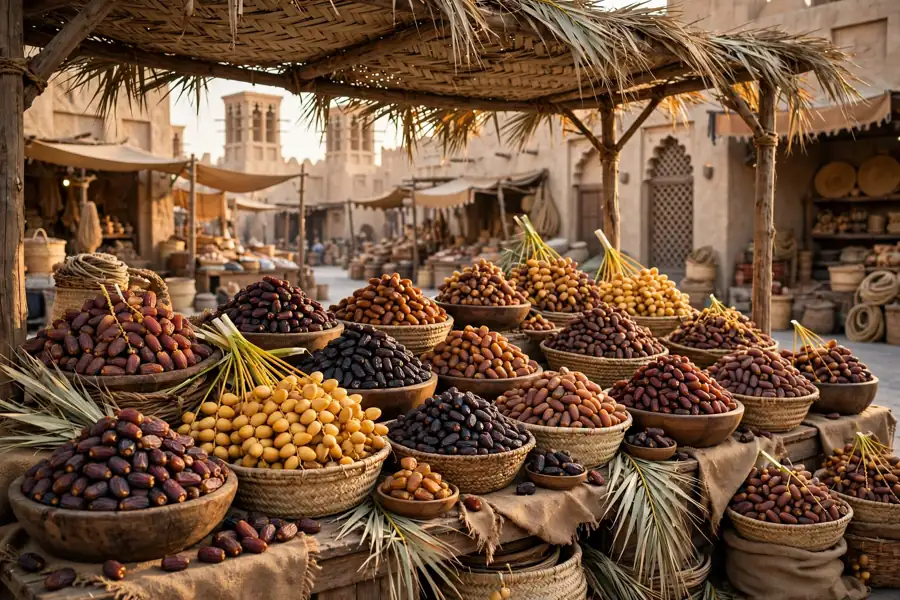
Khalas is the everyday favourite — golden, moderately sweet, and the classic partner for coffee. Fard is a smaller, darker date with a rich flavour, widely grown and reasonably priced. Lulu is round, soft and very sweet, while Khenaizi is known for its deep red-to-dark colour and soft flesh. Barhi is unusual because it is eaten at the yellow, crunchy stage as well as fully ripe.
Imported varieties fill the premium shelves. Medjool dates, large and caramel-soft, are popular for stuffing and gifting, and Ajwa dates from Madinah hold religious significance for many buyers. Local farms around Liwa and Al Ain supply a large share of the fresh market each summer harvest, and speciality retailers label the farm and harvest year for the top grades.
Fresh, Semi-Ripe and Dried: Understanding the Stages
Dates are sold at three stages. Khalal dates are fully grown but still firm and yellow or red, eaten fresh and crunchy in season. Rutab dates have softened and browned at the tip — moist, honeyed and highly perishable, they must be refrigerated and eaten within days. Tamr is the fully dried stage most people picture: shelf-stable, concentrated in flavour, and available all year.
The summer harvest season, roughly from July to September, is when fresh rutab appears in markets and prices for local fruit are at their best. Outside the season, dried dates dominate, and quality depends on how well they were dried and stored.
How to Buy and Store Dates
Good dried dates look plump with a slight sheen; the skin should not be heavily separated from the flesh, and there should be no sugar crystals crusting the surface or any fermented smell. Buy from shops with fast turnover — the date sections of major supermarkets, speciality stores in Deira and Abu Dhabi’s Mina market area, or farm shops during harvest season.
Price is a fair guide to grade. The same variety can sell at several levels depending on size, moisture and how carefully the fruit was sorted — the largest, most uniform dates go into gift packaging, while smaller fruit of the same variety is sold loose for everyday use and cooking. Neither is a bad buy; match the grade to the purpose. Loose market dates are perfect for smoothies, baking and daily eating, while the boxed grades earn their price when appearance matters.
At home, keep dried dates in an airtight container in a cool cupboard for everyday use, or refrigerate them to extend freshness for months. Rutab dates go straight into the fridge and are eaten quickly, or frozen if you bought more than you can use. Dates absorb odours, so store them away from strong-smelling foods.
Dates in Cooking, Desserts and Gifting
Emirati kitchens use dates in rangina (a warm date and flour dessert), date syrup known as dibs, and a growing list of modern bakes — date cakes, energy balls and stuffed dates filled with nuts, candied peel or cheese. Chopped dates sweeten salads and grain dishes, and date smoothies are a Ramadan staple. If you enjoy regional flavours in desserts, you might also like our guide to ice cream in the UAE, where date is one of the signature local scoops.
For events, stuffed and chocolate-coated dates are a standard premium gift and a popular addition to dessert tables — the providers under catering services in the UAE often supply them for corporate functions, and they appear on many wedding menus arranged through wedding services in the UAE. Presentation boxes from local brands make easy gifts for visiting family, especially paired with the gift sets sold by shops featured in our guide to perfumes in the UAE. You will also find date desserts on menus across the restaurants in Business Bay during Ramadan.
A Simple Buying Strategy
Start with Khalas for daily eating and coffee, add a box of rutab in season for the full fresh experience, and keep one premium variety — Medjool or a good local harvest grade — for guests and gifts. Buy smaller quantities more often rather than a huge box that sits open for months. Once you know the varieties, dates in the UAE stop being a single fruit and become what they are for everyone who lives here: a whole category of flavour, tradition and hospitality in one small fruit.