The Emirates sits between Europe, Asia and Africa, and its airports handle an enormous share of the region’s air freight. Air cargo services in UAE move everything from urgent machine parts and pharmaceuticals to e-commerce parcels and exhibition equipment, often in hours rather than the weeks sea freight takes. This guide explains how air cargo works, what it costs, and how to choose a provider when speed genuinely matters.
How Air Cargo Works
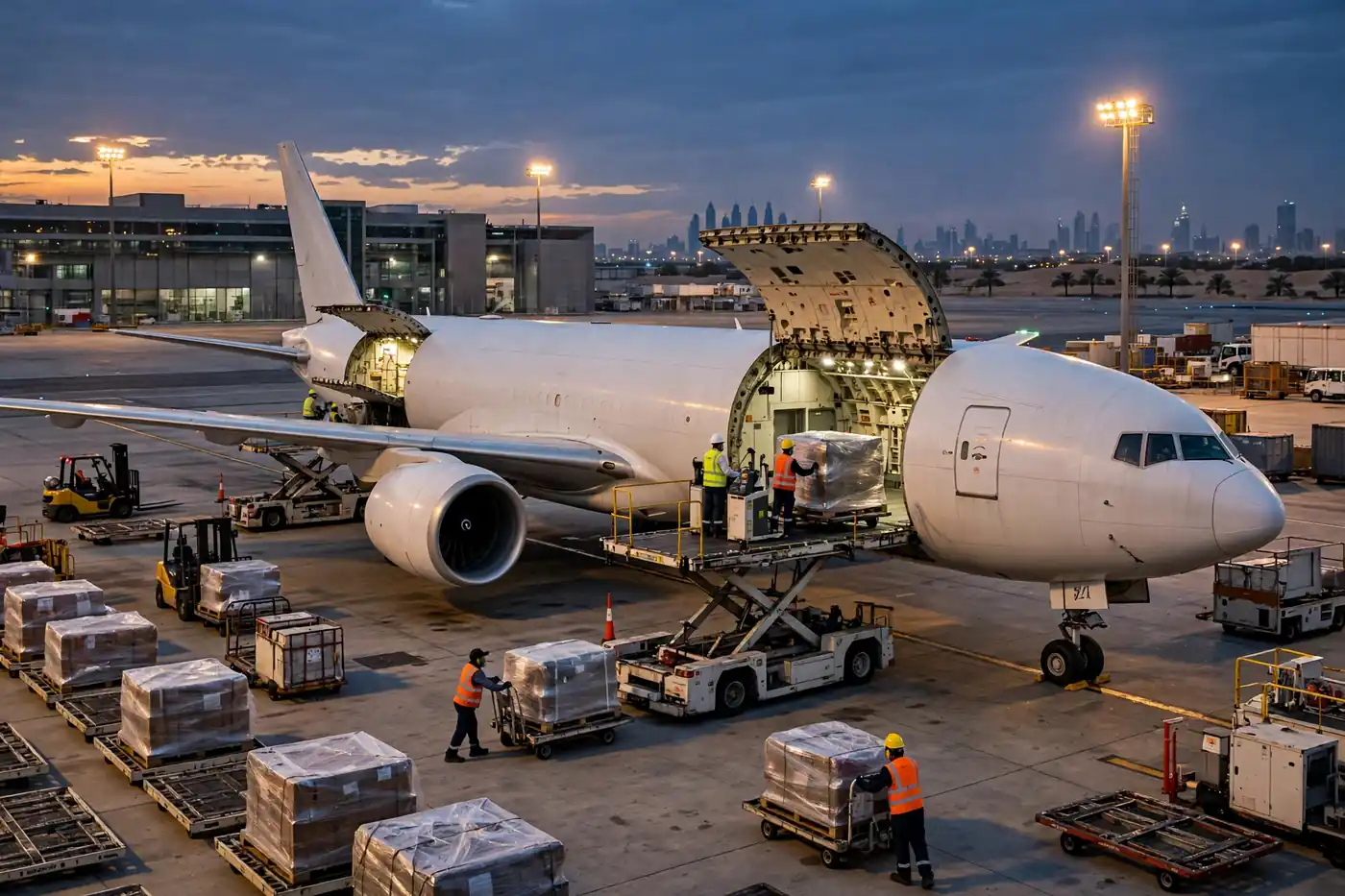
Air freight moves in the bellies of passenger aircraft and in dedicated freighters from hubs such as Dubai International, Al Maktoum International and Abu Dhabi’s Zayed International. A shipment typically passes through five stages: collection or drop-off, export documentation and customs, security screening, the flight itself, and import clearance with final delivery at the destination.
Businesses rarely deal with airlines directly. A freight agent consolidates shipments, books space, prepares the air waybill and manages both customs ends. That agent relationship is the core of the service, and it connects naturally with freight forwarding in UAE, where the same company may route some goods by air and others by sea depending on urgency and budget.
What Businesses Ship by Air
Speed-sensitive cargo dominates: electronics, fashion stock for launches, automotive and aviation parts, medical supplies and laboratory samples, documents, and perishables such as fresh food and flowers. E-commerce has added huge volumes of small parcels, while events and exhibitions rely on air freight when equipment absolutely cannot be late.
Not everything should fly. Heavy, low-value goods usually belong on a vessel, and a good agent will tell you so rather than quote an air rate. Many shippers split consignments: the urgent portion by air, the balance following by sea or through regular courier services in UAE for smaller items.
Rates, Weight and How Charges Are Calculated
Air freight is charged on chargeable weight, which is whichever is greater: the actual weight or the volumetric weight calculated from the shipment’s dimensions. Bulky but light goods therefore cost more than newcomers expect. Rates are quoted per kilogram in weight bands, so heavier shipments pay a lower rate per kilo, and the quote may separate the air rate from fuel and security surcharges, handling, documentation, customs clearance and delivery.
Ask for an all-in door-to-door figure wherever possible, and confirm what is excluded, particularly destination customs duties and storage if the receiver is slow to clear. Prices move with capacity and season: space tightens before Ramadan, during peak retail periods and around major exhibitions, so booking early protects both rate and routing.
Documents, Customs and Restricted Goods
A commercial invoice and packing list support most shipments, with certificates of origin, product-specific permits or airline approvals added where needed. The air waybill is the contract of carriage and the document every tracking update refers to, so details on it must match the invoice exactly; small mismatches are the most common cause of avoidable delays.
Some goods are restricted or need special handling in the air: lithium batteries, perfumes and aerosols, pharmaceuticals and anything classed as dangerous goods must be declared and packed to airline rules. Undeclared restricted items cause seizures and fines, so declare honestly and let the agent advise. Larger relocations of stock or equipment often sit within wider logistics in UAE contracts that blend air, sea, warehousing and distribution.
Airport to Door: The Ground Game
Air cargo is only as fast as its slowest ground leg. Collection cut-off times, warehouse receiving hours, customs working patterns and final-mile delivery all shape the real transit time, which is why experienced shippers compare door-to-door promises rather than flight times. Providers with their own facilities near the airports and in-house customs teams generally clear faster than those handing off at each stage.
Businesses importing regularly often hold stock close to the hub between flights, and companies arranging household or office moves by air for key staff usually coordinate with packers and movers in UAE so packing, export and arrival delivery line up. For multi-modal routes, our guide to global transport from UAE explains how the pieces connect.
Perishables and Temperature-Controlled Cargo
A significant share of the UAE’s air freight never warms up or cools down. Pharmaceuticals, fresh produce, seafood, cut flowers and laboratory samples move in temperature-controlled units and cool-chain facilities at the big hubs, with the clock running from the moment they leave the sender’s cold store. Providers specialising in perishables manage pre-cooling, insulated packaging, priority loading and the fastest possible clearance on arrival.
If your goods are temperature-sensitive, ask specifically about the chain: where the shipment waits before the flight, whether its temperature is logged, and what happens during a delay. A gap of a few hours on a hot ramp can quietly destroy a consignment that looked perfect on paper, so cool-chain competence matters more than the headline rate.
Express, Standard and Deferred: Choosing a Speed
Air cargo is not one product. Express services prioritise the next available flight with premium handling at both ends and suit breakdown parts, samples and launch stock. Standard services consolidate onto scheduled capacity at lower rates, while deferred options wait for space and trade days for money. The differences sound small on a quote and feel enormous when a production line or an event is waiting.
A useful rule: price the delay, not the freight. If a day of delay costs more than the express premium, express is the cheaper option. Agents who lay out all three speeds with honest door-to-door times make that calculation easy; agents who quote only one speed are selling, not advising.
Choosing an Air Cargo Provider
Compare providers on network strength at your destinations, customs expertise, communication and honest advice about when not to fly. Ask how they handle a missed flight or a customs query at midnight, because the answer reveals their real operation. A provider that tracks proactively and warns you before you ask is worth more than a slightly cheaper rate. In air cargo, reliability is the product; the flight is only the middle of it.